The climate change crisis is pushing emperor penguins toward the life-threatening danger of extinction.
According to the International Union for Conservation of Nature (IUCN), the mass drowning of emperor penguin chicks due to ice melt will cause the species to become extinct.
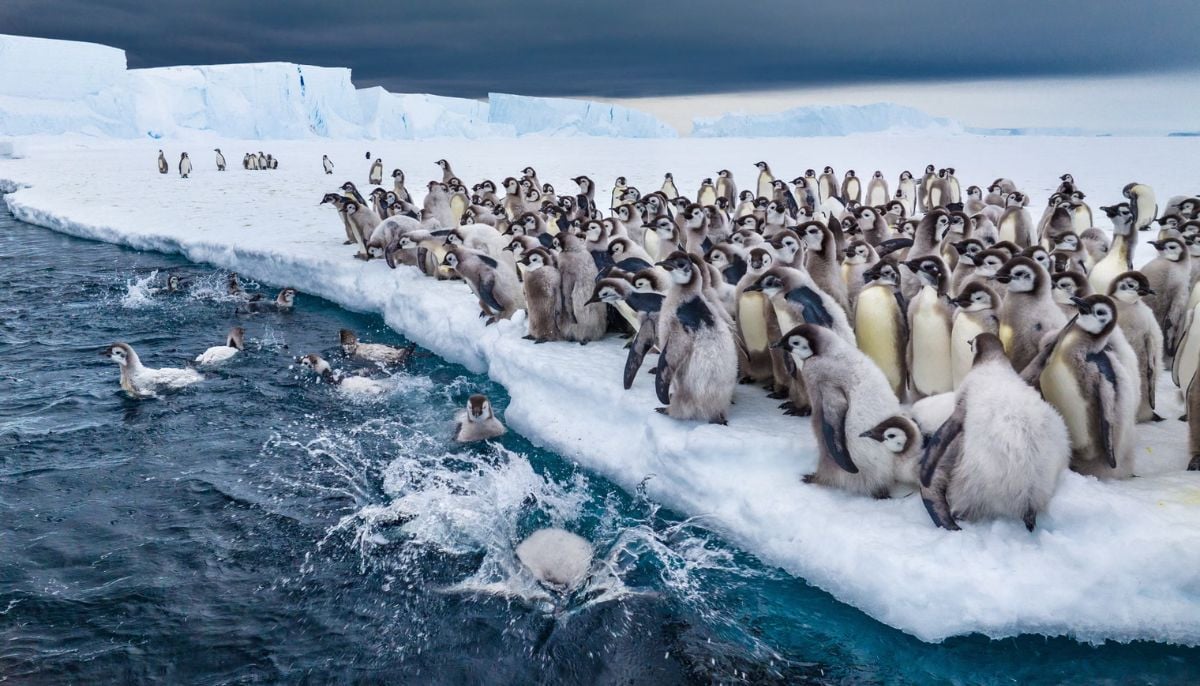
For nine months of the year, emperor penguins rely on ‘fast ice’ anchored to the shoreline. The ice also acts as a breeding ground for their chicks, giving them a safe place to hatch and grow until they develop their waterproof plumage.
For a decade now, Antarctica has been witnessing massive ice mass shrinkage due to global warming.
Unfortunately, global warming caused by climate change is bringing these penguin colonies closer to death. If the melted ice breaks, entire colonies can fall into the ocean.
The chicks without waterproof feathers are more susceptible to this disaster. Those who do not drown immediately often succumb to hypothermia and freeze to death as soon as they emerge from the water with their feathers soaked.
Emperor penguin colonies in danger: future projections
For example, in 2022, four of the five known emperor penguin breeding grounds in the Bellingshuasen collapsed, leading to the deaths of thousands of chicks. Similarly, in 2016, another colony in the Weddell Sea suffered the same grim and disturbing fate.
Given the frequency of ice melting, the IUCN predicted that the population will be halved by 2080. Currently, the population is estimated at 595,000 adults, which has already decreased by 10 percent between 2009 and 2018.
Now the largest penguin species, the emperors have gone from “near threatened” to “endangered” in the new IUCN analysis.
“The extinction of the emperor penguin is a stark warning: climate change is accelerating the extinction crisis before our eyes,” said Martin Harper, CEO of BirdLife International.
What needs to be done?
According to experts and environmentalists, the first and most important step is to decarbonize the economies responsible for global warming.
Achieving net-zero carbon emissions is the only physical requirement for stabilizing global temperatures and preventing further warming of the atmosphere.
WWF is also making efforts to list emperor penguins as a “specially protected species” at the Antarctic Treaty meeting in Japan in May. This move will protect penguin habitat from other pressures, such as shipping and tourism.