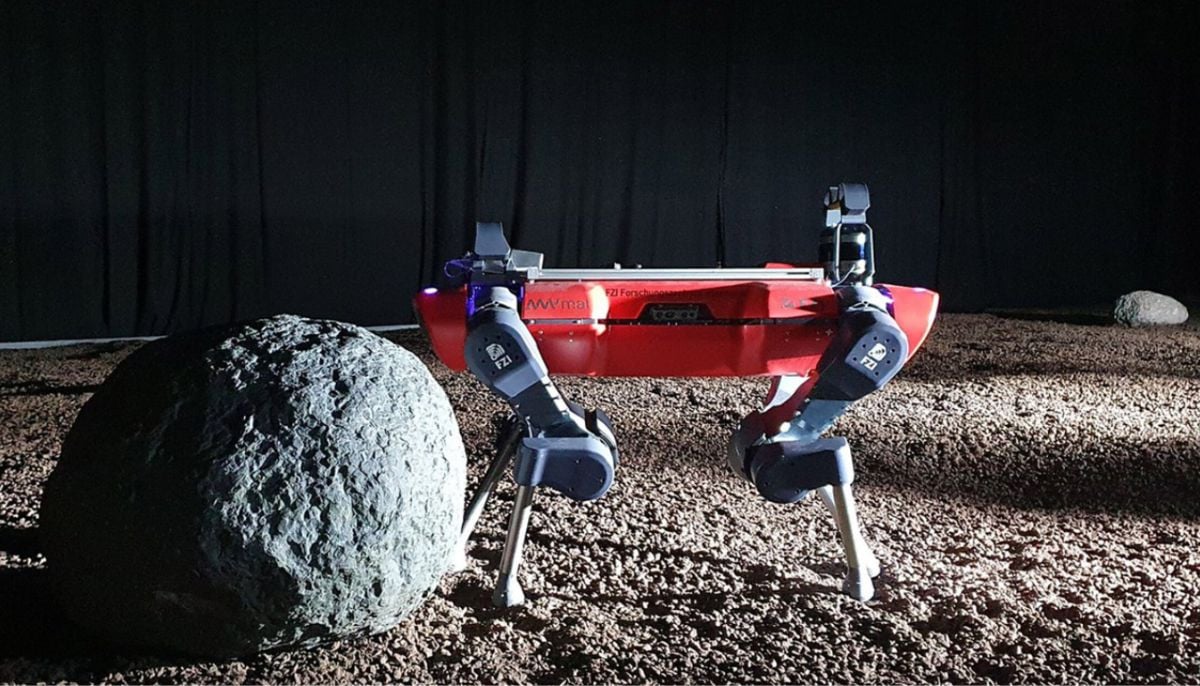
A new era of rapid space exploration may be on the horizon as researchers at the University of Basel have successfully tested a semi-autonomous, four-legged robot that can navigate Mars-like terrain three times faster than human-guided rovers.
The robot, a quadruped named ANYmal, recently completed a series of geological missions at Marslabor’s simulation facility. Equipped with a specialized robotic arm and high-tech scanners, the robot demonstrated a level of independence rarely seen in planetary exploration. He uses a Raman spectrometer and microscopic imaging to identify complex minerals such as gypsum, carbonates and basalt, as well as lunar analog materials such as anorthosite. Data shows that ANYml has completed missions autonomously in just minutes. However, it took 12 to 23 minutes, while a human operator doing the same job took 41 minutes. However, it is pertinent to note that human monitoring provided relatively more detailed and accurate information.
Why it matters
Current Mars rovers are often limited by communications delays, moving only a few hundred meters per day as they wait for instructions from Earth. The research also confirms that legged robots appear to not only overcome obstacles but also adapt to changeable terrain, providing access to highly sensitive areas. Taken together, these points work together to build a future where robots like ANYmal are not just tools, but active participants capable of independently searching for biosignatures; the chemical traces could indicate ancient life on distant worlds.