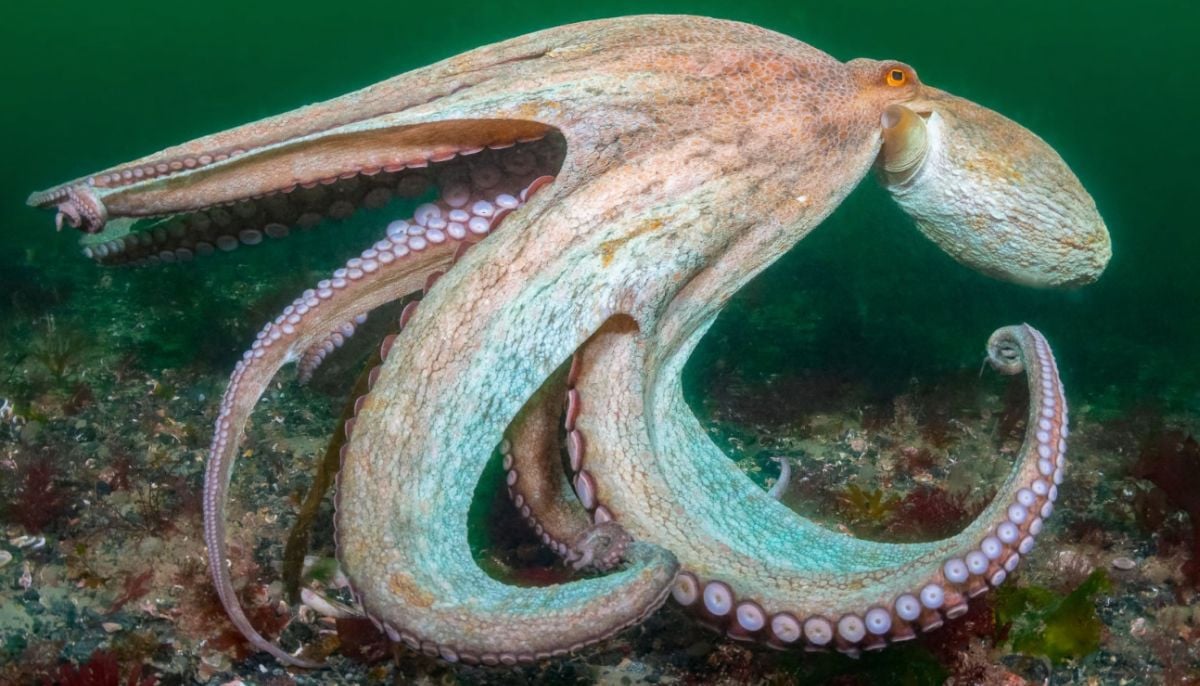
Researchers have made a surprising discovery: a giant octopus from the age of dinosaurs that has been linked to the legendary Kraken, a creature that can drag ships to their doom. Based on fossilized jaw structures, scientists estimate that the creature was between 7 and 19 meters long.
Due to its enormous size the speciesNanaimoteuthis haggarti-is compared to the mythical monster from Scandinavian folklore. One of the largest invertebrates ever recorded, it acted as an apex predator in the ancient seas.
While modern giant squids can reach a length of twelve meters, Nanaimoteuthis haggarti was considerably larger and more formidable. In this regard, Mr. Iba stated that his work shows that giant octopuses acted as top-level predators in the Cretaceous Sea.
“These giant octopuses were likely at the same ecological level and may have competed with marine reptiles and sharks within the same ecosystem,” he added.
The study of fossils comes from Japan and Vancouver Island shows intense wear on the creature’s beak, the only rigid part of an octopus’ body.
This new study shows remarkably well-preserved jaws from a species that can grow up to 19 meters in length. It is one of the largest invertebrates known to science, as reported by the BBC.
Modern octopuses are known for their intelligence and their ability to develop complex hunting strategies.
For example, the Giant Pacific Octopus can have an arm span of over 5.5 meters. “With their tentacles and suction cups they could hold such an animal perfectly and there is no escape,” said Christian Klug, a paleontologist at the University of Zurich, who reviewed the study.
Several questions remain unanswered; at this point, scientists cannot identify the animals’ exact shape, their full size, or how fast they could swim.
Nevertheless, the fossils provide a fascinating insight into the creatures that once roamed the ancient seas, and the intelligence that likely helped them compete with other apex predators.