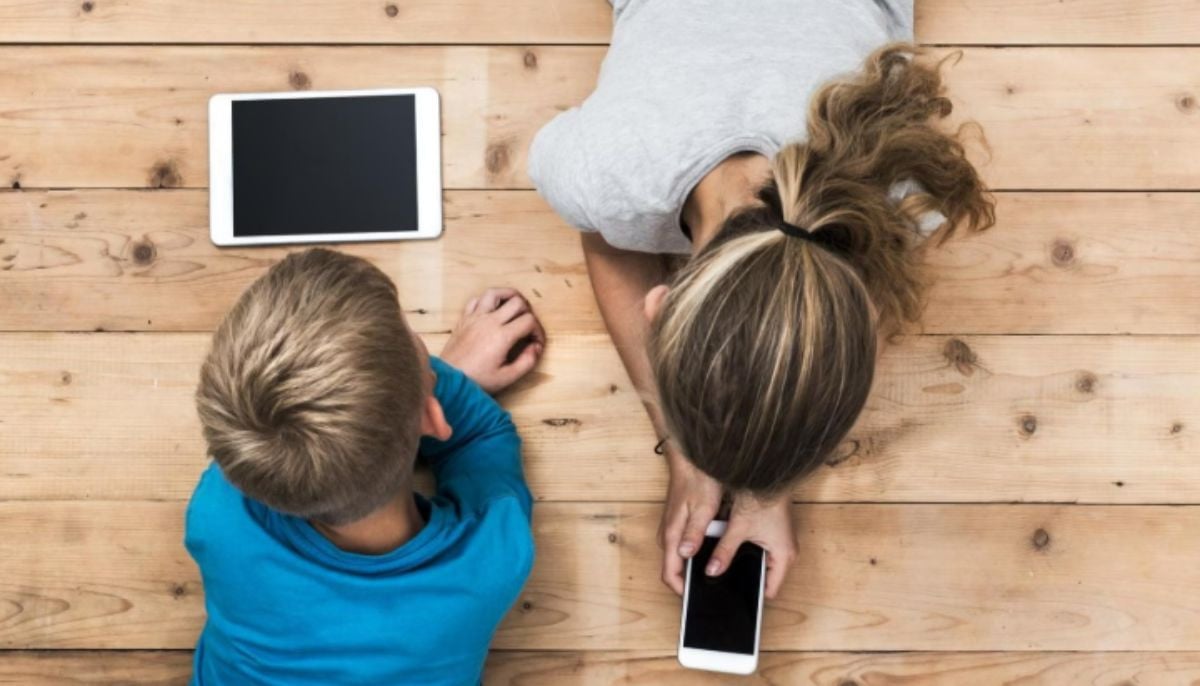
So-called ‘iPad children’ of this generation can be seen using gadgets in every nook or corner or even on their mother’s lap.
Most parents believe that it is safer to accompany their children with gadgets rather than leaving them alone and getting hurt while walking around or disturbing them while doing their daily chores, but experts think the opposite.
They indicate that media consumption is widespread today and its impact on children depends on age, frequency, content and context.
Digital media have long been part of everyday life. According to the Berlin Center for Addiction Prevention, children today are growing up in a world where smartphones, tablets and YouTube are commonplace.
Effects of media on children aged 0-3 years
This is evident from a study published on Thieme Connect, toddlers under three years old do not benefit from exposure to screens; instead, premature excess of screen time can hinder development, such as delayed language development and weaker motor skills.
The study shows that it also increases the risk of attention disorders, anxiety and depression.
Another study by the Media Education Research Association Southwest shows that children up to preschool age cannot yet distinguish between reality and screen content.
These children perceive what is real and absorb it unfiltered as the rapid and intense stimuli of colors, sounds and movements overwhelm the child’s brain, leading to difficulty concentrating and making it less sensitive to subtler stimuli.
Digital content on screens also affects a child’s self-activity, or ability to act, explore and discover independently.
Effects of media on children aged 3-6 years
Researchers indicate that it is important for preschoolers to learn new skills; therefore, they are required to use gadgets, but longer use can also have serious consequences for them.
According to researchers, the average attention span of preschoolers is only 10-15 minutes, and longer videos can overwhelm the brain and hinder concentration.
Researchers also explain that the reason for media consumption among children is important.
If parents offer media gadgets to relieve boredom or calm the child, this can negatively impact self-regulation.
Effects of media on 6 years and older
According to the KIM Study in 2022, 70% of children regularly use the internet. Usage among 6-7 year olds is 38%, while among 12-13 year olds it is 99%.
Parents at this stage should help children select their content, set rules, and schedule breaks between viewing times.
Discussions about advertising data and online protection are just as important.
Media has a negative impact on children’s mental health, disrupting both their sleeping patterns and eating habits.
Other negative consequences include exposure to violence, sexual content and the promotion of self-harm.
The study concludes that digital media is now an integral part of childhood, but parents must take responsibility and monitor its daily use and impact across different age groups.
The report suggests that parents should not be technophobes and should play the role of guiding them into the digital world and limiting their screen time due to its detrimental effects on their physical and mental health.