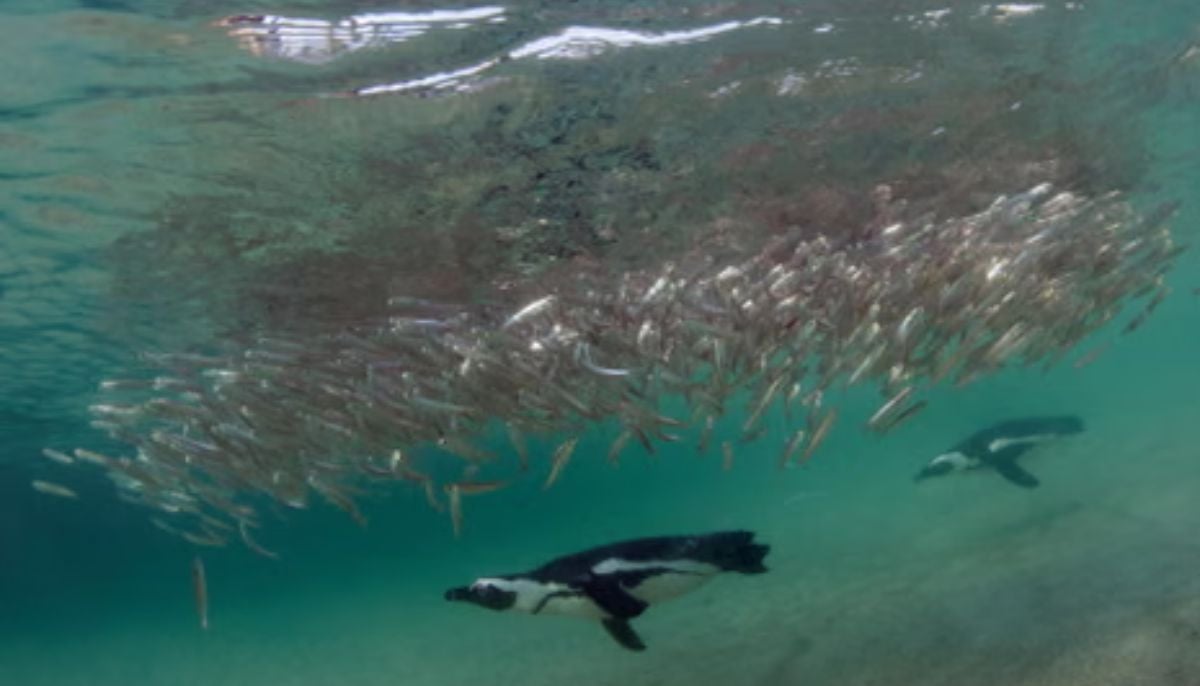
More than 60,000 penguins in colonies off the coast of South Africa have starved to death due to the disappearing sardine, according to a new study published by researchers from the University of Exeter and the South African Department of Forests.
In particular, the research report found that more than 95% of African penguins in two of the selective breeding colonies on Dassen Island and Robben Island died between 2004 and 2012.
As reported by The Guardianthe deaths of the breeding penguins occurred due to starvation during the molting period, and the study clearly links this decline to the climate crisis and overfishing.
The research was published in Ostrich: Journal of African Ornithology showing that the losses recorded by researchers in those colonies were not isolated.
In this context, Dr Richard Sherley from the Center of Ecology and Conservation at the University of Exeter said: “The African penguin species has suffered a population decline of almost 80% in 30 years.”
The dense feather structure of the African penguin is a natural phenomenon that provides insulation
African penguins regenerate their worn feathers to maintain their insulation and waterproofness. During the molting period they stay on land for about 21 days.
It has been observed that to survive this fasting period, they need to build up their fat reserves just before molting.
In this regard, Sherley said: “If it is too difficult to find food before they molt or immediately afterwards, they will not have enough reserves to survive the fast.”
He further explained, “We are not finding any large rafts of carcasses; we feel they are probably dying at sea.”
The study further investigated that the biomass of the South African sardine had declined to 25% of maximum abundance each year off the coast of western South Africa.
The fish are an essential element for African penguins, and fluctuations in temperature and the brackish water off the west coast of Africa have made the fish’s reproduction less successful. However, fishing levels in the region will remain high.
Conservationists are taking effective action on the ground by building artificial nests to protect chicks.
In commercial seining, a school of fish is encircled with a large net and then captured by closing the bottom.
This activity was carried out around the six largest penguin breeding colonies in South Africa.
Nevertheless, the study concludes that discussing low levels of small fish stocks absolutely requires attention not only to African penguins but also to other native species that depend on these stocks.