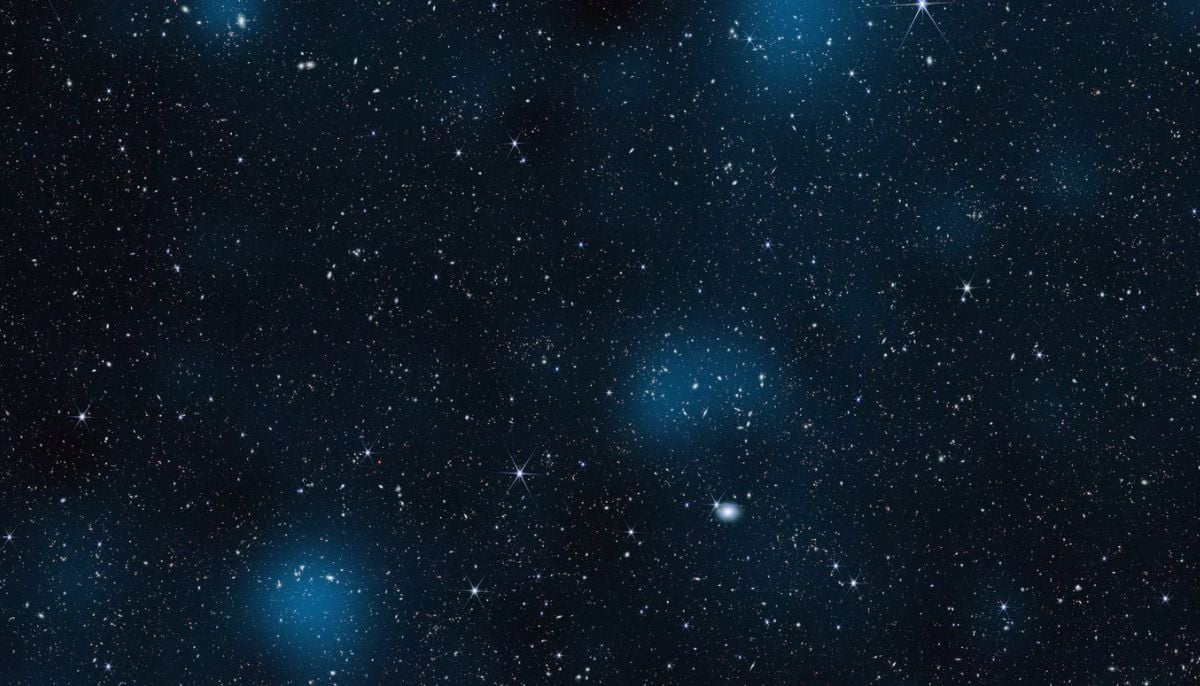
In a recent breakthrough, NASA has unveiled the most detailed map of dark matter, providing unprecedented insight into the ‘ghostly architecture’ of the universe.
The scientists used the James Webb Space Telescope to create the map, which suggests that dark matter acts as a hidden framework on which the galaxies are built.
The extensive map published in Nature Astronomy also provides insight into how this elusive substance shaped the cosmos at an unprecedented level, creating stars, galaxies and several planets, including Earth.
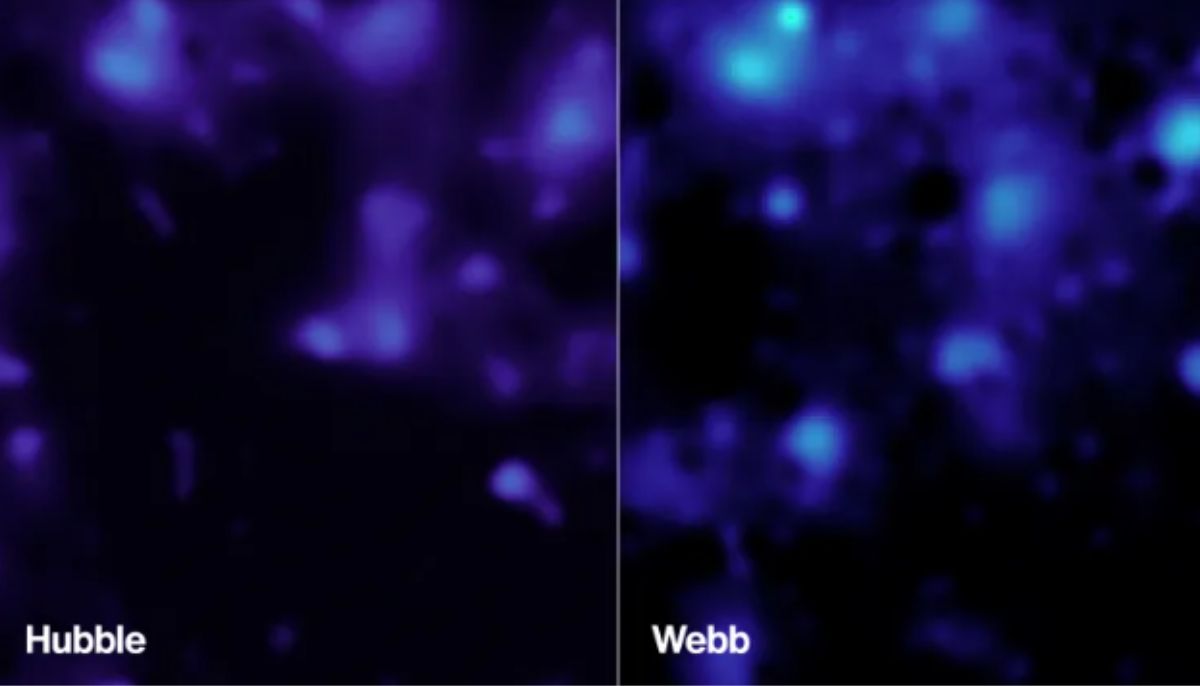
“This is the largest dark matter map we have made with Webb, and it is twice as sharp as any dark matter map made by other observatories,” said Diana Scognamiglio, lead author of the paper and an astrophysicist at NASA’s Jet Propulsion Laboratory in Southern California.
Invisible scaffolding
Dark matter does not interact with, reflect or absorb light, making it a ‘ghost’ that passes through ordinary matter. The map also confirms that dark matter and normal matter grew up together.
According to Richard Massey, an astrophysicist at the University of Durham: “Where we see a large cluster of thousands of galaxies, we also see an equally large amount of dark matter in the same place.”
Meaning of dark matter
According to researchers’ observations, the detailed appearance of dark matter could unravel the mysteries of the cosmos, including the formation of the Milky Way.
Furthermore, dark matter also helps determine the large-scale distribution of galaxies in the universe. Its influence also created the suitable conditions for planet formation.
“This map provides stronger evidence that without dark matter we might not have the elements in our Galaxy that allowed life to emerge. Dark matter is not something we encounter in our daily lives on Earth, or even in our solar system,