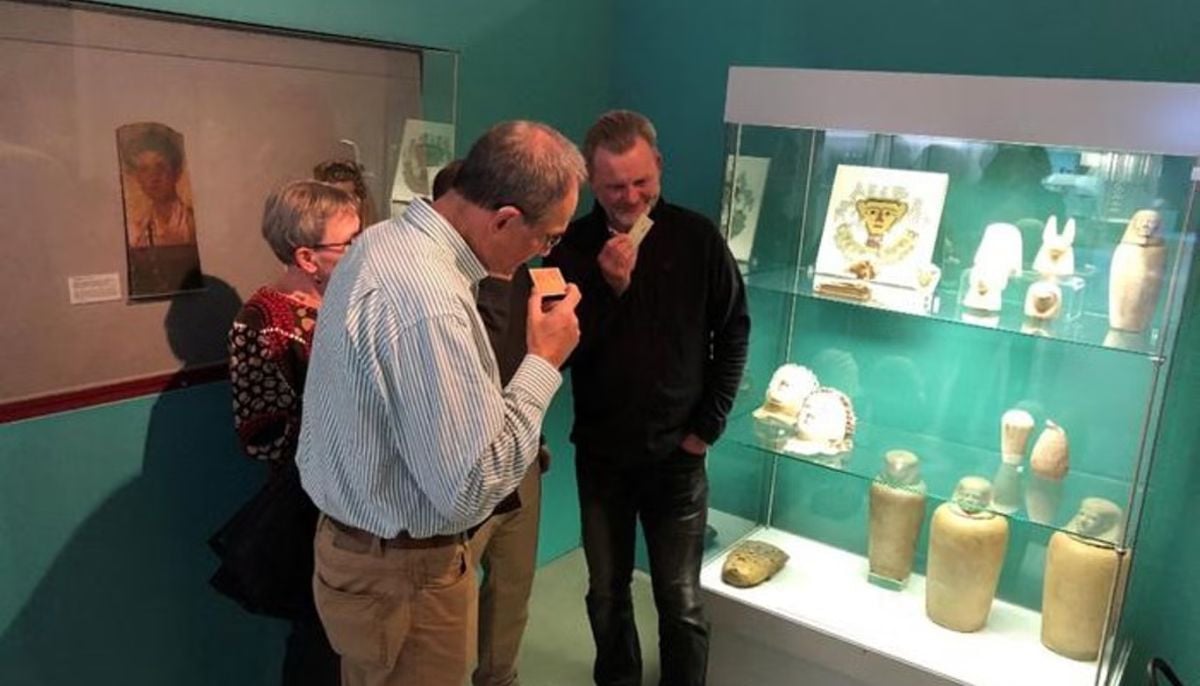
What did ancient Egypt really smell like? Not just what it looked or sounded like, but also what it felt like to be at a royal funeral. Archaeologists and scientists have brought that experience one step closer to reality by recreating scents worn by ancient Egyptians more than 3,500 years ago.
Researchers have developed techniques to recreate the smells of Egyptian mummification, which may soon be on display for museum visitors. The research builds on archaeological methods that allow scientists to examine ancient DNA and protein samples and molecular traces to discover information about historical dietary practices, diseases and ceremonial activities.
An important breakthrough concerns volatile organic compounds, or VOCs. These molecules have the ability to keep ancient odor evidence intact over thousands of years. The analysis of VOCs present in funerary articles allows scientists to reconstruct odors that have been associated with perfume as well as medicine and religious use.
The scientists at the Max Planck Institute in Germany believe that recreating ancient smells allows them to study the daily activities and ceremonial practices of past societies. Archaeochemist Barbara Huber from the University of Tübingen said chemical data alone is not enough. A perfumer must translate it into a complete fragrance that reflects the complexity of the original material.
The research, published in Frontiers in Environmental Archaeology, introduces new museum instruments such as scent maps and fixed scent stations. These are already used alongside Egyptian mummy displays.
At the Museum August Kestner in Hannover you can smell ancient perfumes made from the canopic jars of Lady Senetnay, who lived around 1450 BC. The perfumes are made from approximately 20 different ingredients, chosen in consultation between perfumers and archaeologists.
Museum curators say scent is changing the way people view mummification. It shifts the focus from fear to understanding old beliefs and intentions. Similar scent stations can now be seen at the Moesgaard Museum in Denmark.