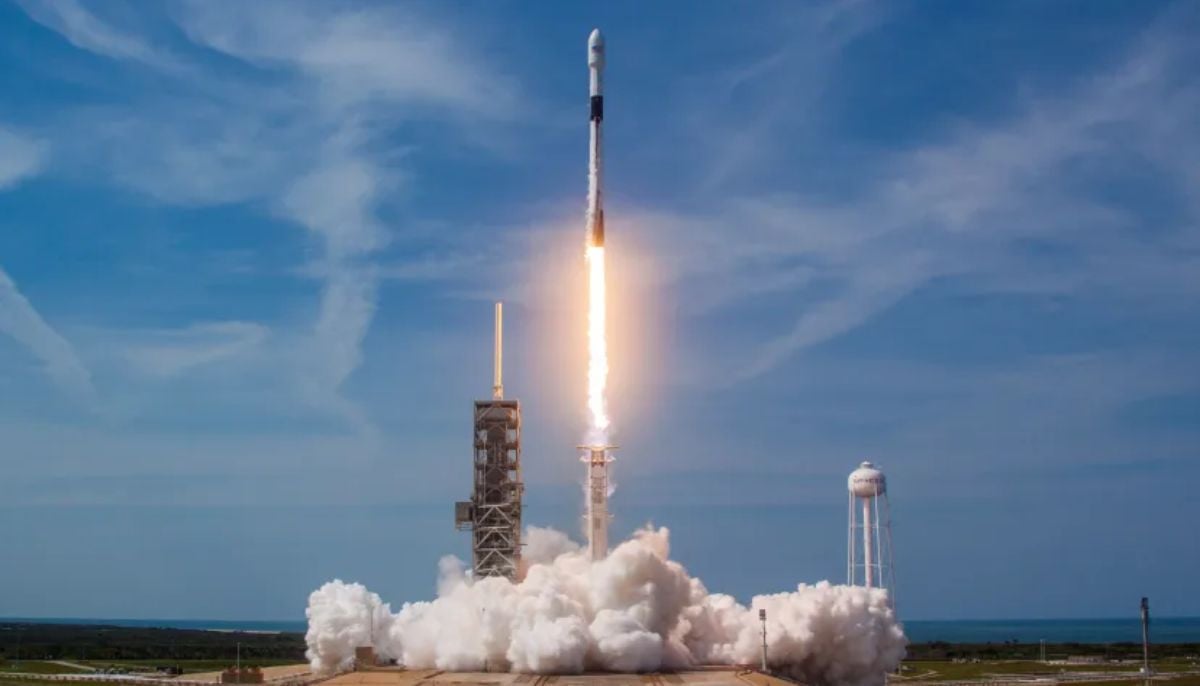
NASA and SpaceX are gearing up for the Crew-12 astronaut mission after the Federal Aviation Administration (FAA) cleared the Falcon 9 rocket to fly next week. The launch is now scheduled for 6:01 a.m. EST (1101 GMT) on Wednesday, February 11, from the Cape Canaveral Space Force Station in Florida.
The FAA’s approval comes after a four-day grounding caused by a problem with the rocket’s upper stage during a Starlink satellite launch on Feb. 2. While the 25 satellites reached low Earth orbit as planned, the upper stage failed to perform a deorbit burn, causing the rocket body to fall back to Earth uncontrollably.
This was the fourth Falcon 9 upper stage incident in 19 months, although previous investigations had delayed launches by up to two weeks.
In a Friday update, the FAA confirmed that it accepted SpaceX’s findings. “The latest accident report lists the probable cause as failure of the Falcon 9 stage 2 engine to ignite prior to deorbit combustion,” the agency said.
SpaceX has also taken technical and organizational measures to prevent a recurrence. With the assessment completed, Falcon 9 may now return to flight.
The Crew-12 mission will carry four astronauts, NASA’s Jessica Meir and Jack Hathaway, Russian cosmonaut Andrey Fedyaev and European Space Agency astronaut Sophie Adenot, to the International Space Station (ISS) for approximately nine months.
The quartet will launch aboard the Crew Dragon capsule Freedom and will restore the ISS to its standard crew of seven. The station has operated with just three astronauts, one American and two Russians, since January 15, following the early departure of the Crew-11 team.
Crew-11’s early return marked the first-ever medical evacuation from the ISS. NASA has not released the astronaut’s identity or medical information due to privacy concerns. If Crew-12 launches as planned, the arrival of the astronauts will resume full occupancy and support ongoing research and maintenance aboard the orbiting laboratory.