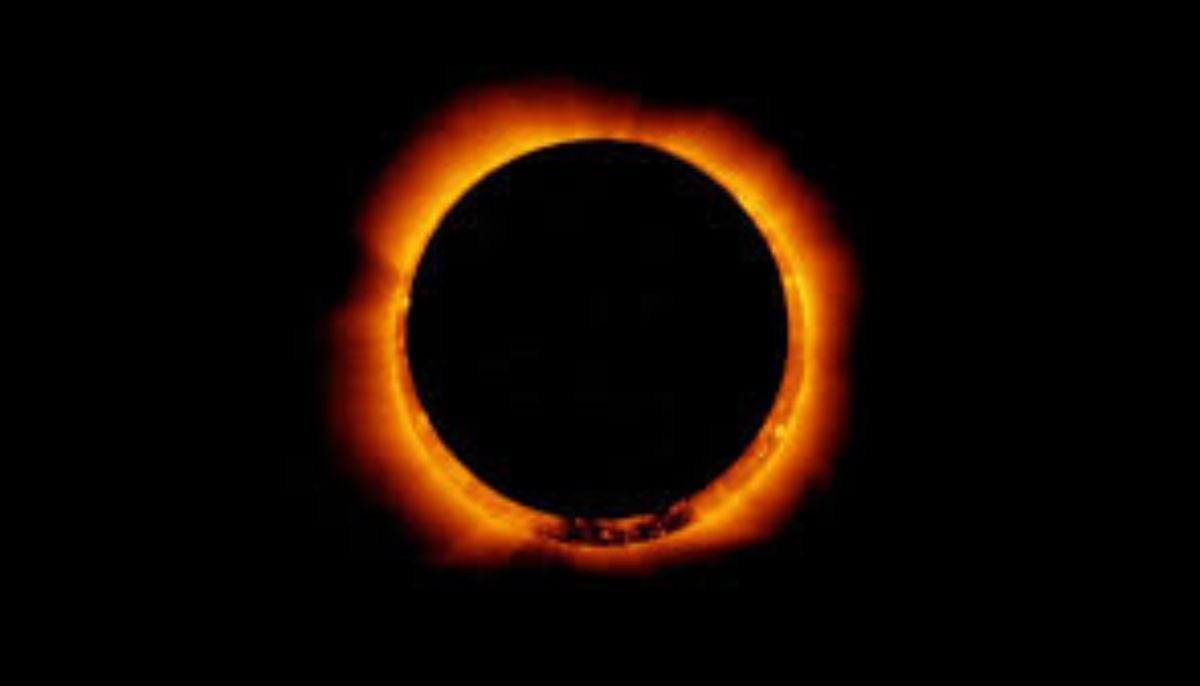
The first solar eclipse of 2026 arrives on February 17 as a rare annular solar eclipse, also known as a ‘ring of fire’ eclipse. The event will occur when the moon passes in front of the sun but does not completely cover it, leaving a bright ring visible.
According to NASA, Space Science Division, eclipse experts say the path of the annularity will extend 2,661 miles long and 383 miles wide, mainly over western Antarctica and along the Davis Sea coast of the Southern Ocean. The eclipse will rise over mainland Antarctica and reach the coast of the Davis Sea, making it one of the most remote major sky events of the year.
Where will the ‘Ring of Fire’ be visible?
The dramatic annular solar eclipse will only be fully visible in parts of West Antarctica. This means that more penguins than humans are likely to witness the full ring effect. The path cuts through icy landscapes and touches barely accessible areas, limiting viewing options for the public.
However, the partial solar eclipse phase will reach a much wider audience. In parts of southeastern Africa, the southern tip of South America and regions across the Pacific, Indian, Atlantic and Southern Oceans, the moon will take a visible bite out of the sun.
How can you safely view a partial solar eclipse?
Safety experts emphasize that good sunscreens are essential during every phase of the eclipse. The moon turns blood red during a total lunar eclipse, which occurs on March 3 and 4, just two weeks after the current date. The upcoming event will provide a dramatic celestial display that 31% of the world’s population will be able to see, compared to February’s annular solar eclipse, which had more limited viewing options.