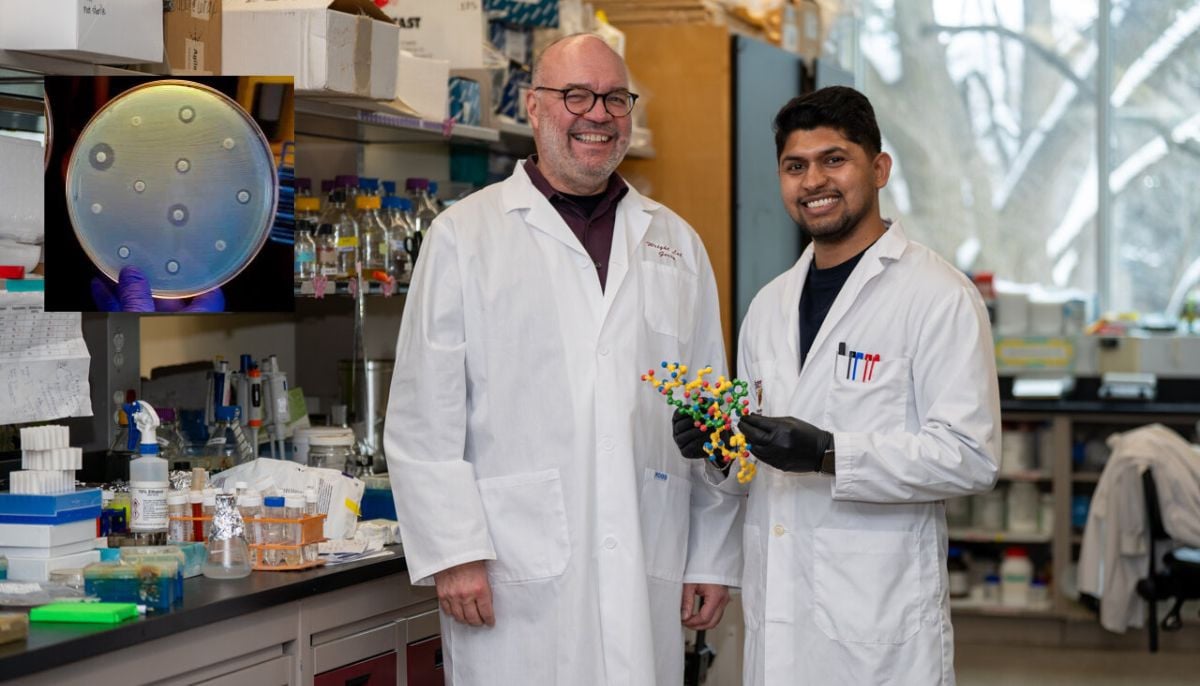
Researchers have made a major breakthrough with bacteria found in an underground cave that have retained the ability to survive antibiotic exposure for 5,000 years. The bacteria were discovered deep in the Scarisoara Cave, one of Romania’s largest ice caves, preserved under a 5,000-year-old ice sheet.
Teams conducted experiments by drilling a 25-meter ice core from the area of the cave known as the Great Hall. Researchers analyzed ice fragments from this section to isolate different bacterial strains and map their genomes, and found that these microbes have adapted to survive at extremely low temperatures.
In this regard, Christina Purcarea, author of the study and scientist at the Institute of Biology Bucharest of the Romanian Academy, said: “The bacterial strain Psychrobacter SC65A.3 isolated from the Scarisoara Ice Cave, despite its ancient origins, shows resistance to multiple modern antibiotics and carries more than 100 resistance-related genes.”
In line with previous studies, researchers have analyzed other strains of Psychrobacter bacteria, mainly for their biotechnological potential, but the antibiotic resistance profiles of these bacteria are largely unknown.”
The results published in Frontiers in microbiology, show that 20 percent of the Earth’s surface consists of frozen habitats with low temperatures that characterize much of the biosphere. These findings are crucial for better understanding cold-adapted microbes as climate change continues to impact these environments.
Several factors have contributed to the rise of antimicrobial resistance (AMR) in the region. Europe faces an aging population that is increasingly susceptible to infections.
In addition, drug-resistant pathogens are spreading across borders, doctors and the overuse of antibiotics, coupled with shortcomings in infection prevention and control, have exacerbated the crisis. Antimicrobial resistance (AMR) causes millions of deaths every year. In Europe alone, it is estimated that more than 354,000 deaths could occur annually, a figure that is expected to rise in the coming years.