A new scientific discovery in China has left everyone stunned.
Scientists have discovered a well-preserved 125-million-year-old dinosaur fossil with unusual features in China.
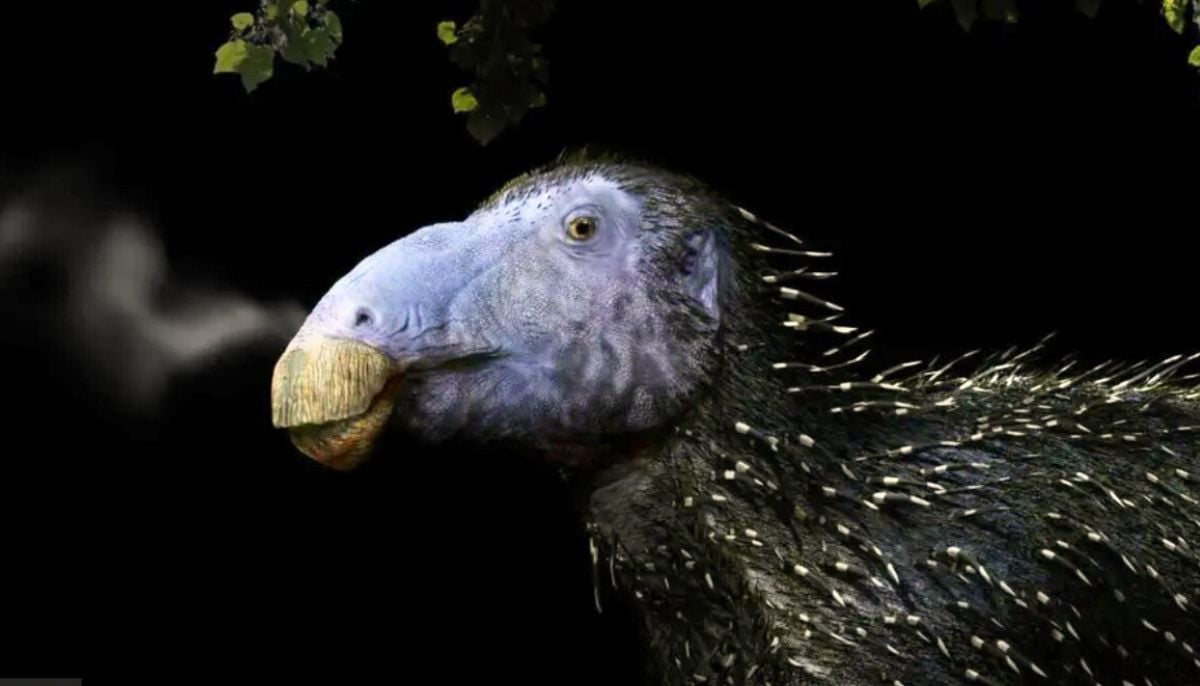
The newly discovered dinosaur, nicknamed the “spiky dragon”, had both longer and shorter spikes across its body – a bit like a porcupine.
Scientists in China have discovered an exceptionally preserved juvenile iguanodontian with fossilized skin so detailed that individual cells are still visible.
Experts say it is in such good condition that it allowed them to see what the dinosaurs’ skin really looked like.
The newly identified species is called Haolong dongi and belongs to the iguanodont family.
The most amazing fact is that the herbivorous dinosaur was covered in hollow, porcupine-like spines, a feature or structures never before seen on a dinosaur.
According to scientists, these dinosaurs were first identified in the early 19th century and are known for their beaked mouths and strong hind legs.
What makes this specimen extraordinary is not only the skeleton, but also the preserved skin.
They found that individual skin cells had been preserved for about 125 million years.
Soft tissues rarely survive for millions of years, but in this case even microscopic details are preserved.
This level of detail allowed scientists to reconstruct the structure of unusual hollow points embedded in the skin.
These spines, described as cutaneous because they originate in the skin, covered much of the dinosaur’s body.
Unlike horns or bony plates, they were not fixed extensions of bone. Instead, they were hollow structures, a feature never before seen in dinosaurs.
The newly identified species has been named Haolong dongi in honor of Dong Zhiming, a pioneering Chinese paleontologist who made significant contributions to dinosaur research in China.
Haolong dongi was a herbivore, meaning it fed on plants instead of other animals.
During the early Cretaceous period, when he lived, small carnivorous dinosaurs hunted in the same ecosystems. The hollow quills may have served as a defensive adaptation, functioning in a manner similar to a porcupine’s quills by discouraging predators from attacking.
However, defense may not have been their only goal. Researchers suggest that the spikes could also have helped regulate body temperature, a process known as thermoregulation. Structures that increase surface area can help release or retain heat. Another possibility is that the points played a sensory role, allowing the dinosaur to detect movement or changes in the environment around them.
A first discovery of its kind
Until this fossil came to light, there was no evidence that dinosaurs had these types of hollow-skin base spines.
Because the specimen is a juvenile, scientists cannot yet confirm whether adult individuals of the species retained the same structures as they became adults.
The latest findings, published in Nature Ecology & Evolution on February 6, 2026, introduce an entirely new feature to the known diversity of dinosaur anatomy.
This discovery not only adds a new species to the Iguanodontia group, but also reveals that dinosaur skin and body coverings were more varied and innovative than previously thought.