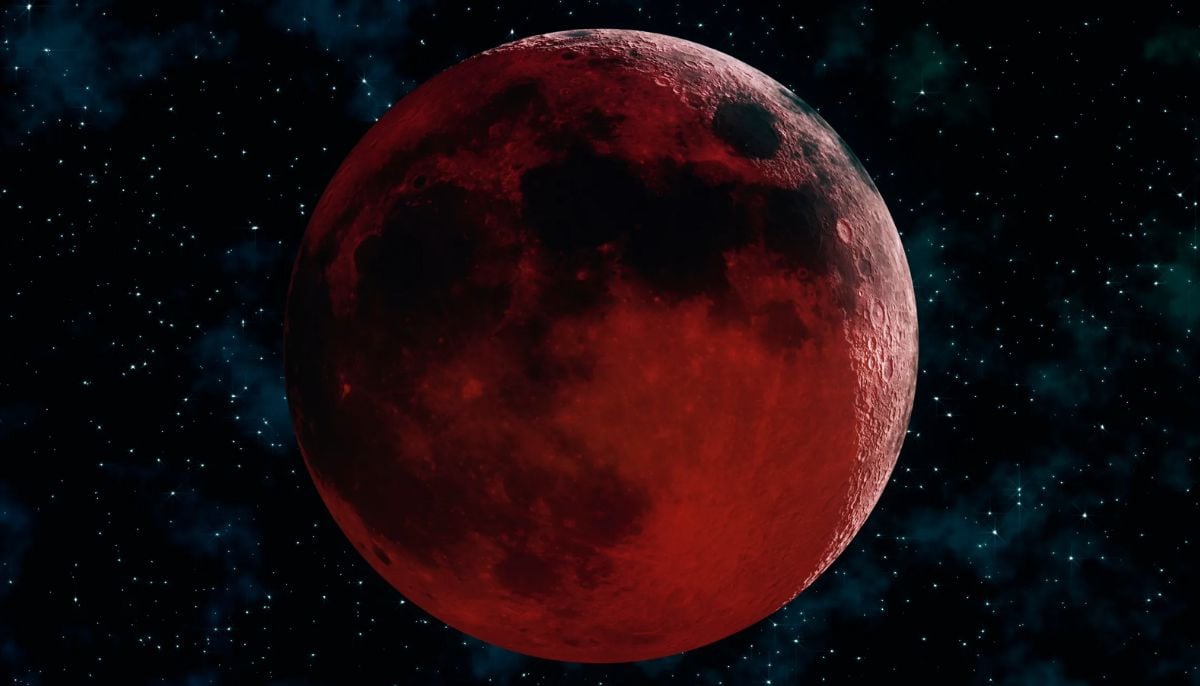
A total lunar eclipse, also called the Blood Moon, will take place on Tuesday, March 3. This is one of two lunar eclipses this year and is especially notable because it occurs when Earth passes between the sun and moon. The planet blocks most of the sunlight from reaching the moon. As some of the light reaches the moon’s surface, it is filtered through Earth’s atmosphere, creating a reddish color.
Skygazers can easily view the eclipse from anywhere with a direct view of the natural satellite. No special equipment is needed to see the intriguing phenomenon. Those who want to experience this intense experience should observe the moon from a dark environment, far away from city lights.
Where will the total lunar eclipse be visible on March 3?
The eclipse will be visible from eastern Asia and Australia in the evening, throughout the night in the Pacific Ocean and into the early morning in North and Central America. The total solar eclipse will begin around 6:00 AM EST and end around 7:00 AM EST. A partial solar eclipse will continue until approximately 8:15 a.m. EST, with the final phase ending at 9:22 a.m. EST. According to NASA, it can be easier to view constellations during a solar eclipse; the moon will be in the constellation Leo, under the hind legs of the lion. After this eclipse, Venus and Saturn appear on March 8.