Gordon Ramsay is one of the most popular chefs in the world.
In addition to his cooking, he is also an advocate for vocal health, especially after dealing with basal cell carcinoma, a non-serious form of skin cancer.
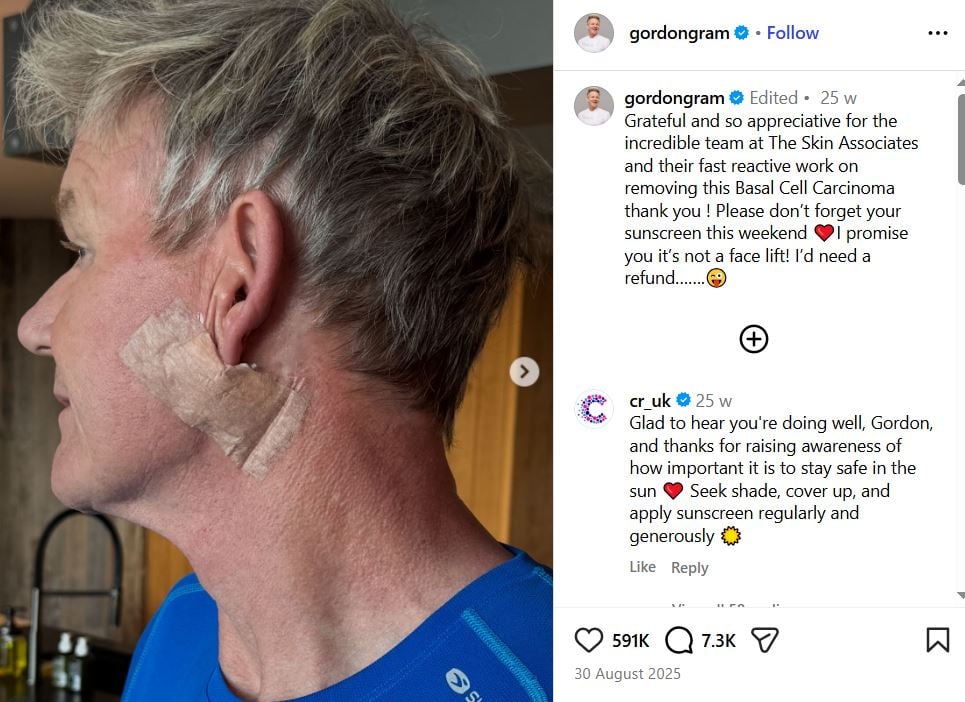
He shared images of the surgical incision under his ear on social media, highlighting the importance of early detection and sun protection, drawing attention to a condition that often goes unnoticed until it becomes more serious.
Diagnosis and public disclosure
In 2025, Ramsay shared photos on Instagram showing a surgical incision under his ear after undergoing treatment for a skin cancer lesion, widely believed to be basal cell carcinoma.
Accompanying the images, he urged people to seek medical advice if they have any suspicious symptoms, stressing that early action can prevent complications.
Additionally, Gordon said in his post, “Please don’t forget your sunscreen this weekend,” emphasizing the importance of protecting your skin from the sun’s rays.
Understanding Basal Cell Carcinoma
Basal cell carcinoma is the most common form of skin cancer and is caused by long-term exposure to ultraviolet (UV) radiation. It usually appears as a pearly bump, a scaly spot, or an ulcer that does not heal.
Although it generally grows slowly and rarely spreads to other parts of the body, it can cause significant local damage if left untreated.
Risk factors include fair skin, frequent sun exposure, a history of sunburn and increasing age.
Symptoms and warning signs
Common symptoms of basal cell carcinoma include:
- A shiny or translucent bump on sun-exposed areas
- A flat, scaly spot with irregular edges
- An ulcer that bleeds, scabs or does not heal
- A lesion that gradually enlarges over time
Any persistent or changing skin lesion should be assessed by a healthcare professional.
Treatment and prevention
Treatment for basal cell carcinoma usually involves surgical removal of the affected tissue. In most cases, this is curative if caught early. Other options may include local therapies, cryotherapy, or radiation in specific situations.
Preventive measures include using sunscreen, wearing protective clothing, avoiding peak sun exposure and performing regular skin self-examinations. Dermatology screenings are especially important for people at higher risk.