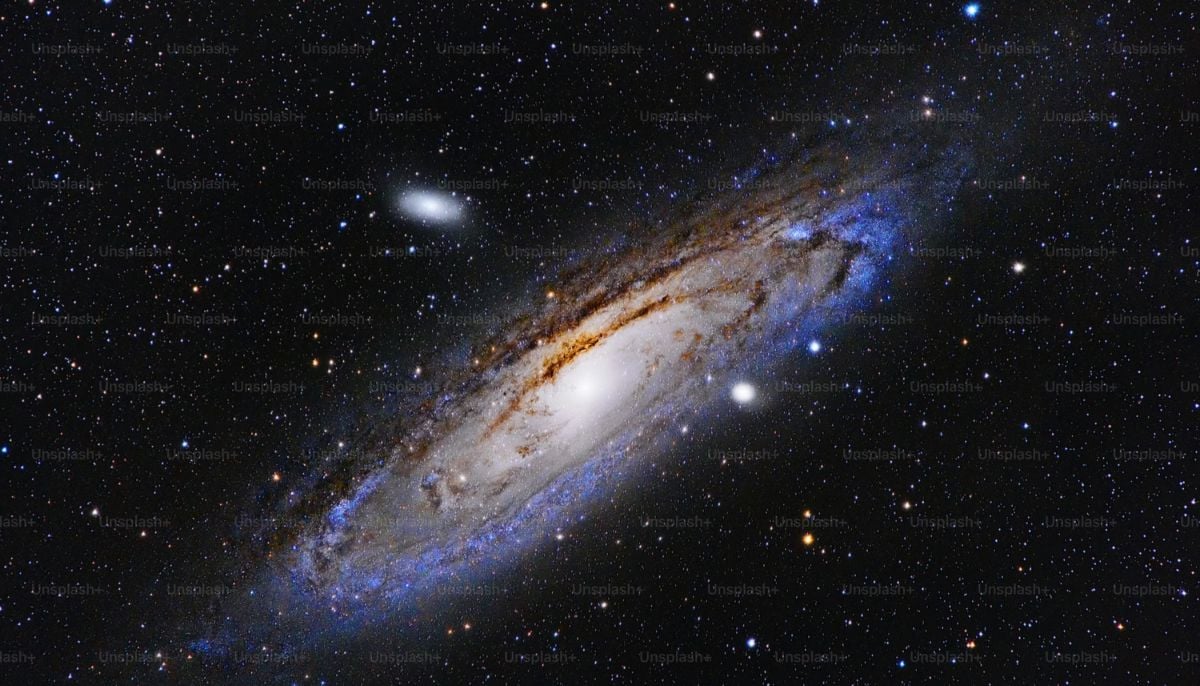
Astronomers have released the largest three-dimensional map ever of hydrogen emissions in the early universe. This map shows structures dating from 9 to 11 billion years ago.
This new 3D hydrogen map provides unprecedented information about how galaxies developed, grew and evolved during the universe’s peak period of star formation, the so-called cosmic noon.
According to Caryl Gronwall, principal investigator of the Hobby-Eberly Telescope Dark Energy Experiment, the team used a method called line intensity mapping to create the map.
This method differs from traditional surveys that create a list of individual galaxies. Instead, the team used more than 600 million spectra to create a “heat map” of hydrogen emissions.
By detecting faint Lyman-alpha light over large parts of the sky, scientists can now see cosmic structures that were previously unknown.
“Instead of just focusing on the bright galaxies, we can now see the sea of hydrogen that connects them,” says Gronwall.
This method allows scientists to investigate the build-up of gas, star formation and mergers of galaxies.
This map not only shows us hydrogen, but can also be used as a method to understand how galaxies have evolved over billions of years.
Intensity mapping is said to revolutionize our understanding of the universe as a whole, by letting us see entire structures instead of just the brightest areas.