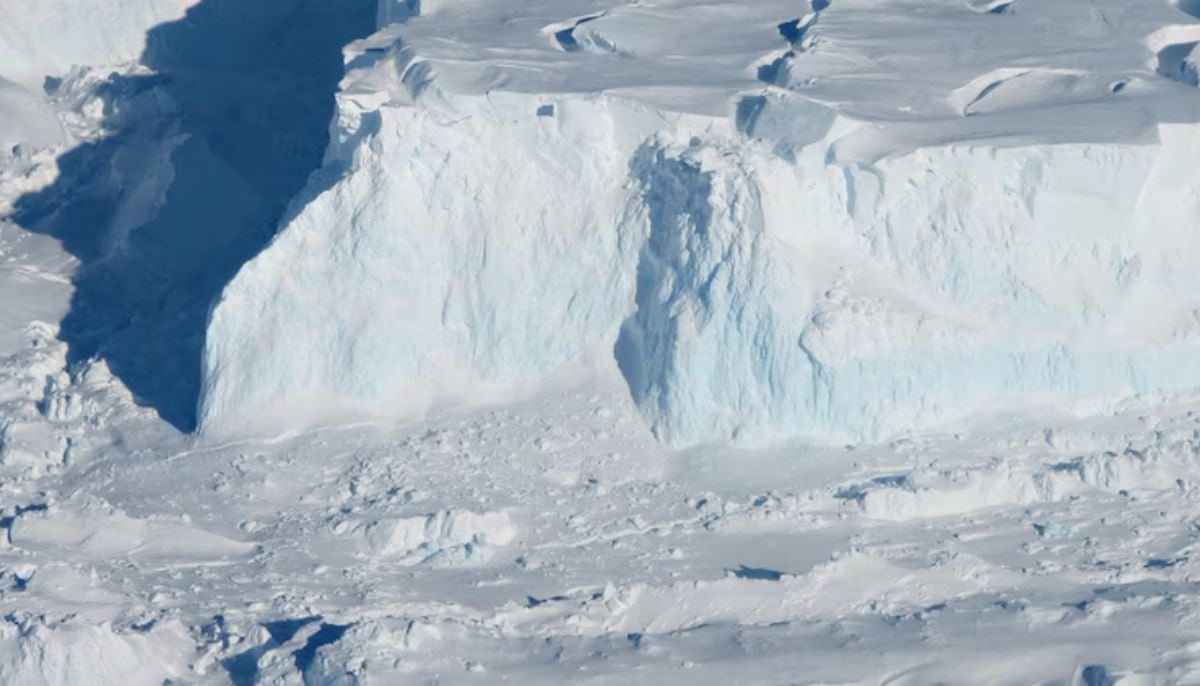
Antarctica is once again experiencing the harsh reality of climate change.
The scientists from the University of California studied satellite photos taken over the past thirty years. They discovered that Antarctica has lost an enormous amount of ice in three decades, so much that if you spread out all that melted ice, it would cover the entire city of Los Angeles.
According to findings published in the Proceeding of the National Academy of Sciences, the regions exposed to rapid ice melt include West Antarctica, the Antarctic Peninsula and parts of East Antarctica. Nearly 8,000 square kilometers of ground ice have melted in these regions since 1996.
The research also includes extensive mapping of the grounding line, the specific spot where ice no longer remains attached to solid rock and begins to float on the ocean. This line is the ‘gold standard’ for measuring how stable an ice sheet really is.
According to researchers, the good news is that for about 77 percent of Antarctica’s coast, the grounding line has not moved at all. But in vulnerable areas the ice is retreating quickly, causing the loss of about 380 square kilometers of grounded ice every year.
“Where warm ocean water is pushed by the wind to reach glaciers, that’s where we see the big wounds in Antarctica,” said Eric Rignot, professor of Earth system sciences at UC Irvine and lead author of the paper.
Why does this happen?
In West Antarctica, strong winds push warm ocean water under the ice, causing it to melt from below. The researchers call it ‘great wounds’ of the continent.
Here’s the biggest mystery: on the Antarctic Peninsula, the ice is also retreating, but scientists have no idea what the reason is, since there is no warm water there.
“There’s something else going on – it’s still a question mark,” Rignot said.
High sea level
Antarctica has always been the center of attention for many scientists because of its enormous contribution to severe sea level rise. The Thwaites Glacier, also known as the ‘Doomsday Glacier’, already contributes to 4% of total sea level rise.
According to researchers’ observations, if the West Antarctic ice sheet were to completely collapse, sea levels would rise by as much as 3 meters.