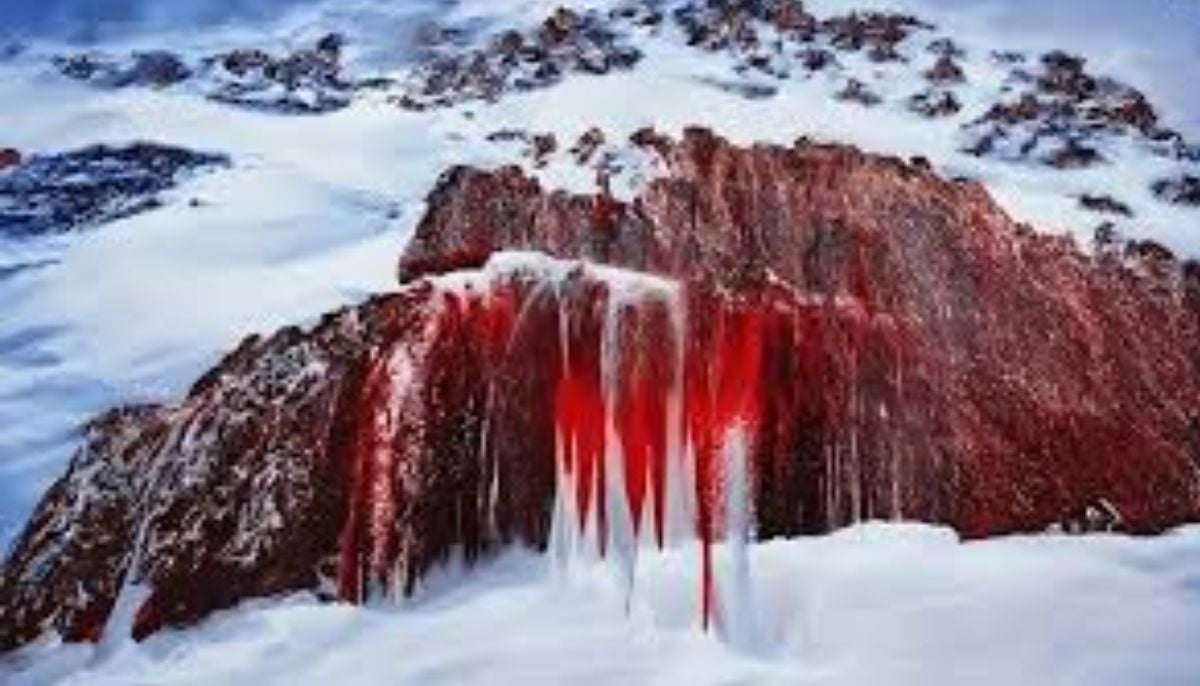
A bright red waterfall bursting from beneath East Antarctica’s Taylor Glacier lies right in the middle of one of the coldest regions on Earth. Blood drops are among the most mysterious natural phenomena in Antarctica. The study was conducted by National Geographic explorer Erin C. Pitt and her team, who investigated the process by which Blood Falls formed.
However, this site remained a geological mystery for over a century until it was finally cracked. Located in the Antarctic Dry Valleys, it is one of the driest and coldest landscapes on Earth. When the iron brine reaches the surface and comes into contact with oxygen, the iron oxidizes. The water turns a rusty red, giving Blood Falls its signature blood-like appearance.
The measurements showed that the closer the water comes to the waterfall, the higher the concentration of iron-rich brine becomes. This highlights the intriguing relationship between water temperature and salinity. The Taylor Glacier is considered the coldest known glacier on Earth with water permanently flowing: a dynamic combination of ice, salt, iron and heat hidden beneath a seemingly lifeless ice desert.
The mesmerizing view hidden in a bloody rift in the ice shows how complex and dynamic nature can be, even in the most extreme areas of our planet.