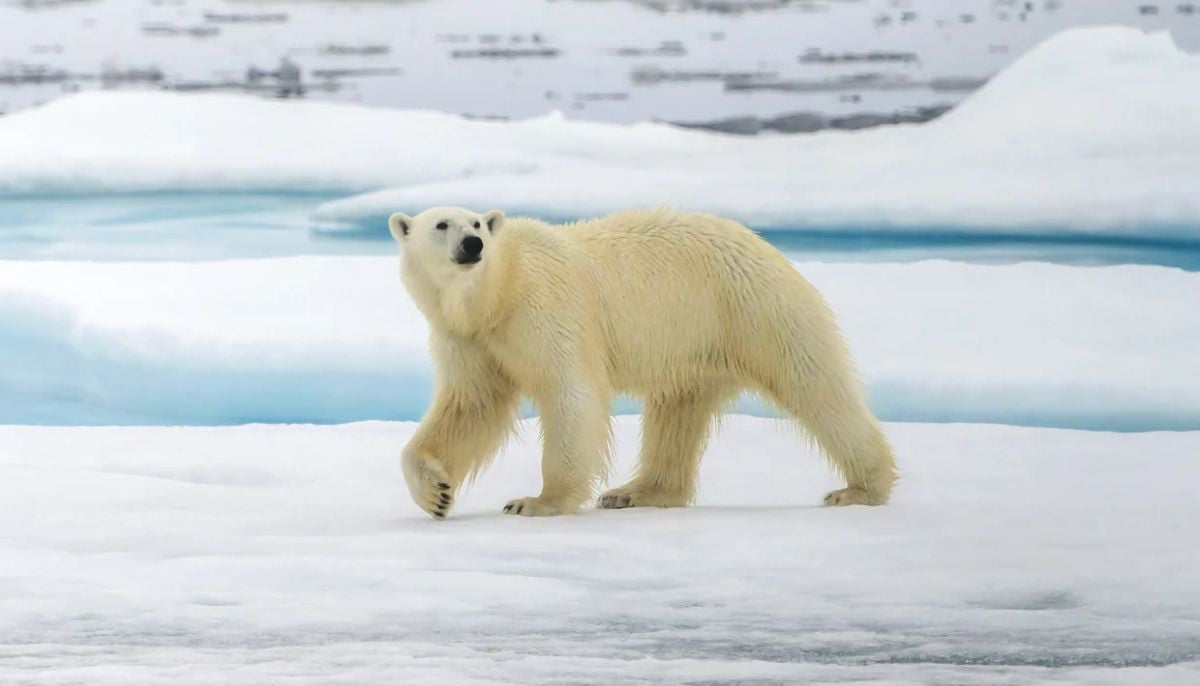
Scientists have discovered a paradigm shift in the genetics of polar bears in a recent breakthrough, allowing them to adapt to the disastrous reality of climate change.
Due to human-induced global warming, two-thirds of polar bears are on the brink of ‘total extinction’ by 2050 as their icy Arctic habitat rapidly collapses.
The U.S. government began granting polar bears protective status under the Endangered Species Act in 2008.
The researchers from the University of East Anglia have observed some changes in the DNA of polar bears, which allowed the animals to survive in a warmer climate. For the first time ever, the study proves an important link between rising temperatures and genetic variations in wild mammal species.
Due to climate change, some genes related to heat stress, metabolism and aging behave distinctively in polar bears in southeastern Greenland.
One such surprising genetic shift, published in the journal Mobile DNA, offers some hope for conservation efforts for polar bears, which face a huge threat of extinction by the end of this century.
“DNA is the instruction book in every cell, telling how an organism grows and develops. By comparing the active genes of these bears with local climate data, we found that rising temperatures appear to cause a dramatic increase in the activity of jumping genes in the DNA of the southeast Greenland bears,” said Dr. Godden.
The study reported the effective role of ‘jumping genes’ in rewriting the genetic code. These genes make up a small part of the genome and influence the way other genes work.
Godden said: “This finding is important because it shows for the first time that a unique group of polar bears in the warmest part of Greenland are using ‘jumping genes’ to quickly rewrite their own DNA, which could be a desperate survival mechanism against melting sea ice.”
However, despite genetic adaptation in bears, the world must make concerted efforts to limit global warming and the burning of fossil fuels.
“This research offers some hope, but does not mean that polar bears are at less risk of extinction. We still need to do everything we can to reduce global CO2 emissions and slow temperature increases,” the lead author added.