NASA’s highly anticipated Artemis II mission is scheduled for Wednesday, April 1, 2026, marking humanity’s first trip to the moon after more than 50 years of waiting.
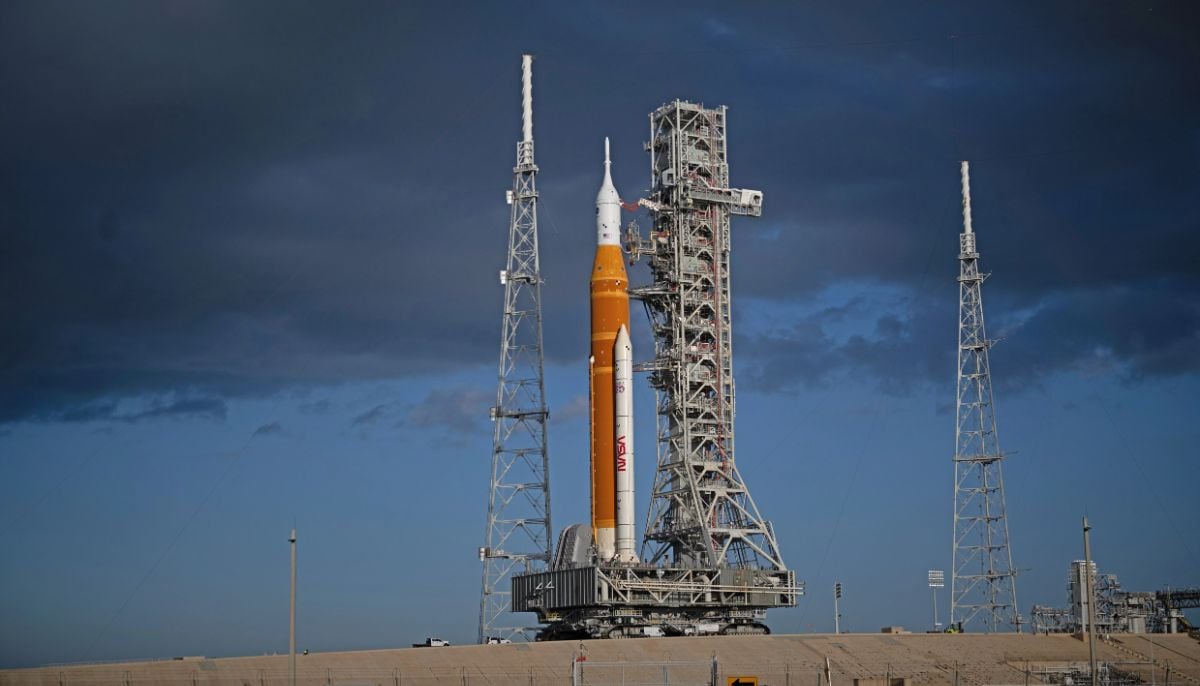
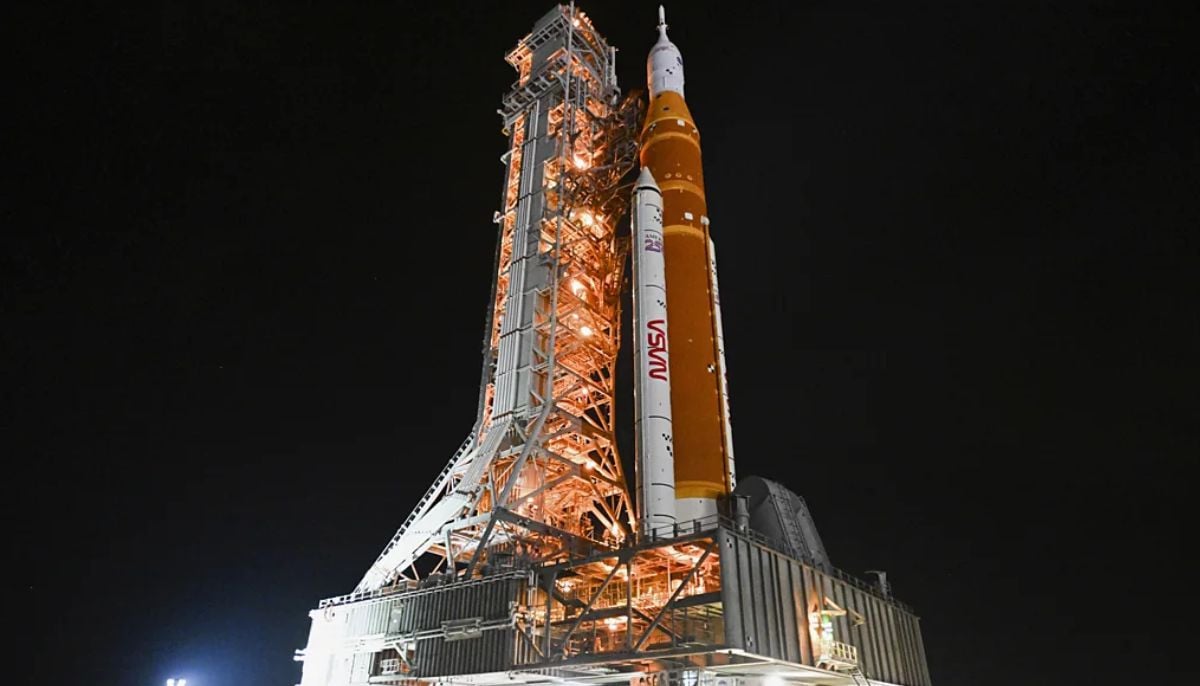
Currently, the SLS rocket and Orion spacecraft are located on Pad 39B at the Kennedy Space Center. The NASA crew, including Victor Glover, Reid Wiseman, Christina Koch and Jeremy Hanse, are in the final quarantine before their 10-day mission.
This mission is not just a trip to the moon’s surface; the Artemis program represents years of work, effort and finances worth $93 billion to date.
According to Artemis II chief flight director Jeff Radigan, the astronauts will go at least 5,000 nautical miles beyond the moon, which is much higher than what has gone on previous missions.
The flight profile (10 day trip)
Artemis II follows a ‘Free-Return Trajectory’, meaning the moon’s gravity will naturally pull the spacecraft back to Earth without the need for a massive engine burn to return.
Artemis II is expected to lift off from NASA’s Kennedy Space Center in Florida aboard the Space Launch System, the agency’s most powerful rocket.
_updates.jpg)
Shortly after launch, the Orion crew capsule will detach from the rocket’s upper stage and enter a highly elliptical orbit around Earth.
Earth’s orbit
The first 24 to 48 hours will be spent in high Earth orbit conducting extensive systems checks before moving into space to the moon
Translunar injection
A large engine burn, known as a translunar injection, pushes Orion out of Earth’s grasp and toward the moon.
Deep space monitoring
Over the next three to four days, astronauts will continue to evaluate spacecraft systems en route to Father from Earth, pushing the human presence deeper into space than ever before
Moon flight
Ultimately, Orion will pass around the moon’s surface on a free reentry trajectory, reaching a distance of over 400,000 kilometers from Earth, the furthest distance from Earth ever during this phase.
Return to Earth
After completing a lunar flight, the crew will conduct further tests in space before returning to Earth.
crash
As Orion approaches Earth, it will lose its major components before entering the atmosphere at about 25,000 miles per hour. Also on the line is a descent into the Pacific Ocean, where recovery teams will wait.
Potential Key Risks
According to Fiona Antkowiak, one of nine flight controllers assigned to Artemis II, as Orion enters the atmosphere it would experience enormous temperatures of more than 2,000 degrees Celsius, which could be the most dangerous few minutes of the mission.
Furthermore, the risks of returning to Earth cannot be ignored. In January 2023, Space Shuttle Columbia disintegrated during reentry, killing the seven astronauts on board.
Artemis II: a stepping stone to a better understanding of lunar science
In the space race, the dry, dusty and arid moon has emerged as a valuable frontier due to the presence of valuable elements such as rare earth elements. Given the scarcity of rare earth elements on the Earth’s surface, the opportunity to explore the lunar surface will give countries access to these metals in high concentrations.
The presence of metals such as iron and titanium used in everything from superconductors to medical devices will intensify competition.
“There is water trapped in some of its minerals, and there is also significant amounts of water at the poles,” says Sara Russell, a planetary scientist at the Natural History Museum.
If we can find the water on the moon, it means that humans can expand their presence beyond Earth, because water will be used not only for drinking, but also to provide oxygen.
Artemis II will also contribute to lunar science, allowing astronauts to study the moon’s south polar regions and the Orientale Basin.
By closely observing the glow of the moon’s horizon, a faint glow caused by dust particles, the scientists were able to delve into the behavior of dust on the moon.
Testbed for future Mars missions
According to NASA, the purpose of the mission is to “explore the moon for scientific discovery and economic benefit, and to lay the foundation for the first human missions to Mars.”
According to Libby Jackson, head of space exploration at the Science Museum, “Going to the moon and staying there for an extended period of time is much safer, much cheaper and much easier to be a testing ground for learning how to live and work on another planet.”
Establishing a lunar base will allow NASA to fine-tune life support systems, such as air and water recycling, in a controlled environment.
Before venturing to Mars, engineers must test all these critical systems on the moon, as a failure of these systems on Mars could be fatal. On the other hand, the moon provides a much safer testing ground for problem solving.
Other mysteries to be unraveled
For scientists, the prospect of assessing fresh lunar material is the ultimate prize. According to Russell, the moon serves as a “fantastic archive” of our own planet.
Because Earth has always been under geological turbulence characterized by the movement of the tectonic plates, wind and rain, the geologically calm and stable lunar surface offers insight into the lost chapters of Earth’s earliest history.
The beginning of a new space race?
Artemis II is expected to lead to a new kind of space race. China is the main ‘pace competitor’. As Artemis II orbits Earth, China launches its Chang’e 7 mission (launching in mid-2026) to the moon’s south pole. They aim for a human landing by 2030 and strive for dominance in deep space.