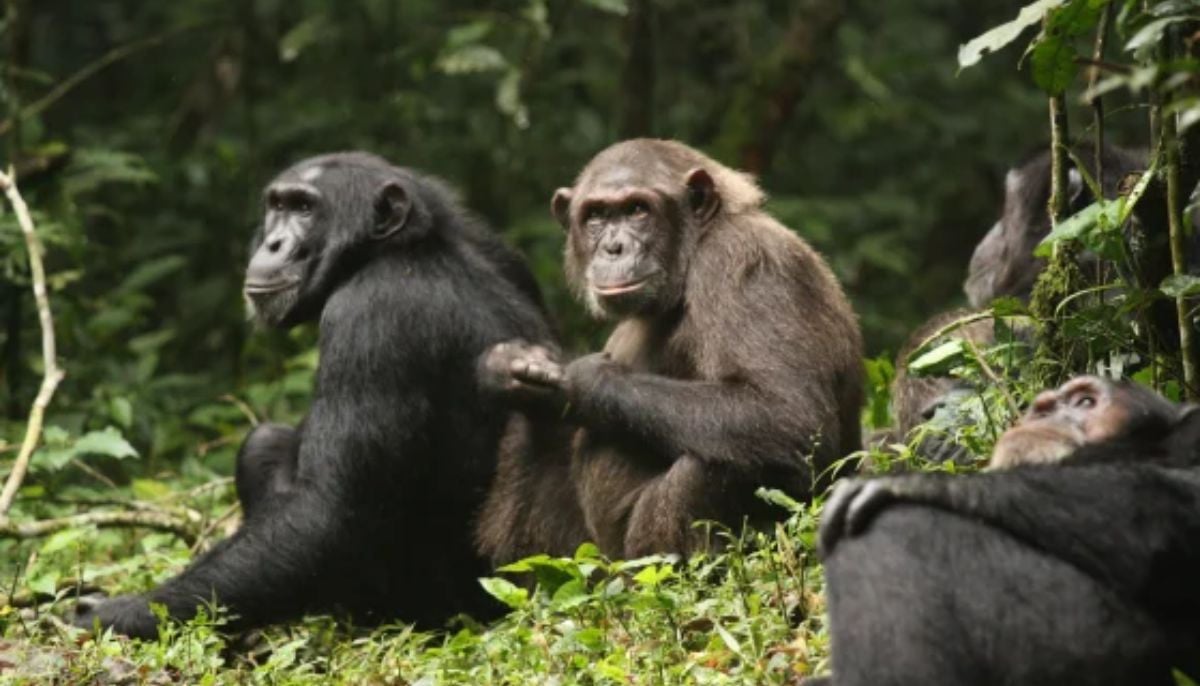
Deep within the lush canopy of Uganda’s Kibale National Park, decades of peace have been shattered, giving way to a brutal and brutal ‘civil war’ that reflects the darkest chapters of human history.
For more than two decades, the Ngogo chimpanzees, the largest community of wild chimpanzees ever recorded, thrived as a close-knit community.
Now researchers have officially documented the first clear but disturbing struggle for power and survival in this community. As a result, two warring factions, Western and Central, emerged, engaging in a brutal civil war for eight years.
What surprises the scientist is the intensity and frequency of conflicts. This is no longer a fight or a simple breakup; it has evolved into a series of coordinated and deadly attacks in which one group attacked another, resulting in the deaths of men and babies.
According to investigators, they have recorded 24 murders since 2018, including 17 babies. But they have no idea of the reason behind the ongoing chip conflict.
“Biting the victim, hitting the victim with hands, dragging, kicking – usually adult males, but sometimes also adult females, participate in the attacks,” said primatologist Aaron Sandel of the University of Texas, lead author of the study published in the journal Science.
“These were chimpanzees holding hands. Now they’re trying to kill each other,” Sandel added.
‘Yesterday’s friend became today’s enemy’
According to Sandel, everyone knows the territorial and competitive nature of chimpanzees, driven by fear of strangers.
But here the situation is even worse. The groups involved in vicious conflicts are those who grew up together, knew each other all their lives and worked together, now they are at odds with each other.
Sandel said he first noticed them polarizing in June 2015, when the Western chimpanzees ran away and were chased by the Central group.
What’s Driving the Chimpanzee Civil War?
According to researchers, many factors, such as group size and competition for resources, may be responsible for threatening harmony among chimpanzees.
Furthermore, ‘male-male competition’ in reproducing and mating with females also destabilizes society.
Primatologist and lead author of the study John Mitani, professor emeritus at the University of Michigan, said: “Perhaps they became victims of their own success as the group grew to an unbearably large size.”
Here are the other major catalysts documented by researchers:
Social destabilization (2014): The unexplained deaths of six adults weakened the social ‘glue’ and communication networks between subgroups.
Leadership turnover (2015): A shift in the position of alpha males caused a period of increased aggression and avoidance, leading to the initial physical separation of the Western and Central groups.
Demographic collapse (2017): A massive respiratory epidemic killed 25 chimpanzees. Crucially, this eliminated the last ‘bridge’ individuals, namely men who maintained the social ties between the disintegrating factions.
Us versus them mentality and human nature
According to researchers, the ongoing conflict sheds light on how early human conflicts evolved over time.
It is often thought that human conflicts arise from ethnicity, religion and political differences. This study refutes this prevailing perspective by proving that relational dynamics can cause wars without cultural frameworks. The behavior of the Ngogo chimpanzees serves as a biological reminder of how easily group differences can destabilize societies.
Although our evolutionary history predisposes us to group conflict, researchers emphasize that humans are not “hard-wired” for war; our past determines our behavior, but it does not have to dictate our future.