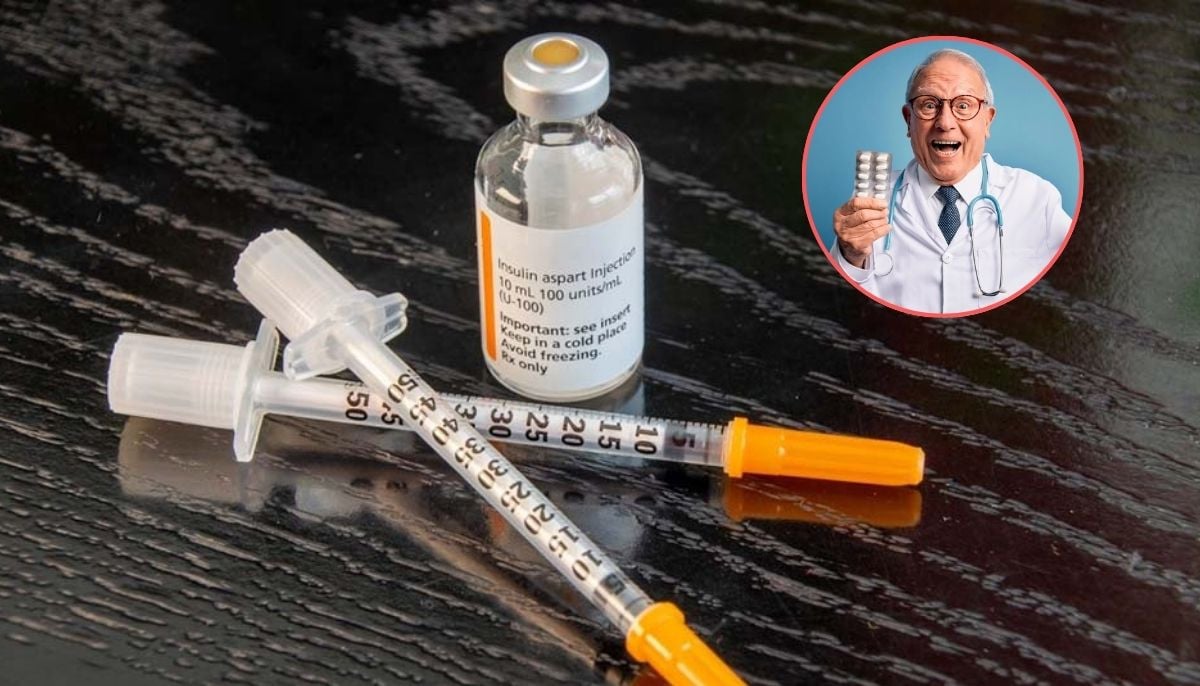
A long-held dream in medicine is nearing reality as researchers at Kumamoto University have successfully developed insulin pills that survive the digestive system, potentially ending the need for daily injections for millions of people.
For years, scientists were unable to develop insulin pills due to the inability of the intestines to naturally absorb insulin into the bloodstream.
In addition, enzymes in the digestive system break down insulin immediately before it can work. Given the hurdles, the recent breakthrough could represent a breakthrough in the treatment of diabetes.
In a recent revolutionary approach, researchers used a cyclic peptide known as the DNP peptide, which can pass through the small intestine, allowing insulin to be delivered orally in a way that was not possible before.
The team developed two effective strategies that were published in the journal Molecular Pharmacy, to ensure the absorption of insulin by the intestines.
The mixing method
This approach is based on the physical association between insulin molecule and peptide without changing the chemical structure of insulin. In terms of efficacy, the mixture causes a rapid return to healthy blood glucose levels when tested in chemically induced and genetic diabetes models.
The method also proved efficient enough to maintain stable glucose control with just one dose per day over a three-day period.
The conjugation method
This methodology is based on creating a permanent bond between the transport peptide and insulin. Using click chemistry, the team physically attached the DNP peptide directly to the insulin molecule to create a DNP-insulin conjugate.
The approach also achieved the same glucose-lowering success as the aforementioned method.
Limitations of oral insulin
Unlike injections, insulin in oral form requires extremely high doses, more than 10 times higher than injections. But this new platform also reduces these requirements and ensures a pharmacological bioavailability of approximately 33-41 percent compared to subcutaneous injection.
Future prospects
Given the significant pharmacological bioavailability of oral insulin, it is not wrong to assume that oral insulin could be ready for real-world use in the near future.
Associate Professor Shingo Ito said: “Insulin injections remain a daily burden for many patients. Our peptide-based platform provides a new route to deliver insulin orally and may be applicable to long-acting insulin formulations and other injectable biologics.”