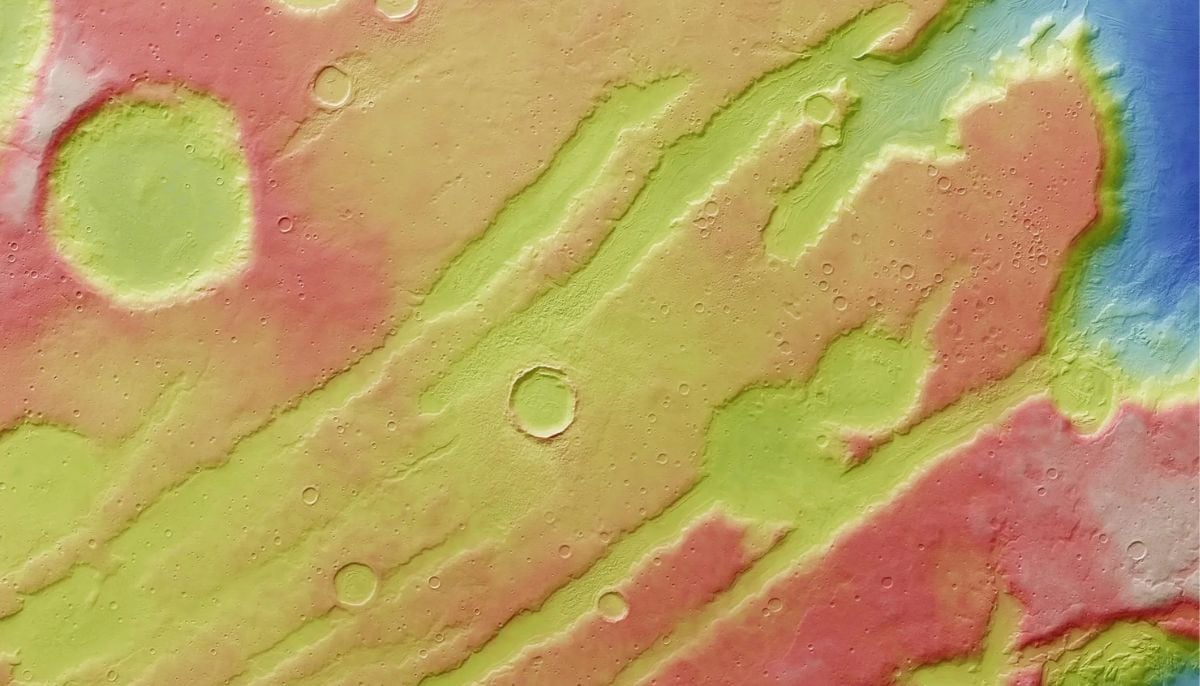
The latest images taken by the High Resolution Stereo Camera (HRSC) on board ESA’s Mars Express spacecraft have revealed evidence of glaciation on Mars in the Coloe Fossae region.
Coloe Fossae is located halfway along the northern latitude of the Red Planet. These structures are often formed by surface material falling, characterized by long and shallow grooves in the craters.
These craters, formed by space debris, hold clues to Mars’ ice age. The swirling and striated patterns on the valley floors and craters also reveal the movement of icy material on Mars.
These distinctive patterns raise questions about Mar’s previous climate.
Scientists attribute these patterns to concentric crater filling or contoured valley filling. These glacier flow patterns often form when mixtures of ice and debris travel across the surface, similar to Earth’s glaciers.
Finally, the mixture is covered with a thick layer of rocky material.
The presence of these hidden tracks far from Mars’ poles indicates a major global climate shift. During colder periods, the presence of these ice trails far from Mars’ poles indicates a major global climate shift. During colder intervals, driven by changes in the planet’s axial tilt, the ice spread from the poles to midlatitudes.