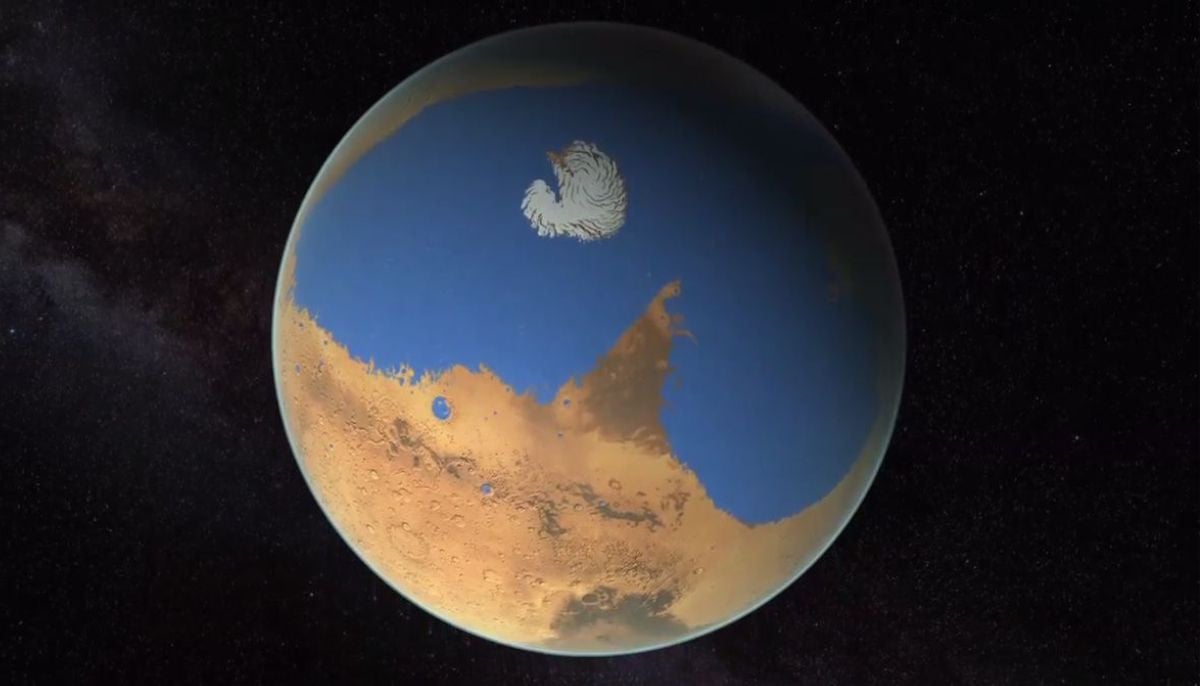
According to new research published in early 2026, our understanding of how Mars became a desert has been completely changed. Although scientists have long known that global dust storms cause water loss, these findings fundamentally change our view of the planet’s climate evolution.
The decades of research show exactly how the planet has evolved. A new study published in Communication: Earth and environment provides a missing link by showing that regional dust storms can transport significantly larger amounts of water. Meanwhile, previous research has shown that only planetary storms have contributed significantly to water loss in the atmosphere.
During a recent wave, scientists observed a substantial increase in hydrogen at the exobase, the boundary where the atmosphere and space meet. As hydrogen levels rise to 2.5 times the usual amount, water molecules break in the upper atmosphere. By monitoring this escaping hydrogen, researchers can measure the planet’s permanent water loss.
In this regard, Shohei Aoki, co-leader of the study at the University of Tokyo, said: “These results add a vital new piece to the incomplete puzzle of how Mars lost water over billions of years.”
The study’s findings further suggest that these events contributed significantly to the accelerated escape of hydrogen, adding that even small-scale storms strongly influenced the Red Planet’s transition to a desert. Furthermore, the study results add a vital new piece to the incomplete puzzle of how Mars lost its water over billions of years, demonstrating that short but intense episodes play a central role in the Red Planet’s climate evolution.