Our cosmic neighborhood is far from a peaceful place. While people feel silent on Earth, they are in reality passengers on a rapid journey through the vacuum of space.
Imagine that you slept completely motionless last night and wake up where you were last night. But the galaxy moved millions of kilometers through the cosmos.
This is what is happening to the Milky Way Galaxy, which is currently hurtling through space at a speed of 600 kilometers per second, about 2.3 million kilometers per hour.
Surprisingly, the galaxy moves along with billions of planets, stars and surrounding galaxies.
Now the question arises: what mysterious force is pulling the Milky Way Galaxy and where are we going on this journey?
For decades, astronomers have known that we are pulled by something immense, yet mysterious force. It’s an enigmatic gravitational titan known as the Great Attractor that’s pulling our Milky Way towards it.
Major attraction: unexplained cosmic mystery
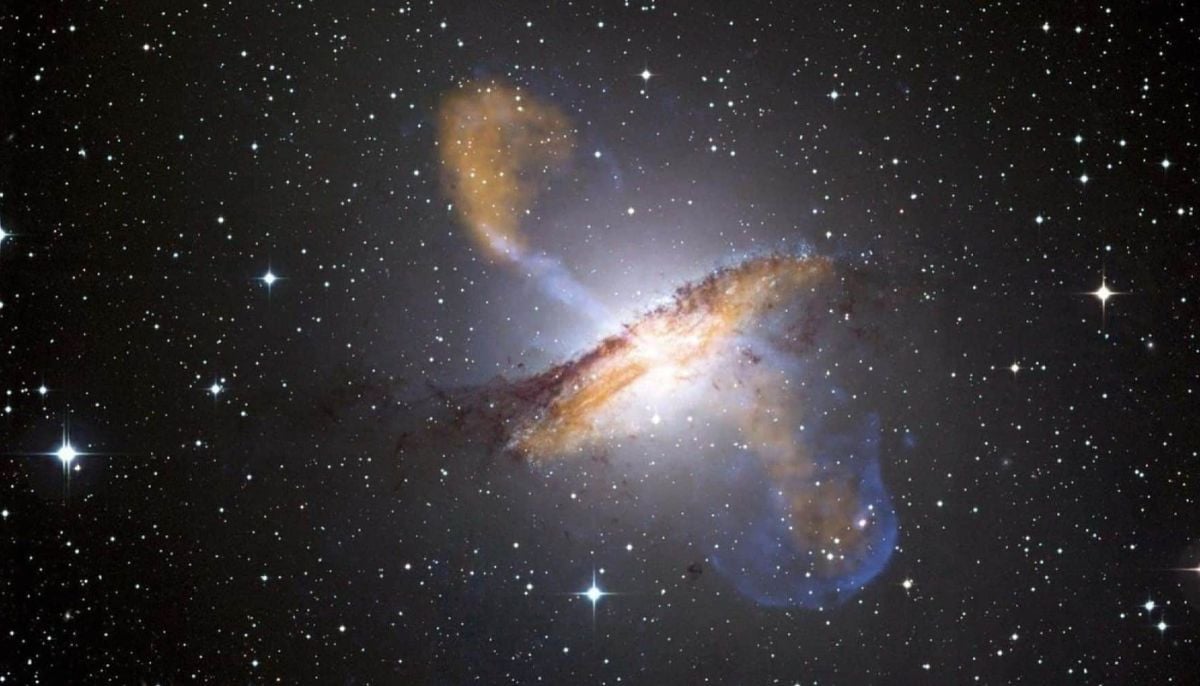
The Great Attractor is a gravitational anomaly located about 250 million light-years away toward the constellations Centaurus and Hydra.
What makes the Big Attractor “cosmically mysterious” is its existence in the “Zone of Avoidance,” an area of the sky obscured by the Milky Way’s own star and interstellar dust.
The Great Attractor is not a single object like a giant black hole; in fact, it is the anchor in the Laniakea Supercluster, a vast continent of galaxies.
Home to about 100,000 galaxies, the Laniakea Supercluster is a cosmic web bound by gravity and pulled toward the Grand Attractor.
Milky Way galaxy is not simply drawn
The researchers have always believed that the Milky Way Galaxy is always being pulled. Here’s the twist, this one is being pushed too, as reported in a new study.
Both our galaxy and the Great Attractor are being pulled toward an even larger mass called the Shapley concentration, which lies 600 million light-years beyond the Great Attractor.
From a new study published in Nature Astronomy Led by Prof. Yehuda Hoffman of the Hebrew University of Jerusalem, the researchers found a previously unknown and gigantic region in our extragalactic neighborhood that exerts a repulsive force on our Local Group of galaxies.
“By mapping the flow of galaxies through space in three dimensions, we discovered that our Milky Way Galaxy is speeding away from a large, previously unknown, low-density region. Because it repels rather than attracts, we call this region the Dipole Repeller,” says Prof. Yehuda Hoffman.
“In addition to being pulled towards the well-known Shapley concentration, we are also being pushed away from the newly discovered Dipole Repeller. Thus it has become clear that push and pull are of comparable importance at our site.” Hofman added.