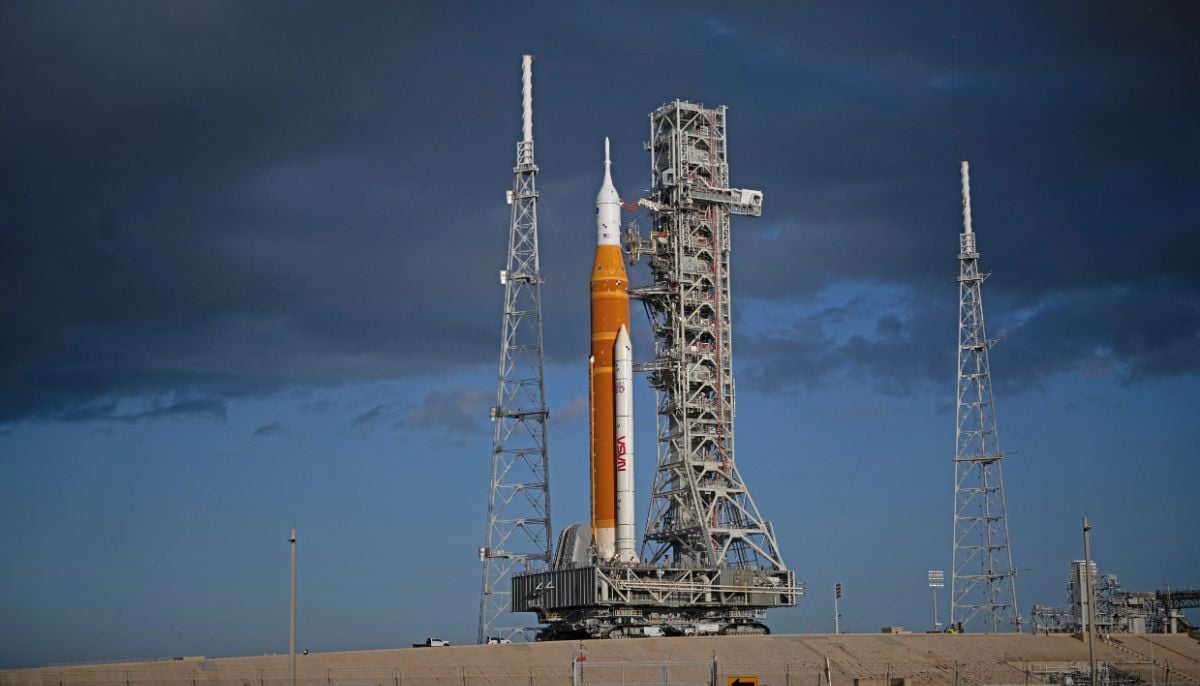
NASA has once again moved its moon rocket to the launch pad in Florida to prepare for the upcoming moon mission, which will send four astronauts into lunar orbit next month. The Vehicle Assembly Building at the Kennedy Space Center became the starting point for the rollout operations, which began late Friday.
NASA plans to launch the Artemis II mission on April 1 if weather conditions remain acceptable. The crew, which consists of three American astronauts and one Canadian astronaut, began their quarantine period earlier this week in Houston.
NASA Artemis II mission
The 90-meter-long Space Launch System rocket traveled a distance of almost 6.5 kilometers atop a massive tracked transporter first put into service during the Apollo missions. The rocket reached the launch pad after an 11-hour delay due to high winds that pushed the journey back by several hours.
NASA engineers expect their latest repairs to succeed. The project suffered multiple delays due to previous problems, including hydrogen fuel leaks and clogged helium lines.
The technicians repaired fuel leaks at the platform, but had to return to the assembly building due to the helium situation that occurred in February.
The Artemis II crew will orbit the moon and return to Earth without landing. The mission aims to land astronauts on the moon’s surface later this decade. The last human journey to the moon took place during Apollo 17 in 1972.
NASA is now planning a two-person moon landing by 2028 under Artemis. NASA officials are showing both caution and optimism about their plans. The next few days will be dedicated to checking the system’s operation and assessing weather conditions, both of which serve as essential factors for obtaining launch clearance.