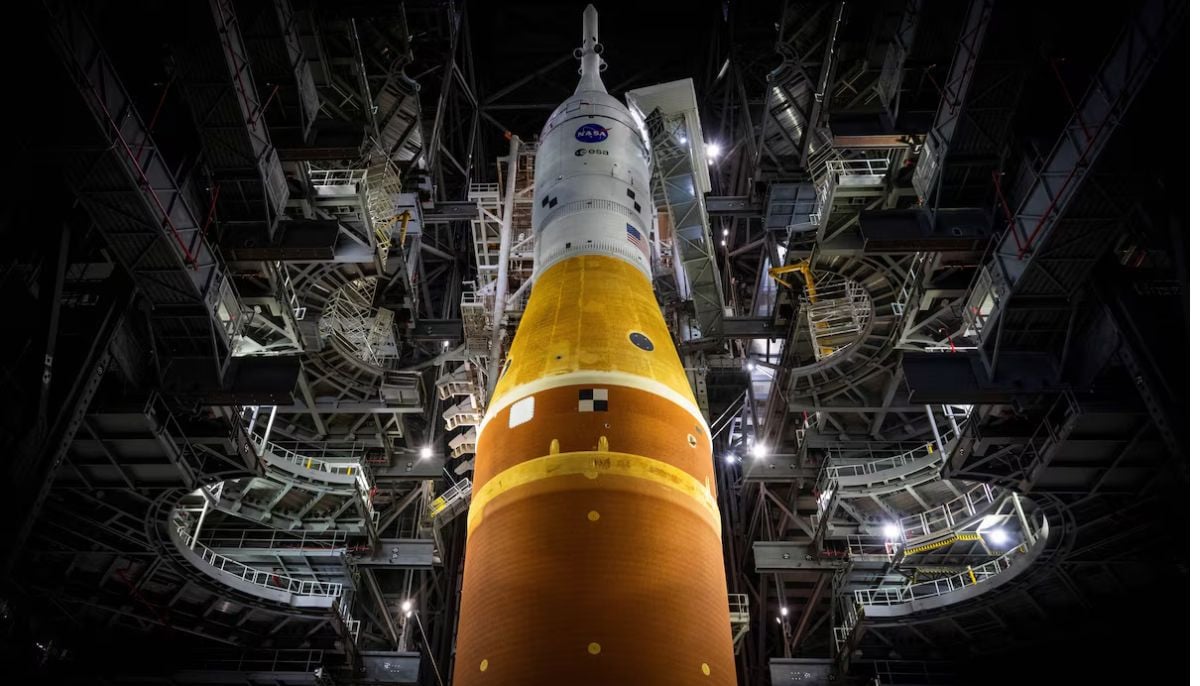
NASA is poised to move its tallest and most powerful rocket from the Vehicle Assembly Building to the launch pad on Saturday, marking a major milestone in its mission to the moon.
A key part of the mission is the Space Launch System, a heavy-lift rocket designed to send astronauts and large payloads beyond low Earth orbit.
According to a researcher at the University of Manchester, the upcoming mission marks a crucial step for human spaceflight. He said: “This is a huge milestone for NASA and the Artemis program as it will be the first time a crew member has seen the other side of the room.”
Artemis I vs. Artemis II: What You Need to Know
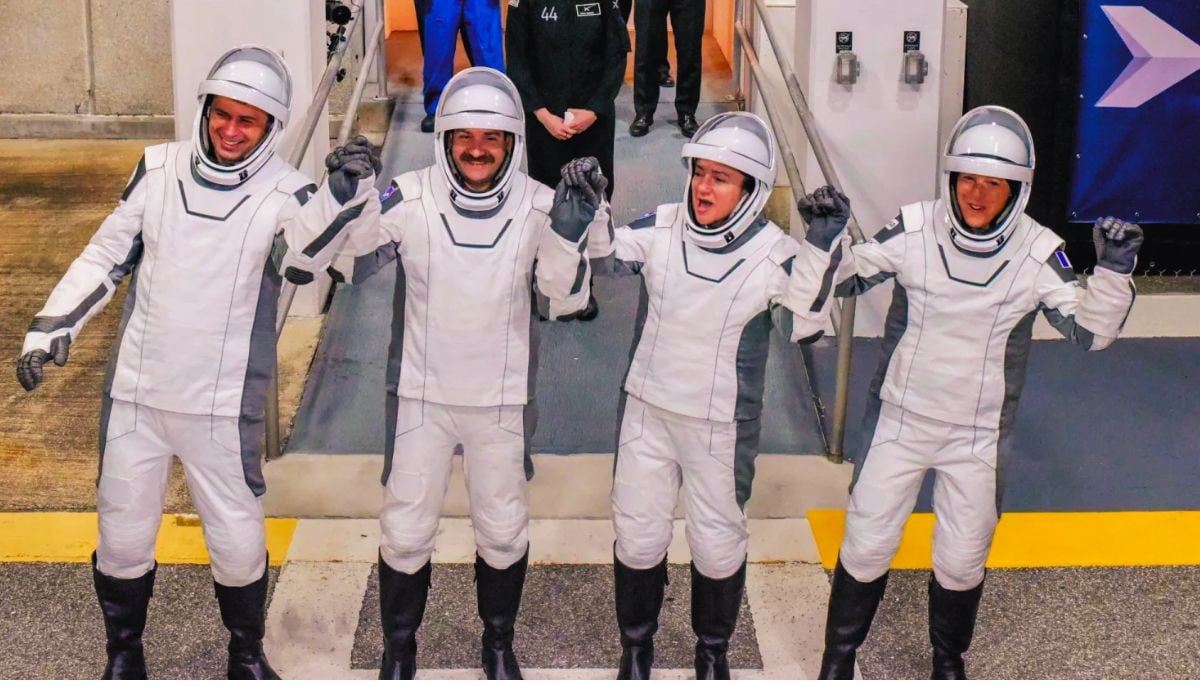
Artemis 1, which flew in 2022, was an unmanned test mission that sent Orion around the moon to prove that the rocket and spacecraft could safely operate in deep space and return to Earth. Artemis II is the upcoming mission that is successfully approaching launch and will be the first to carry astronauts. The crew will not land on the moon, but will travel in a loop around it to test navigation and communications systems with humans on board.
Artemis IV and subsequent missions are planned to help assemble the Lunar Gateway, a small space station that would orbit the moon and serve as a base for surface missions and scientific research. NASA sees the moon as a testing ground for future trips to Mars. Historically, technologies developed for space missions have led to significant advances in engineering and safety systems on Earth.
Currently, the Artemis II rocket is scheduled to be rolled out to the launch pad on Saturday. NASA’s primary focus now shifts from assembly to final inspections, marking the beginning of the next chapter in human exploration.