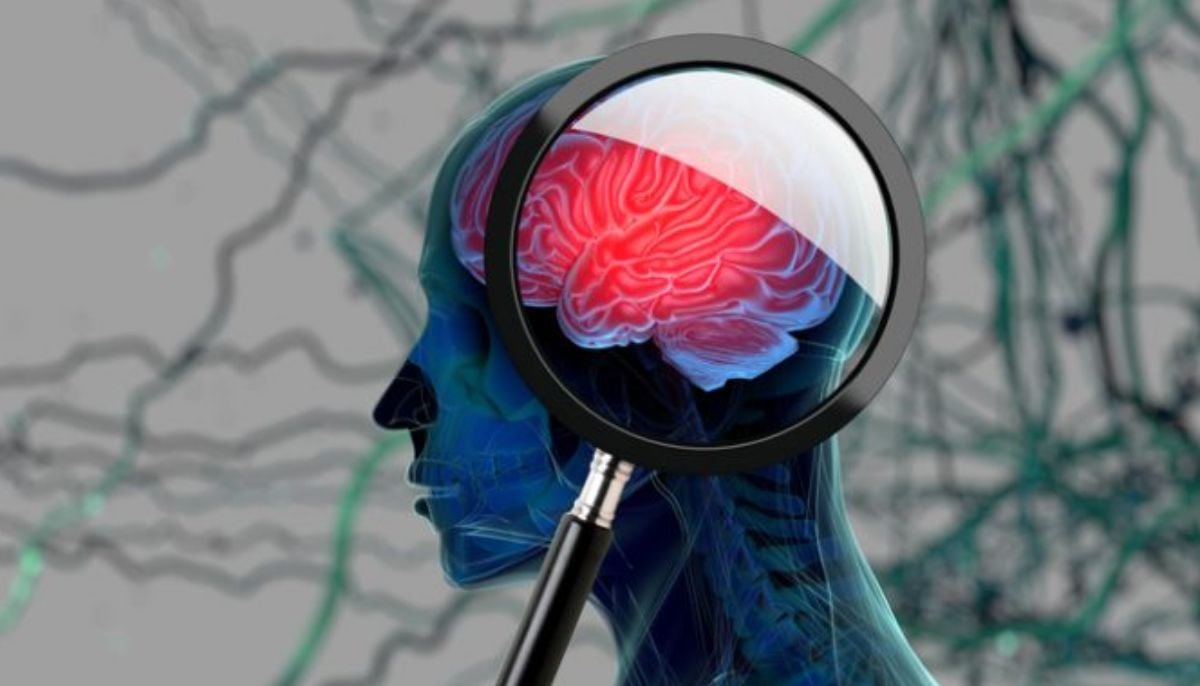
Our memory reflects the health of our brain and is often lost in old age, mainly due to dementia.
Dementia is basically caused by a decline in brain function responsible for affecting memory, thinking, language and behavior.
A group of symptoms that affect the social skills to cope with daily life may vary by category.
Dementia can be divided into four main types, including Alzheimer’s disease, vascular disease, dementia with Lewy body and frontotemporal dementia.
Using the latest technological advances, scientists have developed new AI models that can help accurately detect dementia so that it can be better treated early.
A group of researchers from Orebro University have developed two new AI models that can analyze the electrical activity of the brain and accurately distinguish between healthy individuals and patients with dementia, especially Alzheimer’s disease.
Scientists believe that early diagnosis can be useful in medical science.
Informatics researcher, Orebro University Muhammad Hanif informed that “Early diagnosis is crucial to take proactive measures that slow the progression of the disease and improve the patient’s quality of life.”
In the new study titled An explainable and efficient framework for deep learning For EEG-based diagnosis of Alzheimer’s disease and frontotemporal dementia, researchers combined two advanced AI methods.
“Traditional machine learning models often lack transparency and are challenged by privacy concerns. Our research aims to address both issues,” says Hanif.
Method 1 was called TCNs of ‘Temporal Convolutional Networks’ and the other method was described as ‘Long Short-Term Memory’ LSTM networks, to analyze EEG signals – a system that can determine whether a person is sick or healthy.
The researchers managed to interpret the electrical signals from the brain.
According to the results, Alzheimer’s and frontotemporal dementia, the method achieved an accuracy of more than 80 percent.
By dividing EEG signals into different frequency bands – alpha, beta and gamma waves – the AI can identify patterns associated with dementia.
The new AI algorithms can detect long-term changes in the signals and recognize subtle differences between diagnoses.
In addition, the explainable technology shows how AI can become a fast, cheap and privacy-safe tool for early diagnosis of dementia.
The researchers concluded that electroencephalography EEG is already a simple and cheap method used in primary care and by combining it with AI models it could be used as a new potential for wider healthcare use, from specialist clinics to new future home tests.
Orebro University researcher Hanif informed that the research team is making continuous efforts to explore more AI methods for efficiency and accuracy in the medical diagnosis of this common disease.
“We plan to continue the research by expanding to larger and more diverse data sets, examining more EEG features, including other forms of dementia such as vascular dementia and Lewy body dementia.”
“At the same time, we will use explainable AI and ensure strict protection of patient data,” Hanif explains.