A new astrophysical study predicts that the universe could eventually collapse in a ‘Big Crunch’ in twenty billion years. The research, led by physicist Henry Tye of Cornell University, analyzes data from large studies of dark energy and suggests that dark energy may not be constant.
The team, including physicist Henry Tye of Cornell University and co-authors Hoang Luu and Yu-Cheng Qiu, developed a model using data from the Dark Energy Survey and the Dark Energy Spectroscopic Instrument. Their theory introduces a very light particle known as an axion, along with a negative cosmological constant.
The new framework allows dark energy to decline over time, while the standard model of cosmology treats dark energy as an unchanging force. The calculations predict that the universe will go through a period of expansion that will last about 11 billion years before the process stops and starts to reverse. The universe will reach its final collapse, or Big Crunch, about 33 billion years after the Big Bang event.
The study uses current research data on dark energy, but scientists emphasize the need for careful interpretation of the findings. The researchers point out that they have serious doubts about the accuracy of their future predictions. The concept opposes the sustainable theory that the universe will continue to expand due to unchanging dark energy.
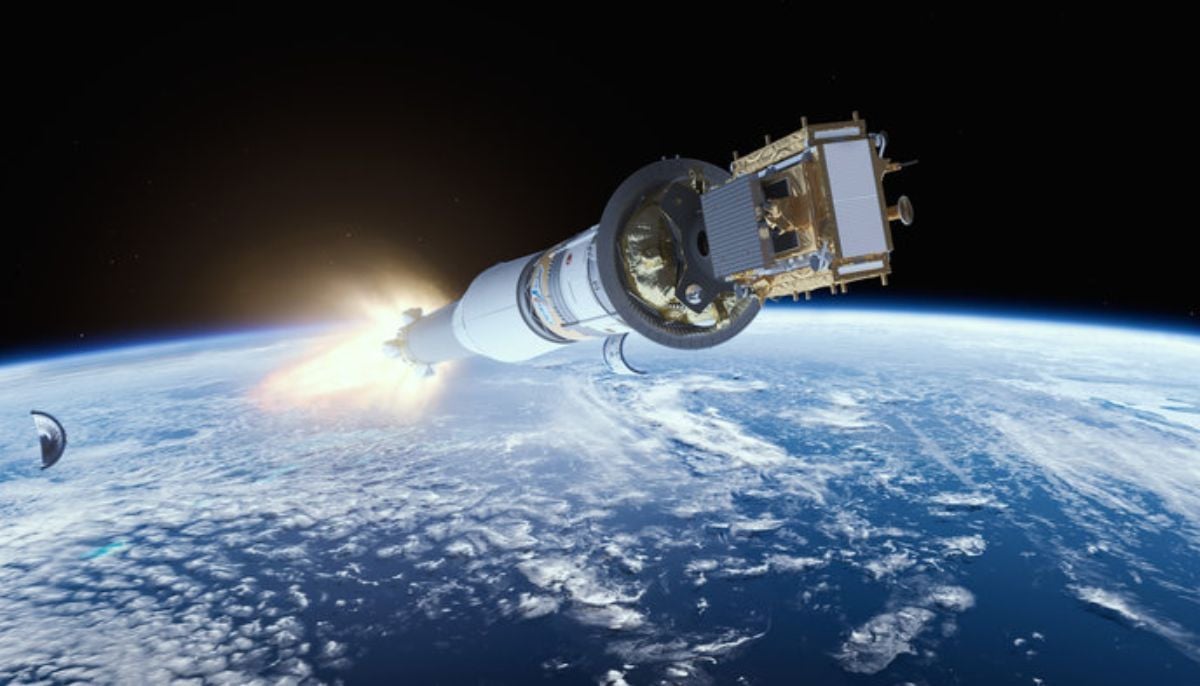
Upcoming missions from the European Space Agency’s Euclid mission, NASA’s SPHEREx project, and the Vera C. Rubin Observatory will provide improved measurements of dark energy in the coming years.