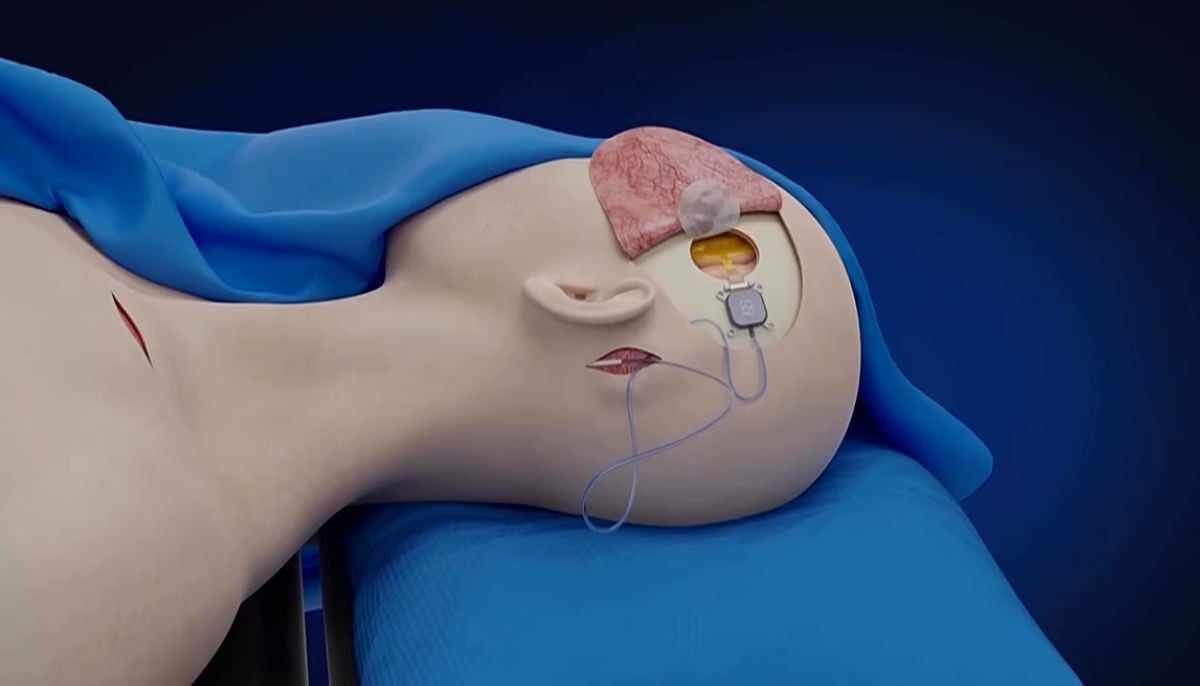
Researchers in China have officially announced a major breakthrough in Brain-Computer Interface (BCI) technology, in which a paralyzed patient was able to operate a wheelchair, surf the Internet and, remarkably, achieve mind control over external devices just days after surgery.
According to euro newsParalyzed for eight years by a cervical spinal cord injury, the 28-year-old man was able to operate devices with his mind alone just five days after undergoing implant surgery in China.
The successful completion of the country’s first clinical trial
The advancement is part of the country’s first clinical trial of a fully implanted, wireless and fully functional brain computer interface (BCI).
BCIs connect a person’s nervous system to devices that understand their brain activity, allowing them to perform actions, such as using a computer or moving a prosthetic hand, simply through their intentions.
In this regard, Professor Mao Ying, the president of Huashan Hospital of Fudan University, said: “He can control household appliances and even operate his wheelchair – all these can be achieved.”
The world’s smallest and least invasive implantable BCI
The device unveiled by Shanghai NeuroXess uses 64 electrodes, each just 1 percent as wide as a human hair, making it one of the most minimally invasive implantable BCIs in the world.
The electrodes are embedded in the brain, while the controller, battery, antenna and processor are located under the skin of the chest.
Additionally, an external wireless charging dock, similar to a phone charger, allows the device to be charged and used independently.
Zhang Xu, a neuroscientist and academician from the Chinese Academy of Sciences, said: “The built-in battery is a crucial step in achieving sustainable power supply; long-term usability is an important consideration when applying this technology to the human body.”
The experts are confident that these devices could revolutionize the lives of millions of people living with paralysis worldwide.
Elon Musk’s Neuralink is one of the best known, with more than 10,000 people eagerly signing up for Neuralink’s patient registry in hopes of participating in clinical trials.