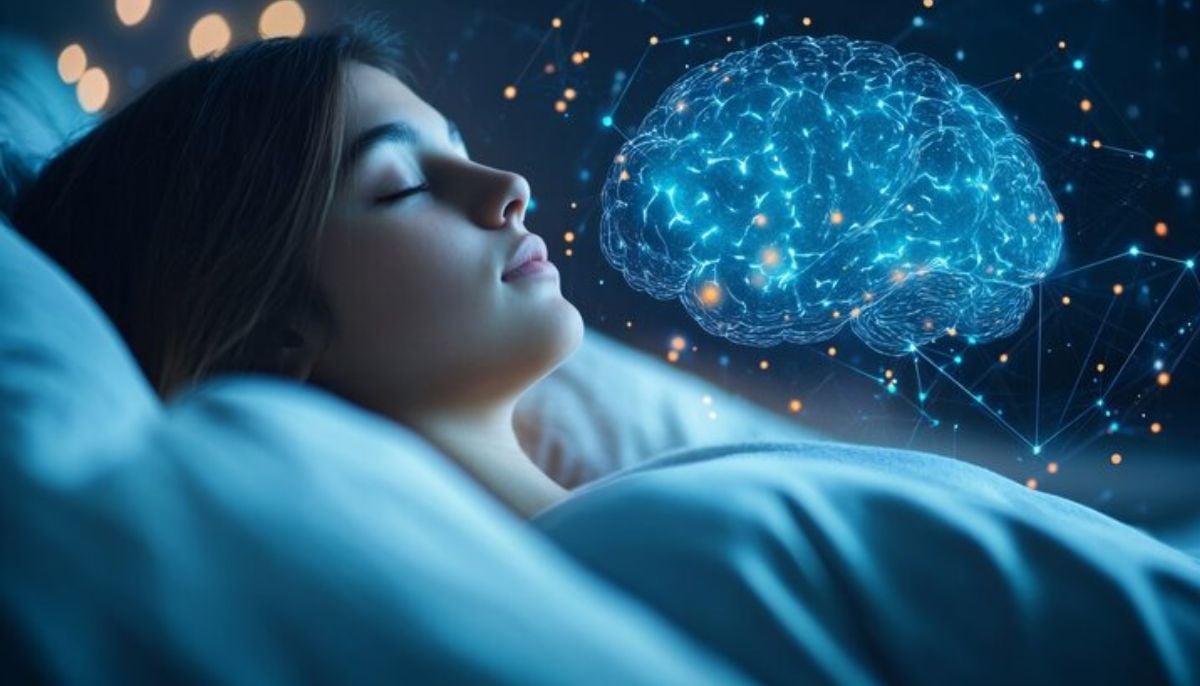
A new study conducted by neuroscientists has revealed the ability to influence the content of dreams, stimulate creativity and improve problem-solving skills.
During the experiments, the Northwestern University researchers used Targeted Memory Reactivation (TMR) to manipulate the dream during REM sleep.
The scientists played specific audio cues during sleep related to unsolved puzzles and induced dreams related to those complicated tasks.
According to the findings published in Neuroscience of consciousnessparticipants who saw puzzles in their dreams would likely show a significant increase in mental performance, leading to greater problem-solving skills.
The study also found a direct correlation between dream content and success rates. For example, participants who saw dream-related puzzles achieved a 42 percent solution rate compared to those with non-dream puzzles, showing a 17 percent success rate.
One of the most surprising findings was that participants did not need to be lucid for the cues to work, as dreams processed the puzzles in creative ways, such as walking through a forest following a cue for a tree puzzle.
According to the observations of researchers, the brain processes external information and applies it to internal problems without being aware of it.
The recent breakthrough could be used for various purposes in the future.
In addition to increasing creativity, the researchers believe that these methods can be used for emotional regulation, treating mental health issues and psychological problems.
The research also paves the way for sleep engineering, such as using sleep as a structured tool for solving complex global and personal problems.
According to Karen Konkoly, lead author of the study and postdoctoral researcher in Paller’s Cognitive Neuroscience Laboratory, “If scientists can definitively say that dreams are important for problem solving, creativity and emotion regulation, hopefully people will start taking dreams seriously as a priority for mental health and well-being.”