A surprising mystery has been discovered off the coasts of the British Caribbean. The first expedition revealed an underwater mountain range, a huge blue hole and coral reefs unaffected by human-induced environmental changes. Operations continued 24 hours a day for six weeks, with researchers using sophisticated cameras and equipment to record data at depths of up to 6,000 meters.
In this regard, Prof. James Bell, leader of the expedition on the British research ship, said: “This is the first step into an environment that people have never seen, and in some cases did not even know existed.”
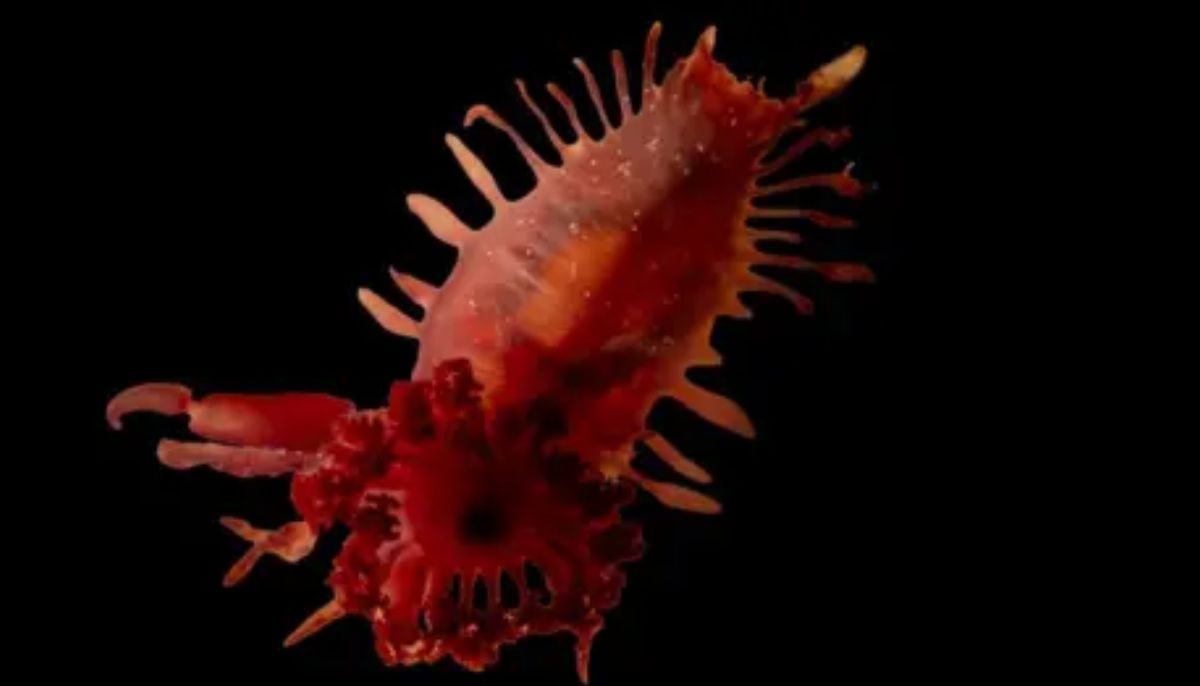
“Yesterday we found a species of swimming sea cucumber, and we still don’t know what it is. We call it really amazing.”
The team documented nearly 14,000 individual specimens and 290 different species of marine animals. Images show a bright blue, yellow and orange mountainside, full of life-size coral towers that resemble large brains. Teams caught fish darting among the gorgonian whip coral, avoiding the disease that is ravaging the rest of the Caribbean.
Using deep-sea cameras and echo sounders from the side of the ship, researchers mapped nearly 15,000 square miles of seafloor and took 20,000 photos, including lanternfish and alien cephalopods. Confirming rumors spread by local fishermen who had previously retrieved coral fragments, the team found a 4km-long reef with mosaics of coral growing in sponge gardens.
This is an intriguing area of research for scientists because these areas of deep water and steep mountains can drain nutrient-rich water, providing food grounds that support local fishing spots.
Kelly Forsythe of the Cayman Islands Department of Environment said, “Our islands were literally born from the sea. But when it comes to our offshore environments, we really haven’t had the chance to explore what’s out there.”
Nevertheless, this latest work will provide the crucial data Britain needs to meet its UN commitments to protect 30% of the world’s oceans in designated marine protected areas by 2030.