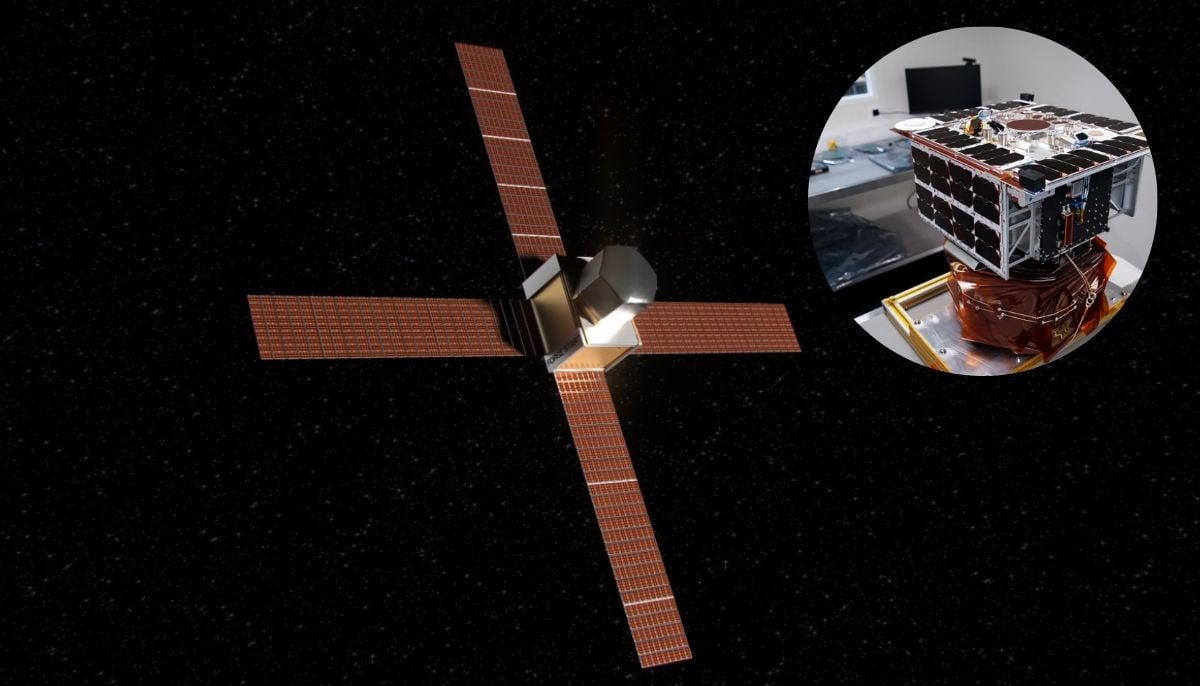
Space Forge, a British startup, is developing a space-based factory to produce materials, mainly semiconductors or chips for quantum computers, defense infrastructure and AI data centers.
In the orbital production of semiconductors, the company has achieved an unprecedented milestone: a method to create ultra-high crystal ‘seeds’ in space.
In June 2025, Space Forge launched a microwave-sized factory satellite called ForgeStar-1 into orbit to develop plasma, which in turn would help create highly advanced crystals for future ventures.
These crystals would lay the foundation for semiconductor production on Earth and help address global chip shortages in a competitive AI landscape.
Orbital manufacturing: a new frontier in the semiconductor race
Semiconductor manufacturing undoubtedly rules the Earth, in which Nvidia occupies the dominant position.
As artificial intelligence becomes an increasingly competitive landscape, chip manufacturing becomes the need of the hour to avoid bottlenecks in supply chains.
Therefore, space emerges as the most suitable frontier, outweighing the Earth’s industrial base.
According to Space Forge CEO and co-founder Joshua Western, “Space provides an unparalleled industrial base compared to Earth.”
Huge profit, more efficiency
Semiconductors, when fabricated in zero gravity, can be arranged in more regular structures. In addition, purity at a high level can be achieved because the space reduces the chance of contamination.
In space, “Semiconductor crystals that are hundreds, if not thousands, of times purer compared to the crystals that can be produced on the ground,” Western explains.
These two properties will yield huge gains in semiconductor efficiency.
According to Western, Space Forge is expected to launch a commercial production system into orbit within two years.
“Our core markets right now are aerospace and defense and telecommunications and data,” he added.
The global semiconductor industry has grown by 22 percent in 2025 and is expected to reach $1 trillion by 2027, Deloitte reports.
The stock’s meteoric rise in recent years has been driven by an AI-powered boom.
As countries race to win the AI race, the need for advanced chips has become concrete, which can be met by space-based technologies.