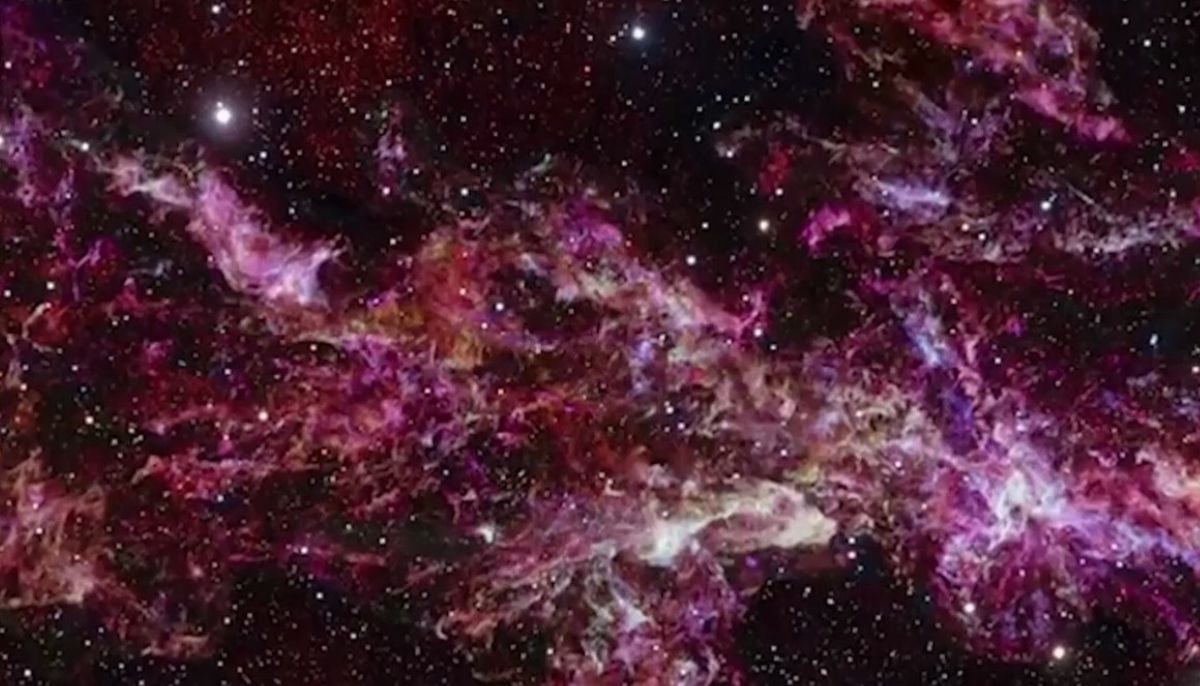
Astronomers have unveiled an intriguing discovery: the largest image ever taken by the ALMA telescope, providing a groundbreaking view of the central molecular zone known as the heart of our Milky Way. This photo, which looks like purple and pink clouds caught in a current, actually shows the gas responsible for star formation at the heart of our Milky Way.
In this regard, Steve Longmore, professor of astrophysics at Liverpool John Moores, said: “This image gives us insight into how stars and planets form when they are close together and packed together. We think this is how most stars in the universe formed.”
This photo gives us a glimpse of a region spanning more than 650 light years, made up of cold cosmic gas under extreme conditions invisible to our eyes. It is the largest recording ever made by the ALMA network with 66 antennas in Chile’s Atacama Desert.
The heart of the Milky Way is usually hidden beneath thick cosmic dust, but recently released images reveal a complex web of gas filaments. These structures direct material to dense clumps where new stars are born. These recent discoveries offer mesmerizing vistas reminiscent of early galaxies; By studying, one can better understand how the first stars in the universe formed.