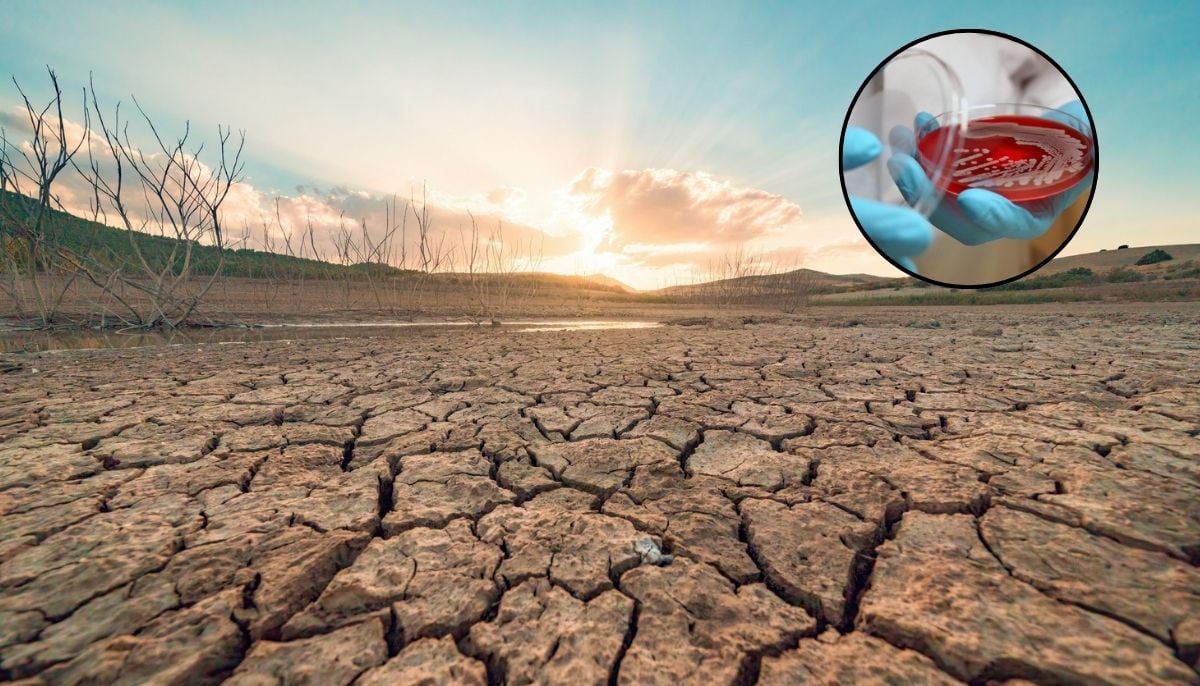
In recent years, antimicrobial resistance has emerged as a deadly threat to public health.
According to the World Health Organization (WHO), antimicrobial resistance (AMR) has shifted from a ‘silent pandemic’ to an immediate global health crisis.
According to a 2024 study published in The LancetBetween 2025 and 2050, 39 million deaths are expected to be directly attributable to AMR.
From a new study published in Natural microbiology, the researchers have found the link with climate change.
According to researchers at Caltech, climate change-induced drought is an important but overlooked cause of antibiotic resistance.
For years, drug resistance was often attributed to the clinical misuse of antibiotics, but this research highlights an ‘ecological pathway’.
Drought as selection pressure
Ecologically, dried soil is responsible for creating high concentrations of natural antibiotics in the remaining moisture. The high concentration becomes unbearable for weak bacteria, allowing antibiotic-resistant strains to thrive and multiply.
Link from bottom to clinic
The researchers have found a direct genetic link between human pathogens and soil bacteria after analyzing data from more than 100 hospitals worldwide. They found that antibiotic resistance genes in hospitals are 100 percent identical to those in local soils.
Various channels, such as agriculture, outdoor recreation and dust inhalation, are responsible for transmission.
“Droughts cause the same effects as antibiotic overuse in the clinic: they both stimulate selection for antibiotic resistance,” says Dianne Newman, professor of biology and geobiology at Caltech.
This study highlights that to combat growing antibiotic resistance worldwide, we must also address the threatening reality of climate change.