This surprising study reveals that Earth’s ‘secret water cellar’ is one of the most consequential geological discoveries of the past decade.
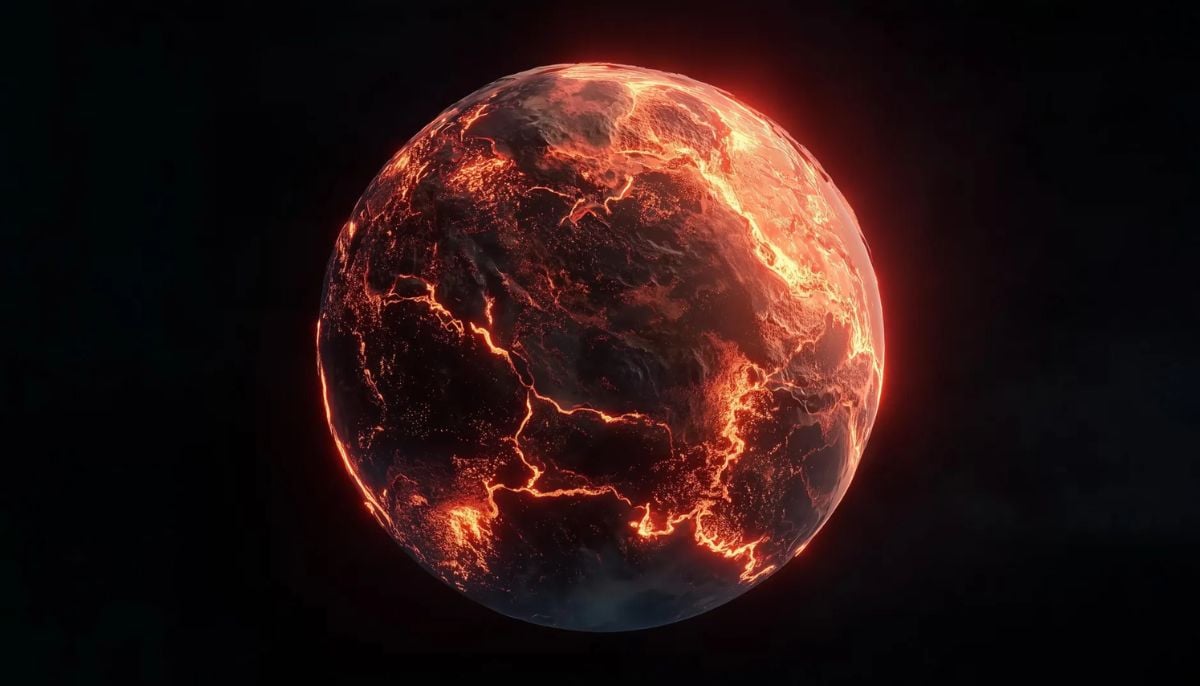
If we look back to 4.6 billion years ago, Earth didn’t look like the calm, blue world we see today.
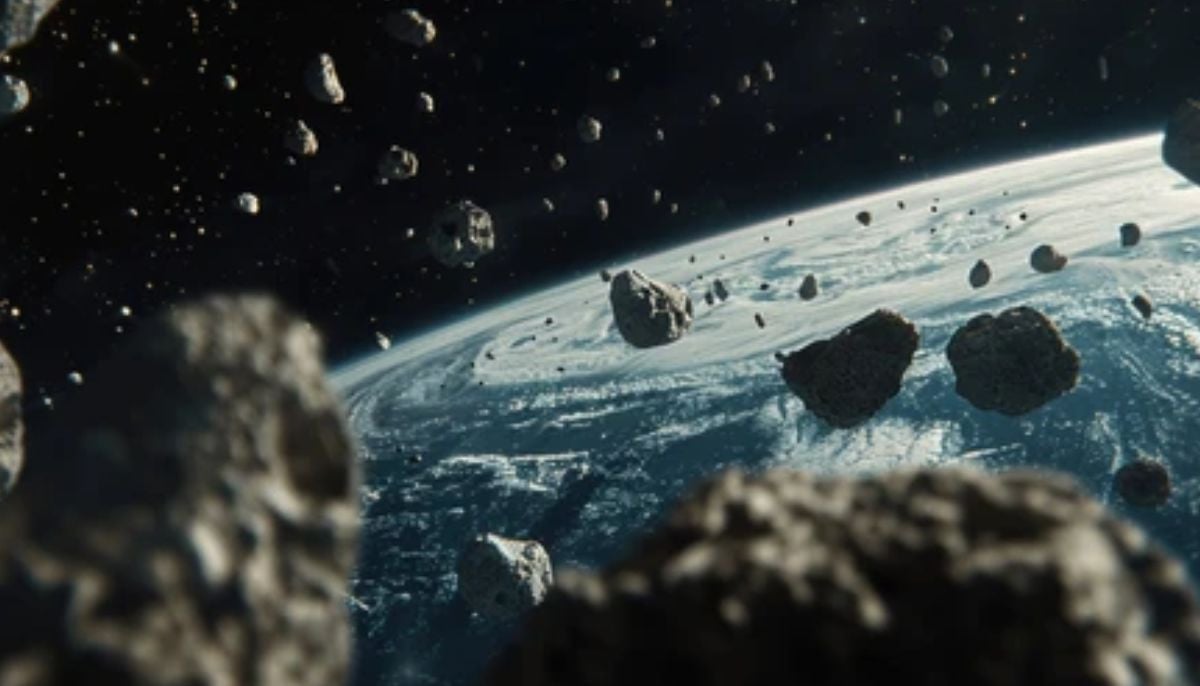
Meanwhile, powerful impacts from space kept the planet’s surface and interior in a constant state of turmoil.
A recent study led by Prof. Zhixue Du of the Guangzhou Institute of Geochemistry of the Chinese Academy of Sciences (GIGCAS) offers a new explanation: large amounts of water could have been stored deep in the Earth’s mantle as it was cooled by molten rock.
The research results have been published in Science on December 11 and are changing scientists’ thinking about water storage deep within the planet.
The researchers have shown that bridgmanite, the most abundant mineral in the Earth’s mantle, can function as a microscopic ‘water reservoir’.
Previous experiments showed that bridgmanite could only hold small amounts of water; however, these studies were conducted at lower temperatures.
To answer these lingering questions, researchers had to overcome significant challenges. They had to simulate the pressures and temperatures found more than 600 kilometers below the Earth’s surface and detect extremely small traces of water in mineral samples.
The team specifically built an anvil cell system combined with laser heating and high-temperature imaging to address these challenges.
The experiments showed that bridgmanite’s ability to retain water is measured by a water partition coefficient, which describes how water is distributed among different minerals.
During Earth’s hottest magma ocean, the newly formed bridgmanite could have stored much more water than scientists thought.
The recent findings challenge the traditional understanding of the lower mantle.
These results helped the team model how Earth’s magma ocean cooled and crystallized.
Their simulations further suggest that bridgmanite retains water so efficiently under extreme heat that the lower mantle has become the largest water reservoir in the solid Earth.
The model showed that this reservoir could be five to a hundred times larger than previous estimates, with the total water volume being 0.08 to 1.0 times the volume of today’s oceans.
This deeply stored water did not simply remain trapped, but rather acted as a lubricant for the Earth’s internal engine.
By lowering the melting point and viscosity of mantle rocks, the water helped stimulate internal circulation and plate movement, sustaining the planet’s geological energy for a longer period of time.
The research further suggests that this hidden ‘water spark’ may have been the determining factor in transforming Earth from a molten inferno to the blue planet we know today.