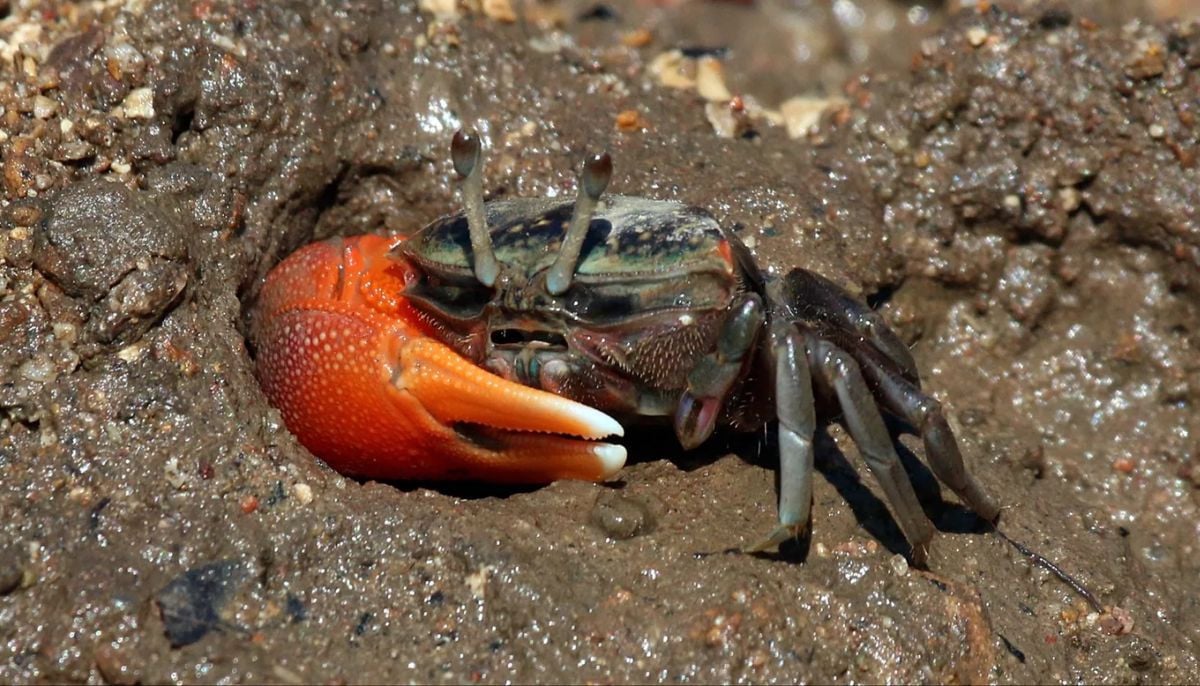
A new study published in the journal Biology of global change has revealed that tiny fiddler crabs – which grow no larger than the width of a Post-It note – are acting as ‘ecosystem engineers’ by consuming and physically breaking down microplastics in some of the world’s most polluted coastal areas on Colombia’s northern coast.
Researchers have discovered that these arthropods are doing well and are actively involved in the biodegradation of small plastic particles in the sediment.
These crabs can break down plastic within days and perform much faster than sunlight and waves.
How fiddler crabs adapt to microplastics
Scientists have previously discovered the intriguing phenomenon of fiddler carbohydrates ingesting plastic in laboratory settings, but this is the first study to analyze whether they will avoid plastics in the natural environment or adapt to their presence.
In this regard, lead researcher Professor Jose M. Riascos said: “We wanted to learn how the microspheres are distributed among the major organs and to find out whether the crab’s interaction with microspheres resulted in their physical fragmentation into smaller particles.”
The research further showed that the crabs had collected microplastics at a concentration thirteen times greater than in the sediments.
Research into the impact of microplastics on fiddler crabs
Researchers have issued major warnings that the fiddler crab’s spectacular abilities may come at a cost, potentially releasing harmful nanoplastics into their tissues and into the wider food chain.
While the full extent of these health outcomes remains unknown, several studies have highlighted potential links to serious conditions, including cancer, respiratory problems and heart attack.