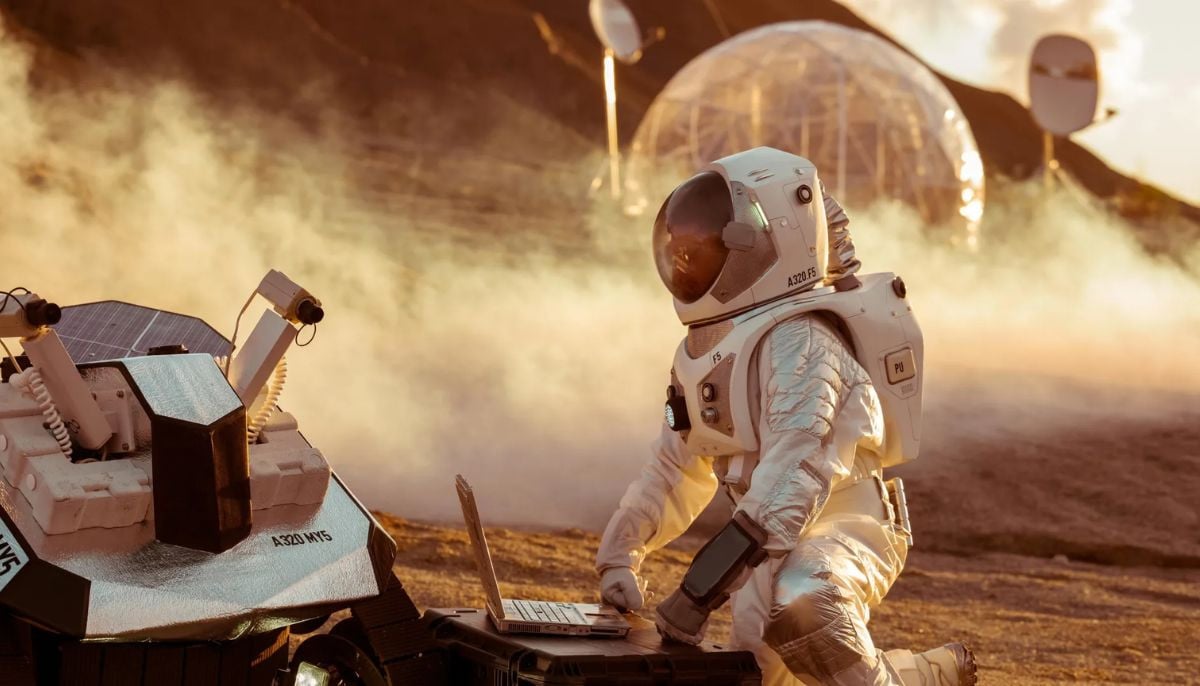
Scientists have discovered the most promising landing site for humans in a recent breakthrough, aiming to prepare for the first human footprints on the Red Planet.
University of Mississippi researchers conducted a study using the most detailed camera ever sent to Mars (HiRISE) to discover challenging surface features.
According to findings published in Journal of Geophysical Research: Planetsthe team identified one specific spot on Mars that has suitable characteristics for future human missions to Mars.
Amazonis Planitia, a region in the middle latitude of Mars, is considered an excellent candidate for future missions.
The site consists of a ‘Goldilocks’ zone, where they not only provide enough sunlight for solar power generation, but also keep the regions cold enough to maintain water ice on the surface, making them ideal for future landings.
According to Erica Luzzi, planetary geologist and lead author of the study, “If we want to send people to Mars, you need H2O, and not just for drinking, but also for propellant and all kinds of applications.”
Accessible water ice is of great importance to astronauts because it allows them to produce drinkable water and breathable oxygen for long-term survival.
Giacomo Nodjoumi, a postdoctoral researcher at the Italian Space Agency’s Space Science Data Center and co-author of the study, said: “For the moon, it would take us about a week to go back and forth to Earth for resupply.”
“But for Mars it would take months. So we have to be prepared to be without supplies from Earth for an extended period of time,” he added.
He explained: “The most important resources are oxygen for breathing and water for drinking. That makes our candidate landing site really promising.”
Road ahead
Although the orbital evidence is strong, it is important to send a robotic vehicle or human for sample collections, with the goal of confirming whether the ice is composed of only water or mixed with other materials.
Nodjoumi said: “We have strong evidence that this is water ice, but until we go there and measure it, we won’t be 100% sure.”