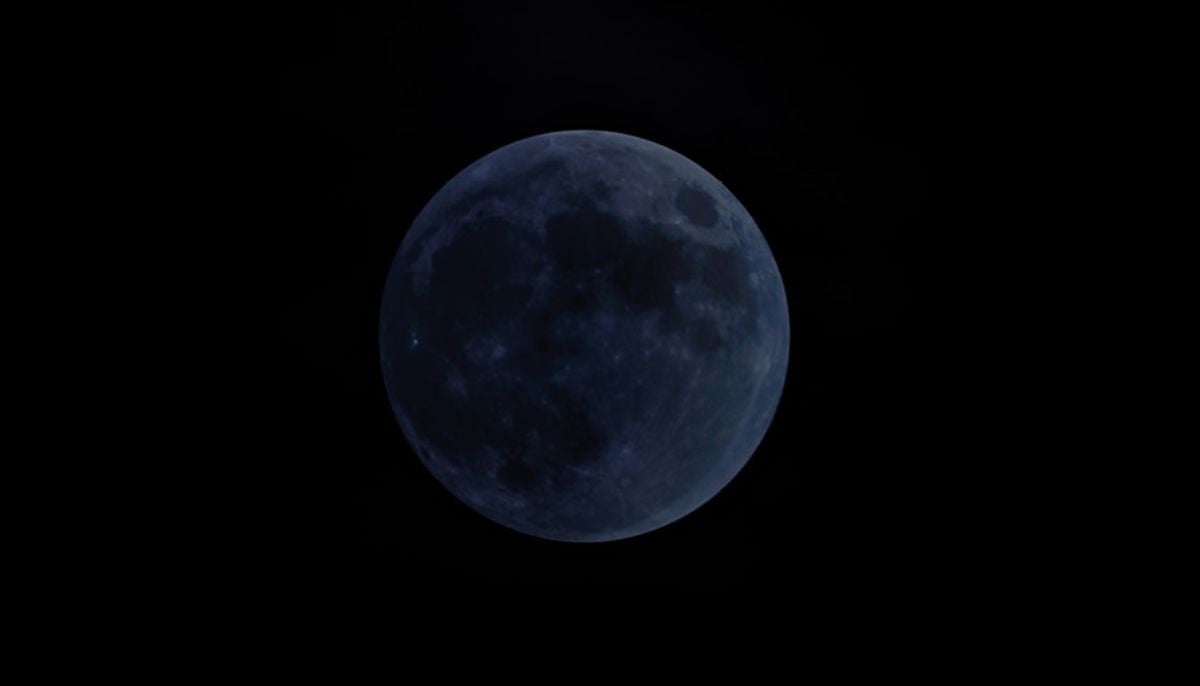
A Black Moon is not an official astronomical term, but rather a popular name for a distinct lunar phenomenon involving the New Moon. A New Moon occurs when the Moon is between the Earth and the Sun. Because the illuminated side faces away from us, the Moon remains invisible to the naked eye.
A black moon is rare because the lunar cycle closely follows Earth’s calendar year, which typically has one Full Moon and one New Moon each month. The easiest way to explain a Black Moon is as the counterpart of a Blue Moon: the second new moon in one calendar month.
Black Moons occur about once every 29 months and are the most common type of Black Moon.
When a season has four new moons, the third new moon is called a Black Moon. During the New Moon phase, the Moon appears black because it passes through the same part of the sky as the Sun, leaving the unlit side facing Earth.
A short time later, however, you can easily spot a slender silver crescent moon low in the western twilight sky, about 30 to 40 minutes after sunset. The next Black Moon will occur on August 31, 2027.