MPOX no longer represents a global emergency for public health, the WHO said on Friday after a steady decline in cases and deaths in the Democratic Republic of Congo and other affected countries.
In August 2024, the World Health Organization (WHO) declared an emergency for the public health of International Concern (PHEIC) in August 2024 after a double MPOX epidemic broke out, mainly in the DRC.
Who -Chef Tedros Adhanom Ghebreyesus has lifted the status after the quarterly meeting on Thursday of the UN EN -Health Agency on the MPOX outbreak.
“This decision is based on persistent falls in cases and deaths in the Democratic Republic of Congo and in other affected countries, including Burundi, Sierra Leone and Uganda,” he said a press conference.
Tedros said that there was now a better understanding of what the transmission was managing, while the most affected countries had improved their capacity to respond.
“Removing the emergency declaration does not mean that the threat is over, nor that our reaction will stop,” Tedros said, and noted that the situation remained a continental emergency in Africa.
“The possibility of continuous flare-ups and new outbreaks will continue to exist,” he said.
The watchdog of the African Union said on Thursday that “the current downward trends are not yet stable enough” to justify the lifting of the emergency situation at the continental level.
This year until the end of July, more than 34,000 confirmed cases worldwide have been reported to the WHO, including 138 deaths, from 84 countries. More than 15,000 of the cases were in the DRC.
Call for vigilance
Mpox is caused by a virus from the same family as smallpox. It can be transferred to people by infected animals, but can also be passed on between people through close physical contact.
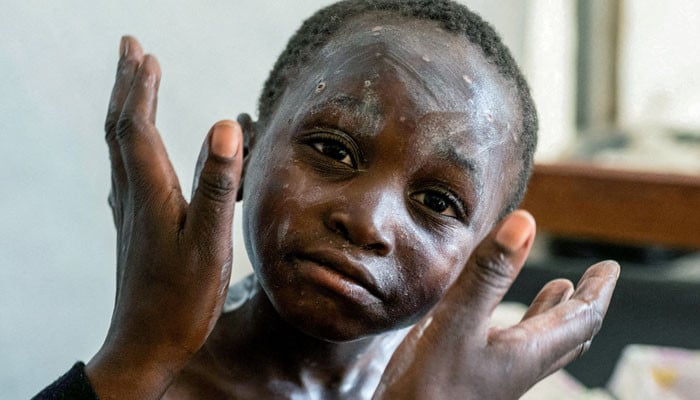
The disease, which was first detected in humans in 1970 in the DRC, then known as Zaire, causes fever, muscle pain and large cooking -like skin lesions and can be deadly.
Dimie Ogoina, chairman of the MPOX committee of the WHO, said that the fatal number of deadly decreased in endemic regions from 3.6 percent to about one percent.
But he insisted in countries not to become complacent about Mpox and “throw away what we have won” during the emergency situation.
Not investing in the fight against Mpox “will bring the world as the risk of a revival,” he said, in which he called for persistent vigilance.
The WHO said that more than three million doses of vaccine had been delivered to 12 countries, with just under a million doses.
MPOX has two subtypes: the more serious Clade 1 and Clade 2.
The virus, long endemic in Central Africa, became international fame in May 2022 when Clade 2 spread all over the world, usually with gay and bisexual men.
The WHO declared a global health accident in July 2022, but thanks to vaccination and awareness drives that contributed to the distribution, that statement was abolished in May 2023.
A year later, however, a new epidemic broke out, both the original Clade 1A trunk and a new tribe, Clade 1B, so that the WHO explains a new couric.
A sleek has only been stated eight times since 2009: about H1N1 pig flu, poliovirus, zika virus, covid-19 and twice on both Ebola and MPOX.