In a recent development, NASA Artemis II astronauts are heading to the far side of the moon after freeing themselves from High Earth Orbit.
According to a statement from NASA on
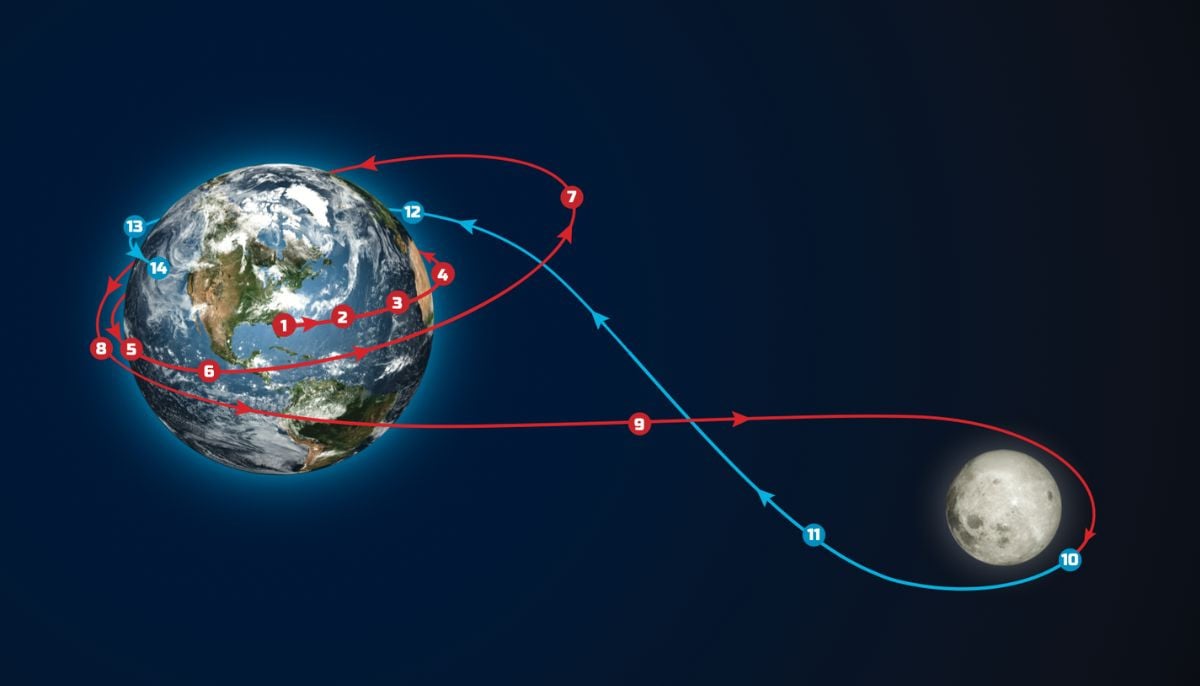
Interestingly, Artemis II’s journey isn’t a simple point-and-shoot mission to the moon. Unlike the Apollo mission, which aimed for the fastest direct route to the moon’s orbit, Artemis II deliberately chooses a more tortuous ten-day trajectory based on a ‘free return trajectory’.
Safety first approach
Unlike Apollo, which performed a translunar injection shortly after reaching Earth orbit, Artemis II spent the first 24 hours in a highly elliptical orbit to perform the necessary safety checks and ensure smooth functionality of the Orion spacecraft.
The crew also used this time to practice ‘proximity operations’, manually maneuvering the Orion close to the deployed ICPS rocket stage to test its handling qualities.
By simulating the docking maneuvers, the crew collects essential data needed for future moon landings.
Prison is a job, not just altitude
Traveling in space doesn’t just mean going straight up, because this straight path would waste enormous amounts of fuel. Eventually, a fuel-less spacecraft would be pulled back to Earth by gravity.
So to stay in space longer, the spacecraft must travel sideways fast enough that it falls around the curve of the Earth. That’s why Artemis II orbits the Earth before taking off.
Figure 8 path: trajectory with free return
Artemis II will not orbit the moon. Instead, it will follow a “figure-of-eight trajectory,” hurling the spacecraft around the far side of the moon. This path is known for using the moon’s gravity as a “slingshot.”
For example, if Orion’s engine were to fail after the “translunar injection” burn, the spacecraft would be naturally pulled back to Earth by gravity without the need for further propulsion or additional combustion.
What makes the Artemis II moon mission distinctive is its plan to reach a record distance to Earth, a distance of over 400,000 kilometers from Earth, the greatest distance to Earth ever achieved during this phase.
While Apollo missions flew as low as 60-70 miles from the surface, Artemis II will pass between 4,000 and 6,000 miles above the moon.
This “high-altitude” lunar flight provides a wider field of view of the far side of the moon and keeps the spacecraft in a safer gravity corridor for the return trip to Earth.
The figure-8 pad will also give the astronauts the opportunity to conduct deep space testing, which will help the agency on future Artemis III and IV missions.