We always assume that industrial waste or harsh chemicals pollute our environment, but the situation here is very different from what we perceive.
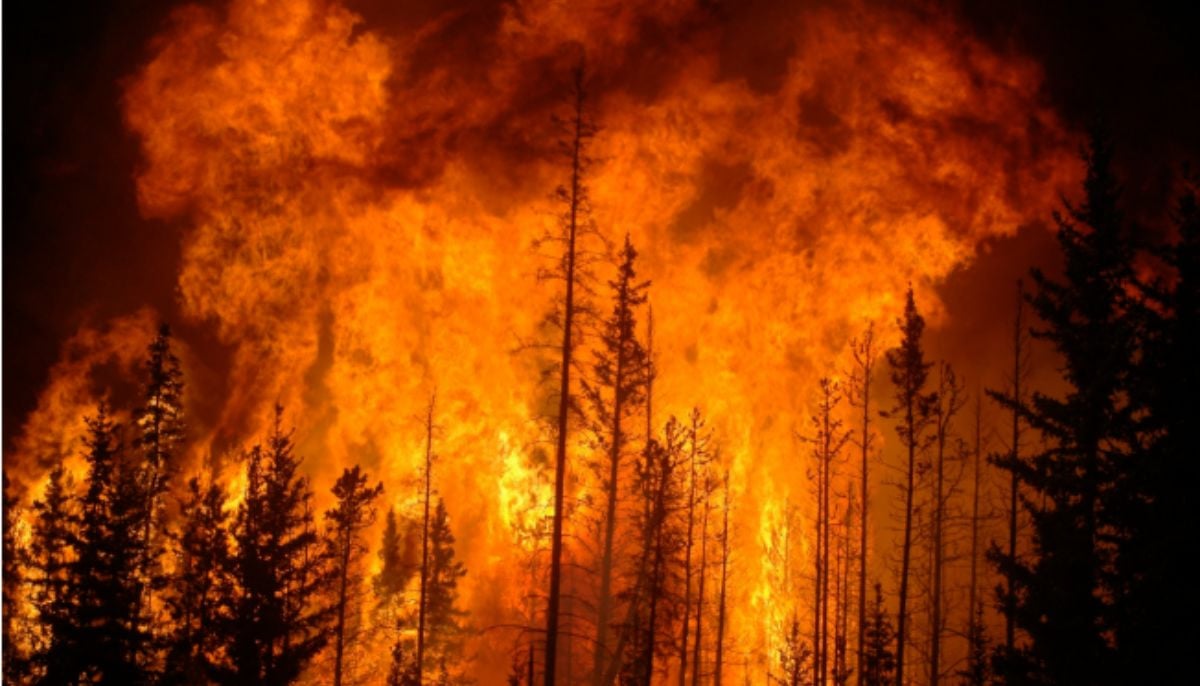
Scientists have said that other factors can also contribute to poor air quality or unhealthy pollution in our environment, such as forest fires.
A study has found that forest fires around the world are likely to emit much higher levels of gases that contribute to air pollution than previous estimates suggested, and the findings showed that smoke from fires can have lasting and serious effects on air quality and health.
Scientists discovered that many of these hidden emissions can be converted into fine particles that are dangerous to inhale.
How do forest fires pollute our environment?
Environmental experts said forest fires are spreading across forests, grasslands and peatlands, releasing large amounts of gases and particles into the air.
The study highlights several regions where emissions from fires overlap with pollution from human activities, creating particularly difficult air quality challenges.
“Our new estimates increase organic matter emissions from forest fires by about 21%,” said Lyuyin Huang, the study’s first author.
“The inventory provides a basis for more detailed air quality modeling, health risk assessment and climate-related policy analysis.”
_updates.jpg)
Every year, forest fires burn through large areas of vegetation, releasing a complex mixture of water vapor, ash and carbon-based chemicals into the atmosphere.
Some of these chemicals are volatile organic compounds (VOCs), which readily exist as gases.
While others only evaporate and become gases at higher temperatures and are classified as intermediate IVOCs and semi-volatile organic compounds (SVOCs).
Once in the air, these partially volatile compounds more easily form fine particles that can be harmful if inhaled, compared to VOCs.
The team first examined a global database tracking land burned by forest, grass and peat fires between 1997 and 2023.
They then collected information about the VOCs, IVOCs, SVOCs and other organic compounds with extremely low volatility that are released when burning different types of vegetation.
The researchers estimate that an average of 143 million tons of organic compounds were released into the air annually during the study period.
The results concluded that the figure is about 21% higher than previous estimates.
According to the researchers, air pollution in the regions or shared emissions hotspots including Equatorial Asia, Northern Hemisphere Africa and Southeast Asia is particularly complex and will require different strategies to reduce emissions from both forest fires and human activities.
The study “Global Wildland Fire Emissions of Full-Volatility Organic Compounds from 1997 to 2023” was first published in the journal Environmental Science & Technology and the new research material was provided by American Chemical Society.