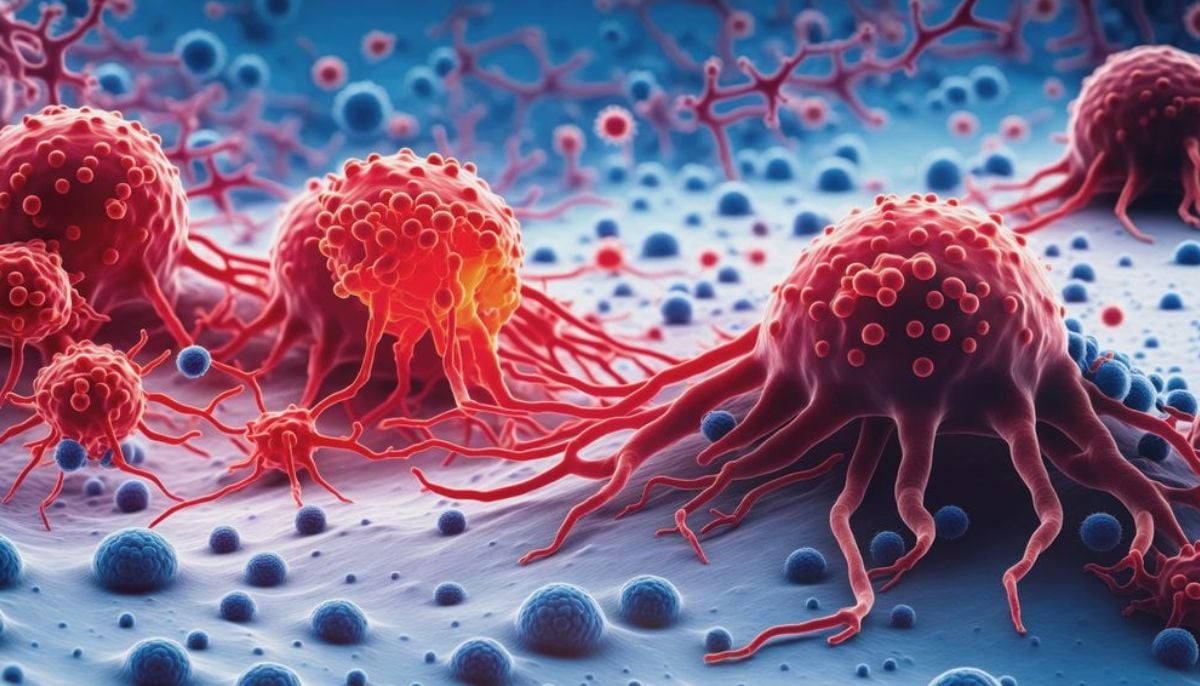
For decades, KRAS, one of the deadliest cancer-causing mutant proteins, was considered impossible due to its smooth surface and lack of binding sites.
Tackling cancer cell growth has always been a challenge, leading to continued disappointment among the scientific community.
KRAS also poses an ‘irreversible’ challenge because it acts as an ‘on/off’ switch for cell growth. Mutations lock it in the “on” position, causing uncontrolled tumor growth.
Furthermore, its slippery physical structure makes it difficult for traditional drug molecules to ‘take hold’ and deactivate.
Now, new hope has been renewed in the form of a groundbreaking drug breakthrough in trials. New strategies, particularly protein degraders and multimutant inhibitors, are showing success in clinical trials.
Recent breakthroughs
In one clinical trial, a drug has shown efficacy against KRAS protein mutant. Four other studies are also underway, demonstrating effective inhibition of various mutant forms of KRAS and related proteins.
The drugs work as protein degraders. Instead of just blocking the protein, these drugs bind KRAS to an enzyme called E3 ubiquitin ligase.
The enzyme marks KRAS as ‘cellular waste’, prompting the cells to physically destroy the mutant.
Kevan Shokat, a chemical biologist at the University of California, San Francisco, said, “The amount of complexity and gymnastics that has to happen, sometimes your protein can be broken down, sometimes it just can’t be done.”
In March, researchers reported promising results from the first KRAS degrader tested in humans. A recent study showed tumor shrinkage in more than 1/3 of lung cancer patients and 1/4 of pancreatic cancer patients, driven by a drug called setidegrasib, made by Astellas Pharma in Tokyo.
In another progressive development, an inhibitor called daraxonrasib also disrupted active but distinct forms of KRAS and its relative mutants, inhibiting their ability to cause cancer.
Main challenges
One of the biggest challenges is drug resistance that cancer cells exhibit due to their greater adaptability.
The resistance comes in different forms, involving new mutations developed by KRAS, or the cell can activate backup pathways to cause tumor growth despite KRAS being knocked out.
Combination therapy: the next frontier
According to experts including Kevan Shokat and Dieter Saur, the next breakthrough lies in ‘combination therapy’. Even the data suggests that different types of inhibitors may be more effective than single use.
“If we combine them properly, we can achieve tremendous synergy. It will only be a matter of time,” Shokat said.