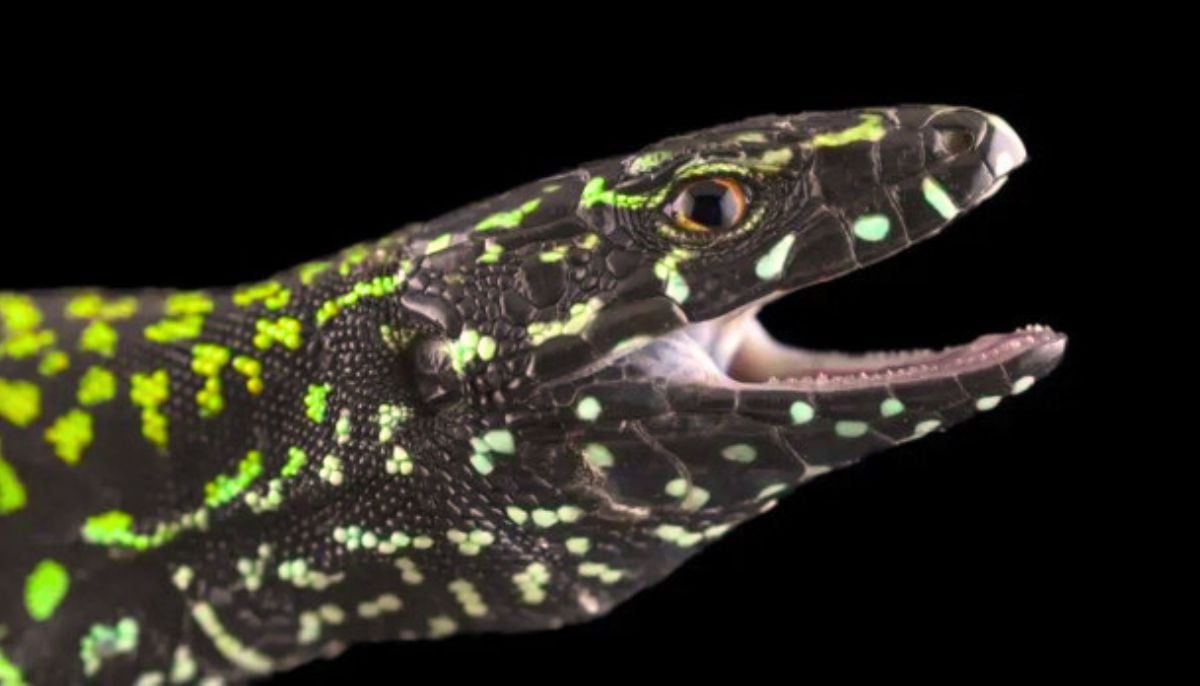
For centuries, people believed that wall lizards coexisted in three different color types, each with its own survival strategy.
For millions of years, scientists have observed a vibrant mix of colors within a single lizard species, but now much of that diversity has disappeared in a remarkably short time.
Strangely, researchers pointed to an unexpected cause: a bold green, highly aggressive and dominant wall lizard that has quickly eliminated several color forms within its own species.
Now a powerful green variant is taking over. These dominant ‘Hulk’ lizards outnumber the others, causing yellow and orange shapes to disappear.
It’s a dramatic reminder that evolution can flip the script much faster than expected.
In many animal species, different color types, known as color morphs, are more than just visual differences.
These variations often reflect different approaches to survival, such as how individuals compete for territory or attract mates.
Each color can represent a unique strategy that helps maintain balance within a population.
The common wall lizard, or Podarcis Muralisfound throughout the Mediterranean has long been a classic example of this balance.
According to researchers, these individuals typically exhibit one of three throat colors: white, yellow or orange.
For millions of years, these color variants coexisted within the same populations, maintaining a stable evolutionary system.
Analysis of more than 10,000 individual lizards. The findings were clear. A group informally known as “Hulk” lizards has changed the dynamics within the species.
To understand what’s happening, researchers examined color patterns in about 240 populations.
These larger, more aggressive lizards, recognizable by their striking appearance, have spread quickly. As they expand into new areas, the yellow and orange throat variants disappear. In many places only the white form remains.
“The aggressive behavior disrupts the finely tuned social systems that previously allowed different color strategies to coexist,” says researcher Tobias Uller, professor of evolutionary biology at Lund University.
This research highlights how even long-standing evolutionary systems can be fragile and that a single dominant trait can quickly reshape competition and change the balance within a species.
The research led by Lund University was originally published in the journal Adaptive spread of a sexually selected syndrome eliminates an age-old color polymorphism in wall lizards.