Scientists are finally addressing what it means to create life beyond Earth and what it will take to grow plants on other planetary soil.
The scientist who has spoken out about this shocking news is Tomomichi Fujita, the lead author from Hokkaido University.
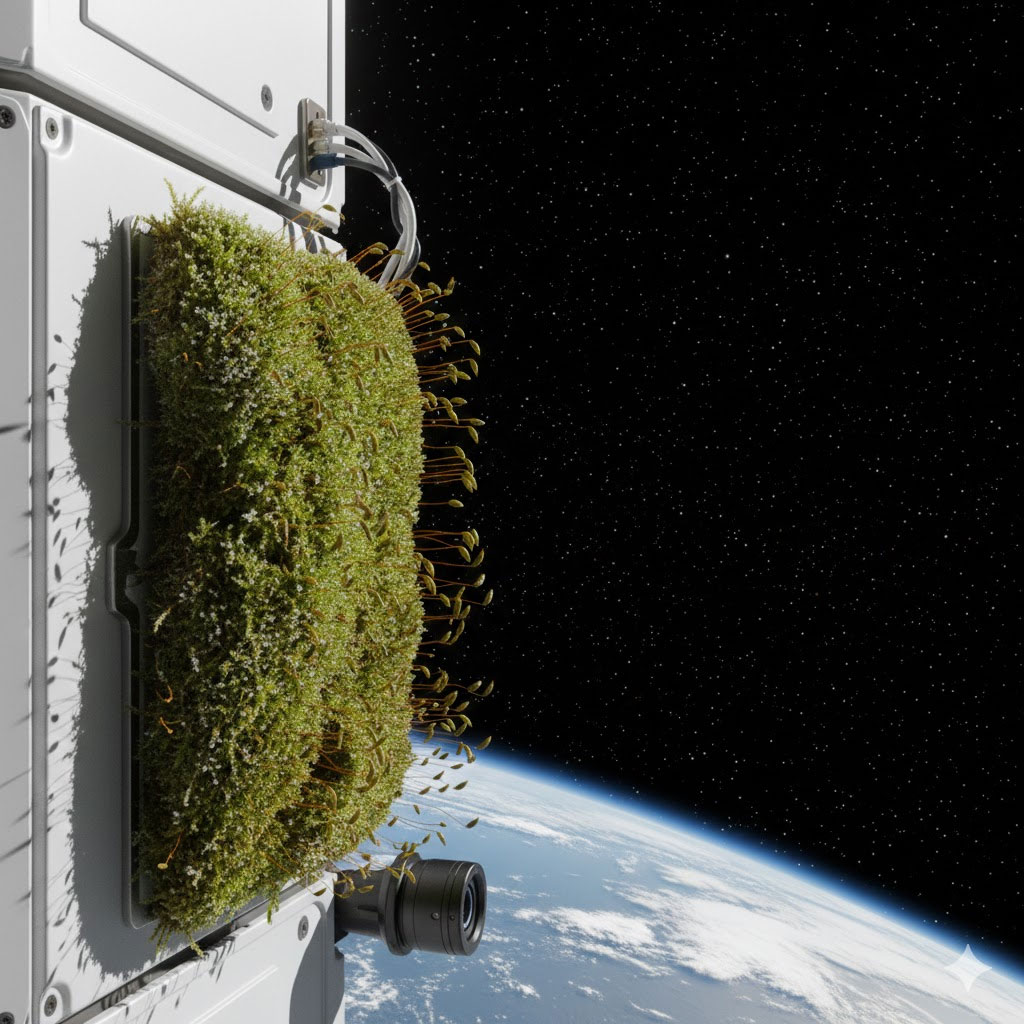
It should be noted that the plant that survived for nine months in the vacuum of space is moss spores. They did this despite being outside the International Space Station (ISS), in extreme temperatures, and even survived UV radiation, according to a report published in the journal iScience on November 20.
What is relevant to mention is that moss is known for its ability to survive in areas considered ‘challenging’ for other species of plants and wildlife. Whether in the peaks of the Himalayas, in the deserts of Death Valley or on the Antarctic tundra. Maybe even the cooling surfaces of active volcanoes.
With such findings, the lead author admitted, “most living organisms, including humans, cannot survive even briefly in the vacuum of space.”
“However, the moss spores retained their vitality after nine months of direct exposure. This provides striking evidence that life that evolved on Earth has intrinsic mechanisms at the cellular level to survive the conditions of space.”
He even emphasized the possibility of researching “space moss” because he was even ‘impressed’ by the plant’s ability to adapt on Earth.
“I started wondering: Could this small but remarkably robust plant also survive in space?” he remembered thinking. That is why he compared three moss shapes for his experiment. Protenemata (young moss), brood cells (stress-induced stem cells) and sporophytes (encapsulated spores), with the aim of seeing what has the greatest chance of survival in space.
“We expected that the combined stresses in space, including vacuum, cosmic rays, extreme temperature fluctuations and microgravity, would cause much greater damage than any single stress.”
Their findings led them to realize that UV radiation was the biggest threat, but also that sporophytes clearly performed better than the other species.
In contrast, the young moss did not survive prolonged UV exposure or extreme temperatures, leaving the brood cells somewhere in the middle.
Survival rate of encapsulated spores:
Encapsulated spores could reach temperatures of -196°C for more than a week or 55°C for a full month.
Real world experience:
It started in March 2022 when hundreds of sporophytes traveled to the ISS via the Cygnus NG-17 spacecraft. After accomplishing this, astronauts mounted the samples to the outside of the station’s walls and left them alone for 283 days. They were returned to SpaceX CRS-16 in January 2023 and then returned to a laboratory for analysis.
About the outcome, Mr. Tomomichi himself said: “we expected almost no survival, but the result was the opposite: most of the spores survived. We were genuinely amazed at the extraordinary durability of these small plant cells.”
In terms of percentage, about 80% of the spores made it through the entire journey, but only 1.1% of those survivors managed to pass the germination stage in the laboratory.
When tested, chlorophyll showed completely normal levels in those who successfully survived, with only a 20% drop in chlorophyll, a light-sensitive compound.
So in the author’s eyes, “This study demonstrates the astonishing resilience of life that originated on Earth.”
In a mathematical model they created to map out how long spores would survive if they increased their time in space, the numbers show a staggering survival time of 5,600 days, or about 15 years. However, they emphasize that more data is needed to draw a firm conclusion.
In any case, before signing off, he said: “Ultimately, we hope that this work will open a new frontier for the construction of ecosystems in extraterrestrial environments such as the moon and Mars. I hope that our moss research will serve as a starting point.”
According to Science daily the work was carried out in collaboration between the DX grant Hokkaido University, JSPS KAKENHI and the Astrobiology Center of National Institutes of Natural Sciences