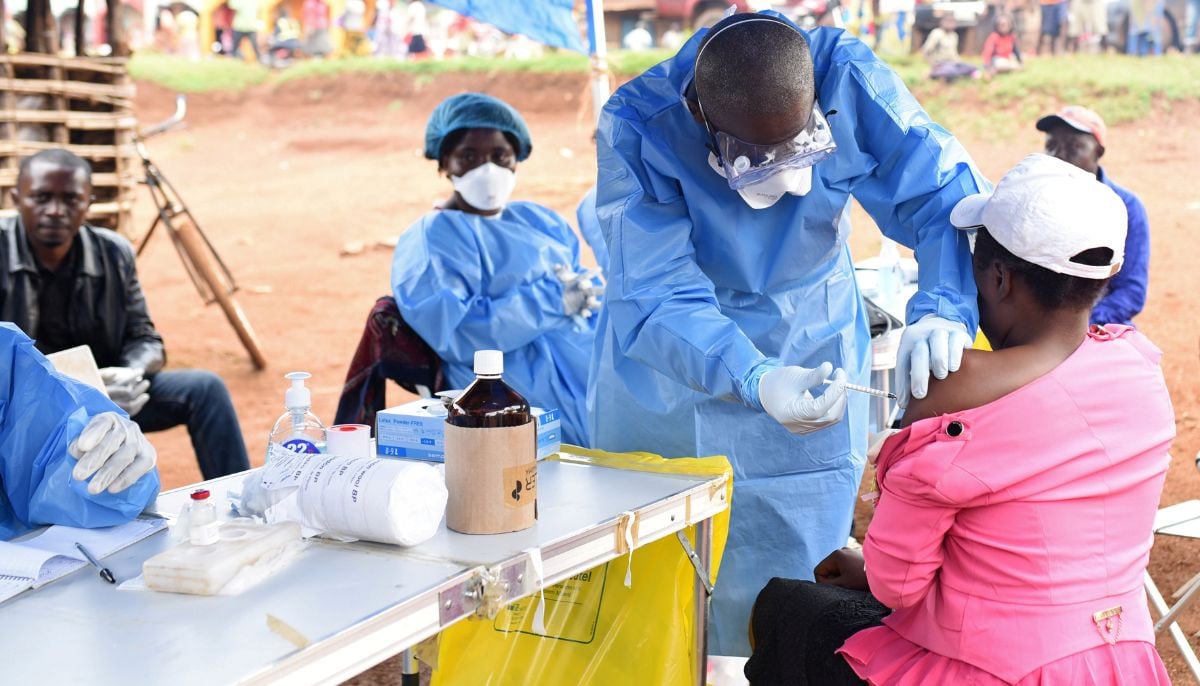
The Africa Centers for Disease Control and Prevention confirmed Friday what health officials feared most: Ebola has returned to the Democratic Republic of Congo.
Ituri province, a remote region in the northeast of the country, has already recorded 246 suspected cases and 65 deaths. Laboratory tests detected the Ebola virus in 13 of the 20 samples analyzed, confirming that this is not a false alarm.
This outbreak occurred about five months after the most recent Ebola episode in the DRC was officially declared, and that earlier crisis killed 43 people.
Ituri is more than 1,000 kilometers from the capital Kinshasa, in a remote eastern part where the road network is poor, and that kind of remoteness once acted as a wall, slowing the rapid spread of disease.
The African CDC cited three things that coincide and make containment almost useless: intense population movements across borders, a security situation that is clearly deteriorating, and only partial surveillance of affected areas.
Armed groups have been engaged in a decades-long battle for control of this mineral-rich region. Just last week, a rebel attack killed at least 69 people.
The DRC government has had trouble maintaining real control since the M23 rebel group launched that swift attack in January 2025, with support from Rwanda. In these types of situations, public health officials simply can’t really do the basic work like ongoing surveillance, isolating patients or keeping track of who has been in contact with whom.
Ituri is located next to Uganda and South Sudan, both of which also have their own fragile healthcare systems. The African CDC has already convened an urgent high-level meeting with health authorities from all three countries, plus UN agencies, to plan for a cross-border spread they may not be able to stop.
Ebola, which was first noted in 1976 and is widely believed to have jumped from bats to humans, is one of the most deadly viruses known to man. It moves through direct contact with body fluids and can cause heavy bleeding, organ failure and death. The DRC has suffered more than a dozen outbreaks, but the 2018 to 2020 crisis was the worst yet, with nearly 2,300 deaths.