The new study challenges the long-standing view of evolution as a purely random or chaotic process, suggesting instead that nature often works from pre-existing ‘blueprints’ to solve survival problems.
According to researchers from the University of York and the Wellcome Sanger Institute, the evolutionary process is not always unpredictable; in fact, it also relies on the same genetic ‘cheat sheet’.
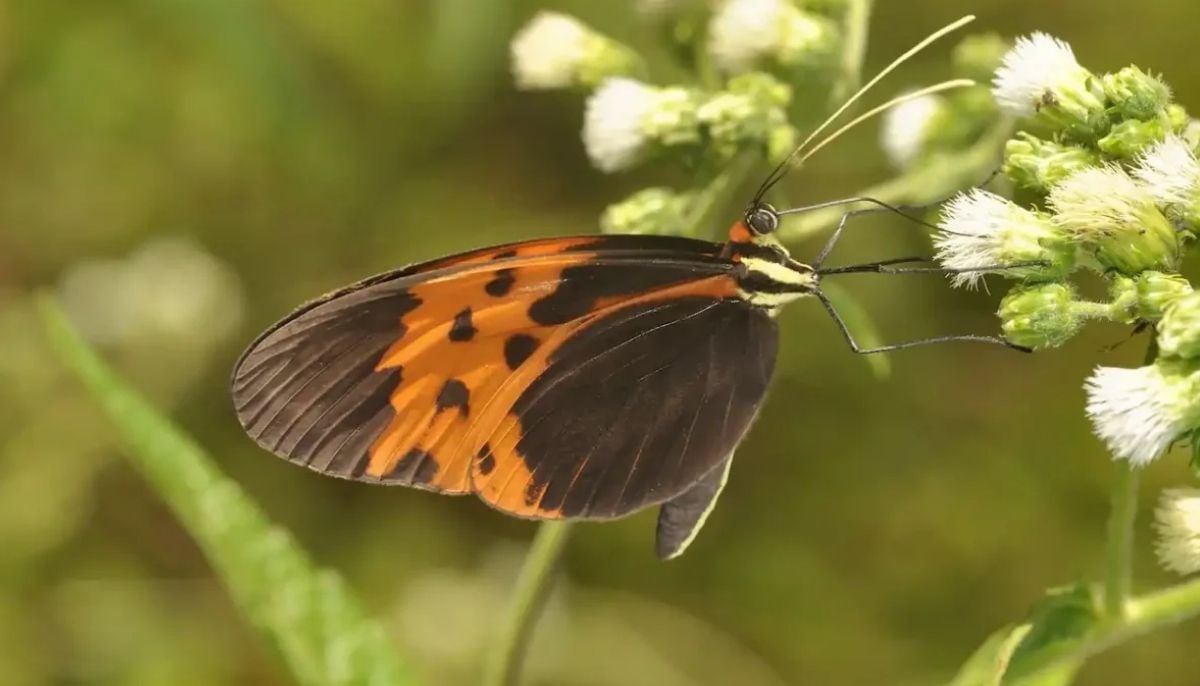
The team revealed that distantly related butterflies and moths have been using the same two genes, ivory and optix, to develop identical warning color patterns, known as mimicry, for more than 120 million years.
By studying species in South American rainforests, researchers discovered that evolution consistently flips the same genetic “switches” to produce poisonous-looking wing patterns.
This discovery of convergent evolution suggests that biological adaptation may be much more predictable than previously thought.
Professor Kanchon Dasmahapatra from the University of York’s Department of Biology explained: “Convergent evolution, in which many unrelated species independently evolve the same trait, is common in the tree of life. But we rarely have the opportunity to investigate the genetic basis of this phenomenon.”
These findings have been published in the journal PLoS biology suggest that evolution can be surprisingly predictable. And this predictability is not new, even though butterflies and moths have been using “these evolution-based genetic tricks to achieve similar color patterns since the age of the dinosaurs.”
If evolution follows established pathways, scientists may eventually be able to predict how certain species will adapt to modern threats such as climate change or changing environments.