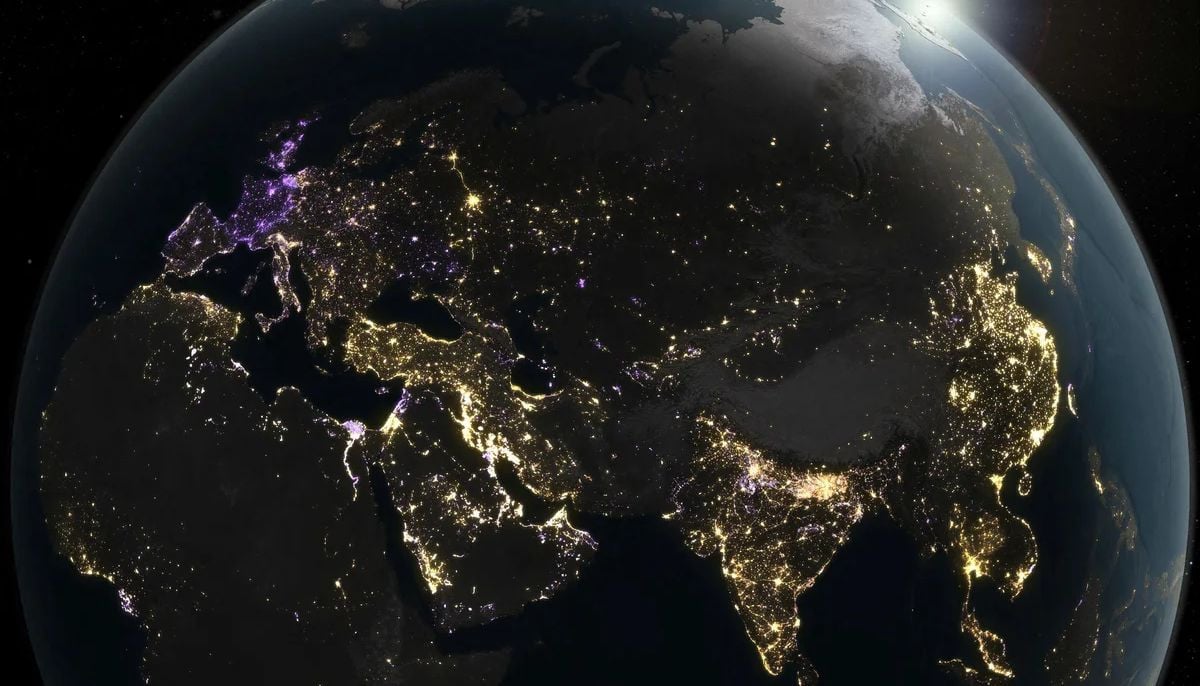
The Earth is becoming brighter, but the pattern of that light is becoming more and more volatile. According to a major NASA-funded study from the University of Connecticut, artificial light on the planet increased by a net 16% between 2014 and 2022, although the growth is far from uniform.
The research was published this month in Natureanalyzed more than 1.1 million satellite images to create what lead researchers call a “heartbeat of the planet”: a pixel-by-pixel look at how human activity is reshaping the night.
While global exposure saw a 34% gross increase, this was partially offset by significant dimming in specific regions.
Asia continues to lead the world in brightening, with increasing nighttime light in China and northern India, driven by rapid urban development.
In the US, West Coast cities became brighter as the population grew, while in Europe light pollution fell sharply. France led the way with 33% dimming due to strict energy savings, followed by Great Britain (22%) and the Netherlands (21%).
The recent research shows that satellites can now monitor global unrest in real time. In the US, intense gas flaring was detected in the Permian Basin and North Dakota, marking a record high in domestic oil and gas production.
Deborah Gordon, senior director of the Rocky Mountain Institute’s Climate Intelligence Program, told the agency: “Letting operators, investors and insurers know this is happening is a huge value proposition, privately and publicly, for the world.
“Understanding where gas is being wasted around the world, and that this data is public, is huge for energy, economic and environmental security.”
The study detects real changes in light use and provides a rough look at how environmental regulations and global events are changing the appearance of the planet after dark.