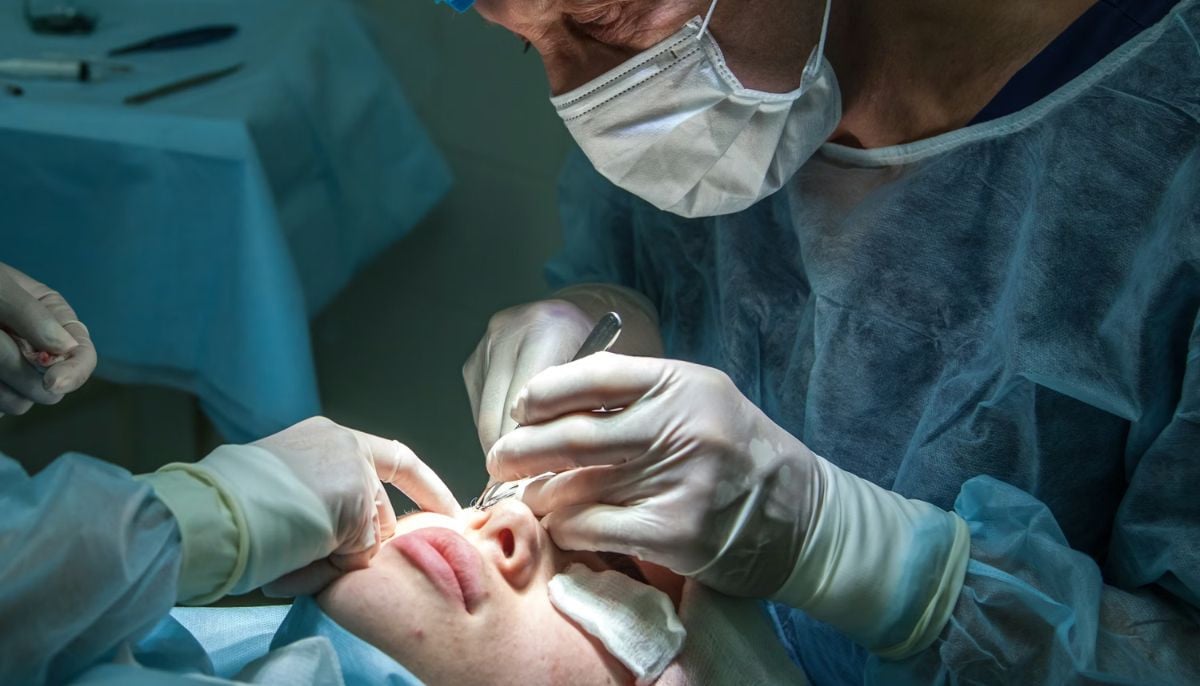
A 60-year-old woman sat opposite Dr. Sachin Shridharani’s desk and showed him a picture. It wasn’t a photo of a celebrity or an influencer, it was an AI-generated version of herself. Flawless skin, sharp jaws, ageless facial features.
“She wanted to look like her granddaughter, 40 years younger,” recalls Shridharani, a Manhattan plastic surgeon. The gap between what the AI promised and what an operation could deliver was enormous.
Patients walk into cosmetic surgeons’ offices with AI-generated photos from ChatGPT, specialized apps, and AI filters that ask the doctor to recreate these impossible versions of themselves, you know, like a runaway shortcut or something.
Dr. Rachel Westbay, a cosmetic dermatologist on the Upper East Side, in an interview with Business insider said the AI image of a patient was a “caricature”: cartoonish lips, enlarged doll-like eyes. It’s like saying, “I want to look like Ariel from The Little Mermaid,” she said, as if that were a direct, simple request.
Then there’s a 2024 study from Beth Israel Deaconess Medical Center, which found that people who used AI image intensifiers had “significantly higher” expectations for plastic surgery results than patients who didn’t.
_updates.jpg)
AI image generators tend to produce what doctors call the “Bratz doll” aesthetic: full lips, oversized eyes, defined jawlines. The technology does not take into account individual facial structure, ethnicity or surgical balance.
“There is no procedure I can perform to increase eye size,” Westbay explained. “Even if we could make it happen, people would look at you like a cartoon.” Complex procedures such as rhinoplasties are especially problematic. AI struggles with the three-dimensional complexity of nose reshaping, often producing results that are surgically impossible.
Dr. Steven Williams, president of the American Society of Plastic Surgeons, has seen patients arrive with AI visions of breast augmentations, body contouring and facelifts. His verdict: “Pixels are easier than surgery.” The limitation is not imagination, but physics, anatomy and safety.
This is not the first time that patients have brought reference images to surgical consultations. Years ago, Vogue cutouts were common. A 2019 survey from the American Academy of Facial Plastic and Reconstructive Surgery found that 72% of surgeons had patients requesting procedures to enhance selfies, a phenomenon called “Snapchat dysmorphia.”