NASA’s cargo mission aims to deliver more than 11,000 pounds of supplies and scientific equipment to the International Space Station, allowing scientists to conduct research into future experiments in the space world.
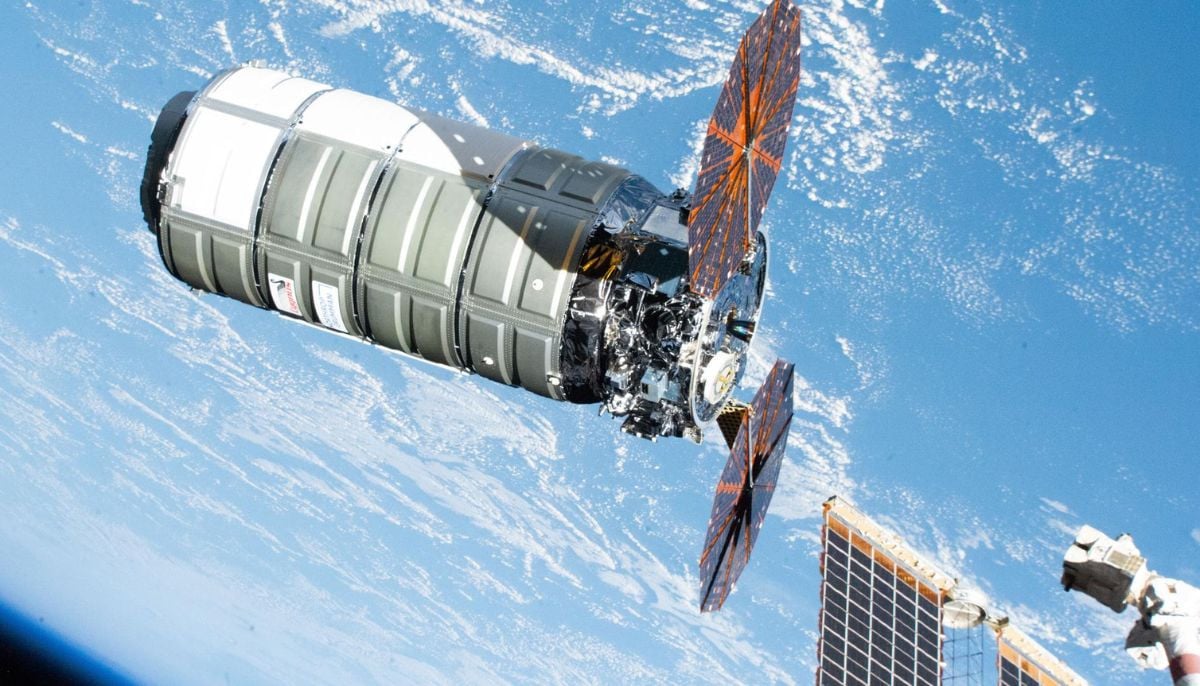
Known as CRS-24 under NASA’s Commercial Resupply Services program, the mission is the second flight of the upgraded Cygnus XL vehicle, a larger variant designed to carry significantly more cargo than previous versions.
What does the Cygnus XL spacecraft carry?
The spacecraft, operated by Northrop Grumman, has been named SS Steven R. Nagel in honor of the former NASA astronaut who completed four Space Shuttle missions and spent 723 hours in space.
The Cygnus XL spacecraft was launched aboard a SpaceX Falcon 9 rocket, which carries research equipment for Expedition 74 and 75 crew members working on the International Space Station. The system’s increased capacity allows it to carry approximately 33% more cargo than previous Cygnus spacecraft.
The cargo consists of scientific equipment, including advanced research instruments and biological research model organisms and systems that allow researchers to conduct extensive testing under microgravity conditions.
The main space mission experiments include an advanced Cold Atom Lab system that allows scientists to investigate fundamental physics topics, including general relativity and dark matter, through research in ultracold environments.
Researchers reportedly plan to develop therapeutic stem cells through microgravity research, allowing them to develop treatments for blood disorders and specific types of cancer.
Will NASA’s Cygnus XL return to Earth?
The spacecraft will reach its destination via NASA astronauts Jack Hathaway and Chris Williams, who will handle arrival operations. Hathaway will pilot the Canadarm2 robotic arm, while Williams will monitor the spacecraft as it approaches the space station.
The Cygnus XL spacecraft will remain attached to the International Space Station for a period of approximately two years. The spacecraft will function as a cargo carrier and perform additional tasks as it allows for orbital changes if necessary.
The mission includes equipment that will improve space weather forecasting models, as the equipment will help protect Earth systems such as GPS networks and radar infrastructure.
The Cygnus XL spacecraft is a single-use design, as it does not allow for multiple flights after the first mission. The space station will use the vehicle for its operational duties, which will then be filled with station debris before undergoing controlled destruction during atmospheric reentry.
The controlled disposal process allows organizations to deal with their increasing space waste through safe disposal upon mission completion.