The space race is no longer limited to world powers such as the US, Russia and China. Private aerospace companies led by American billionaires are also entering the fray, vying for lucrative NASA contracts.
While Elon Musk’s SpaceX currently has a dominant lead in rocket launches and satellite internet, Jeff Bezos-led Blue Origin is also positioning its companies to catch up.
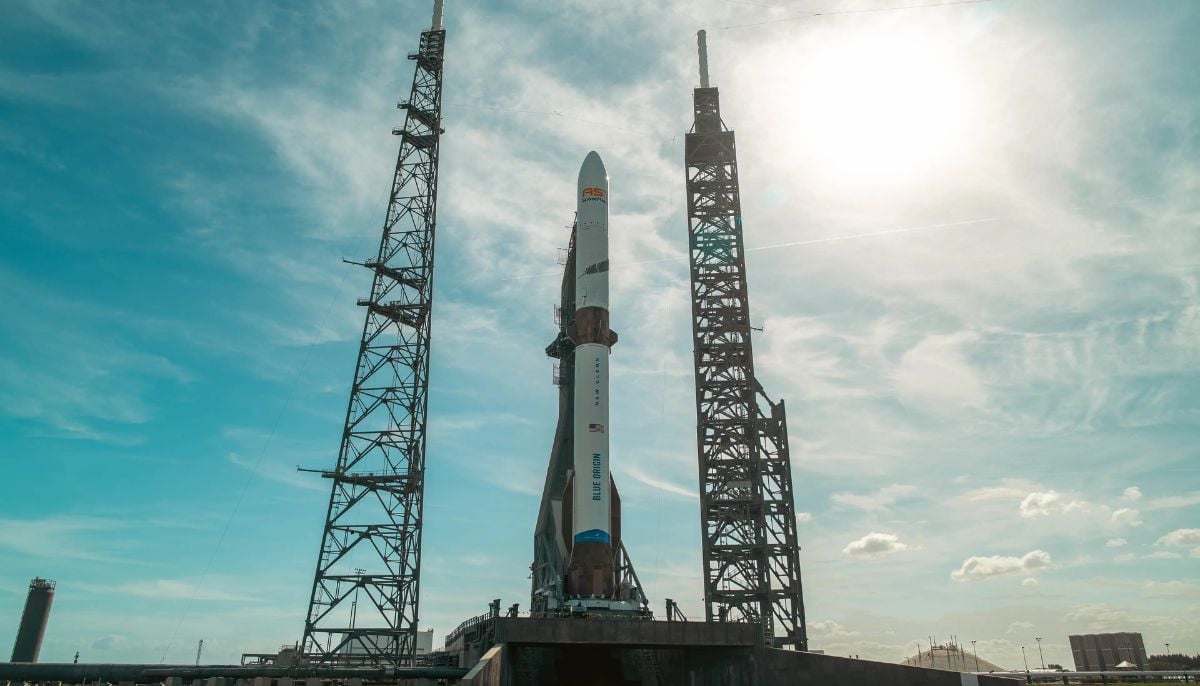
Blue Origin is also developing its New Glenn rocket for commercial use and is focusing heavily on NASA’s Artemis moon missions.
Rocket development: the race for stars
When it comes to rocket development, SpaceX is undoubtedly far ahead of Blue Origin. What makes Elon Musk’s aerospace company superior is its unquestionable position in the field of launch services using Falcon 9. The company uses a ‘fail fast’ method to perfect its rocket.
On the other hand, Bezos’ approach is methodical, based on ‘slow is smooth, smooth is fast’.
Blue Origin’s New Glenn rocket is designed to work perfectly from its first flights. In November, two Mars-bound satellites were deployed for NASA during the New Glenn rocket launch.
Considering its efficiency, the rocket overtakes recent successful launches and orbital deliveries.
Artemis moon race
Both companies are also trying to win the moon race. NASA has contracted both companies to develop lunar landers for the Artemis program. The US space agency plans to put people on the moon again by 2030.
Previously, SpaceX was contracted to deliver the Starship Human Landing System to NASA. Unfortunately, due to delays at Musk’s space company, NASA planned to invite other bidders.
Therefore, Blue Origin was later contracted to supply landers. The company has halted its space tourism (New Shepard) business to focus entirely on its lunar cargo and crew landers.
This year, Blue Origin also plans to launch a cargo vehicle to the lunar surface. The launch will act as a precursor to designs that will eventually allow the company to return astronauts to the moon.
SpaceX has similarly reallocated resources from Mars targets to meet NASA’s 2028 lunar landing deadlines. It won the contract to build a spaceship capable of carrying 100 crew members and 200 tons of cargo.
The NASA Artemis III mission will be based on testing technology in low Earth orbit. However, NASA Artemis IV, scheduled for 2028, will be a moon landing mission.
In mid-2027, NASA plans to test one or both of the companies’ landers. It remains to be seen which company’s lander will reach the moon first in this fierce space battle.
Space-based AI data centers
Both companies are also competing to put data centers in orbit to take advantage of solar power and handle AI computing.
In February, Elon Musk announced the highly anticipated SpaceX-xAI merger, intended to create “the most ambitious, vertically integrated innovation engine on (and beyond) Earth, with AI, rockets and space-based internet.”
SpaceX has also requested approval for up to 1 million data center satellites. Blue Origin has applied for nearly 52,000 satellites equipped with AI computing payloads.