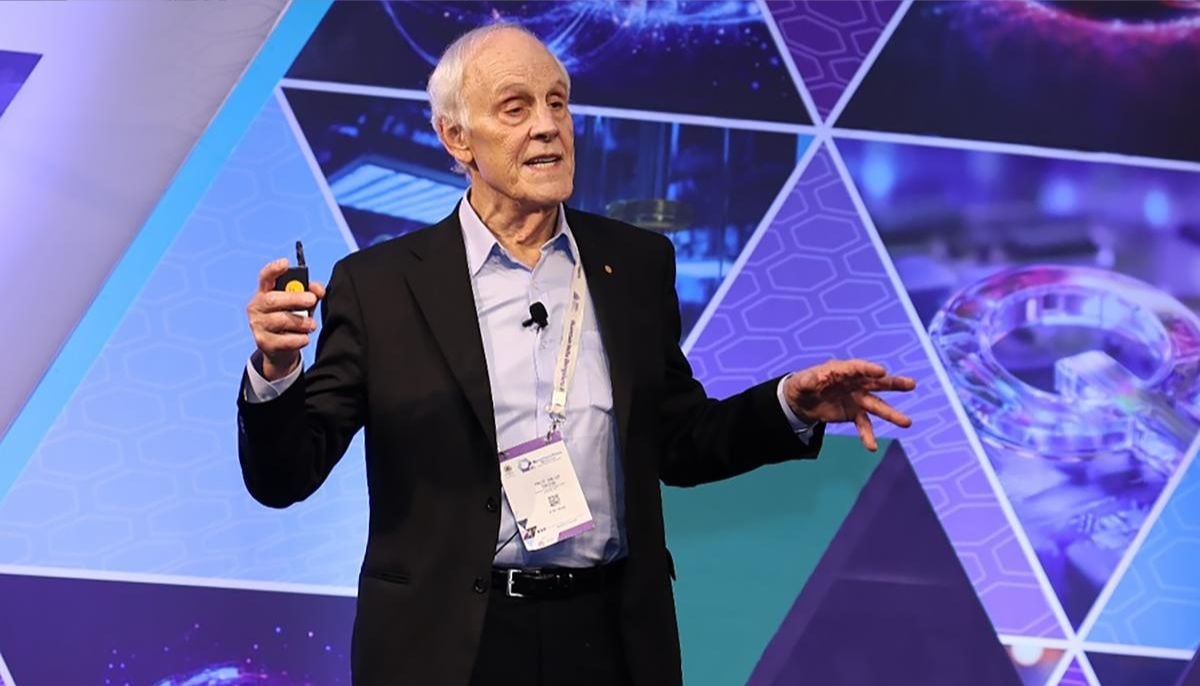
Nobel laureate physicist David Gross has cast doubt on the future and survival of humanity in the search for a unified quantum theory, dubbed the ‘Theory of Everything’.
Recently, David Gross received a $3 million Special Breakthrough Prize in Fundamental Physics for his career contributions to theoretical physics and global science advocacy.
In an interview published by Life sciences, Gross said the biggest roadblock to achieving the unified theory isn’t the math. It is the fading existence of humanity, which emphasizes whether man will survive long enough to finish the job.
‘I spend some of my time trying to tell people… that you’re more likely to live to be 50 [more] years are very small. Because of the danger of nuclear war, you have about 35 years,” said David Gross during his discussion on the future of the species and scientific progress.
Gross estimates a 2 percent annual risk of nuclear war due to the collapse of arms control treaties and the rise of multiple nuclear powers.
Based on this 2 percent estimate, he calculated that the “expected lifespan” of our civilization would be roughly 35 years before a nuclear event occurred.
He also warned that modern warfare, powered by AI, will bring humanity even closer to catastrophe.
What is the theory of everything?
A unified theory in quantum gravity or Theory of Everything is based on combining the two main pillars of modern physics: general relativity (explains gravity and other structures of the universe) and quantum mechanics (focuses on the behavior of particles at the atomic and subatomic level).
If proven or discovered, the unified theory could explain the origin of the universe, unravel the mystery of black hole events and reveal deeper laws of reality.